If you wanted a reminder that motorsport’s ecosystem never sleeps, this week provided it in stereo: MotoGP managed to detonate its own headline grenade, while Formula 1’s 2026 narrative kept twisting in familiar places — contracts, credibility, and the early shape of a title fight that still refuses to sit still.
The biggest non-F1 flashpoint came at Brno, where Marco Bezzecchi — leading the championship in Liberty Media’s newly owned MotoGP — was barred from Sunday’s Czech Grand Prix after an incident in which he pushed and then struck a marshal. It’s the kind of story that tends to spill beyond the paddock bubble because it cuts straight through the usual sporting debates and into something more basic: boundaries. However you slice it, officials didn’t have much room to manoeuvre once it reached that level. In a season where Bezzecchi has been framed as the category’s next breakout figure, the fallout is going to be measured not just in points, but in how he and the championship carry themselves when the cameras aren’t pointed at apexes.
F1, though, did what F1 does: it turned the spotlight back onto itself with a blend of intrigue and insinuation.
Carlos Sainz, normally careful about stepping on the landmines that sit around other drivers’ contracts, let one off anyway by hinting that Max Verstappen’s Red Bull deal contains a time-saving exemption — a carve-out from some of the off-track commitments that are now effectively part of the job description. It’s an “only Verstappen” sort of claim, the kind that lands because it’s plausible in tone even if the details are impossible to verify from the outside.
And it hits a nerve for a reason. In 2026, the calendar and the commercial treadmill have become as central to performance as any shiny upgrade floor. Teams don’t say it out loud, but everyone knows the drivers who manage their energy best across the long season often arrive sharper on Sundays and less frayed by late summer. If Verstappen has genuinely negotiated more control over his time, it’s less a perk than another competitive margin — the modern version of a bespoke steering wheel or a preferred run plan, just applied to the human rather than the machine.
It also underlines a quiet truth about Red Bull’s relationship with Verstappen: the power dynamic has been set for years, and it’s hard to imagine any team telling a driver of his stature what he must do on a Wednesday night if the contract says otherwise. That doesn’t mean it’s unfair — it means it’s elite sport, and leverage is the real currency.
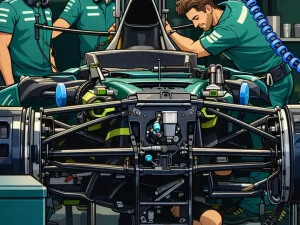
Elsewhere, Aston Martin’s 2026 campaign continues to look like a project stuck between intentions and outcomes. The Honda partnership was always going to come with growing pains, but Barcelona was bruising even by generous standards: back-row starts, then a double DNF, and an overarching sense that the team is waiting for a “big bang” upgrade package rather than living off incremental gains.
Guenther Steiner, never one to leave a blunt instrument unused, went further and declared Aston Martin “not F1 standard anymore”. It’s the sort of line that reads like theatre — and Steiner knows exactly how it will travel — but there’s a sharper edge underneath. In a field this tight, the difference between “not yet” and “not good enough” can be just a few weekends, and the longer a team waits for one transformational update, the more it risks discovering the rest of the grid didn’t pause politely in the meantime.
Then there’s the story that’s threatening to hijack the early championship conversation: Lewis Hamilton, Ferrari, and what a single Barcelona win does to the collective imagination.
Hamilton’s first Ferrari grand prix victory has inevitably kicked the eighth-title chatter into overdrive, and the numbers have followed: he’s now second in the standings, and the mood around Ferrari has lifted. But the pushback has arrived just as quickly, a reminder that one strong weekend — even one that ends with red confetti — doesn’t rewrite an entire season’s competitive order.
The more interesting element isn’t whether Hamilton “is a contender” in the abstract; it’s what Ferrari’s step means to the teams that had grown comfortable. Mercedes, in particular, sounded a note that should make the rest of the paddock listen: James Allison has indicated that, from Mercedes’ perspective, Ferrari has been the outfit clawing back the most performance since the season began — more so than McLaren.
That’s revealing on two levels. First, it suggests Mercedes’ internal read of the trend lines is more concerned with Ferrari’s development rate than the noise around other challengers. Second, it frames Barcelona not as a one-off, but as an inflection point: Hamilton didn’t just end Mercedes’ 100 per cent win record in 2026 — he did it in a way that appears to have changed what Mercedes is watching in the mirrors.
Which brings us back to where this week’s themes overlap. Bezzecchi’s ban is about limits. Sainz’s Verstappen contract hint is about leverage. Aston Martin’s struggle is about standards. And Ferrari’s rise — whether it proves durable or not — is about momentum, that precious commodity teams insist doesn’t exist right up until the moment they’re chasing it.
In June, nobody wins a championship. But you can absolutely reveal what kind of season you’re in — and 2026 is starting to look like one where the margins aren’t just on track. They’re negotiated, managed, and sometimes, painfully enforced.