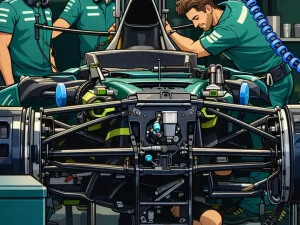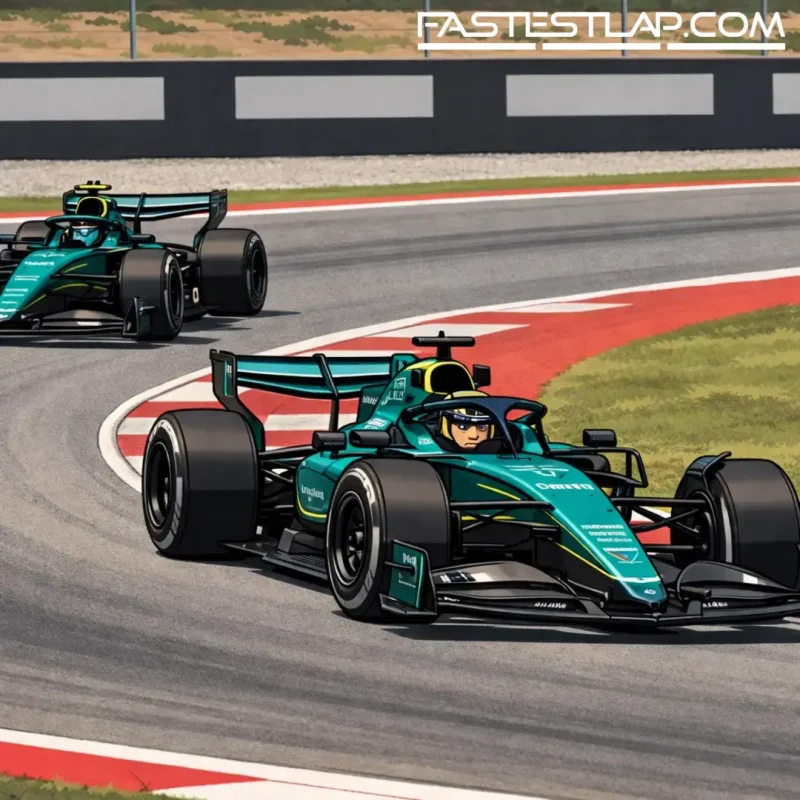
Barcelona was supposed to be a neat little progress check for Aston Martin and Honda: a tough circuit, a proper read on car balance, and a chance to see whether the new works-style relationship is starting to look like a weapon rather than a promise. Instead, it turned into one of those weekends that exposes how raw this partnership still is — and how carefully Honda is trying to manage expectations as it lines up its first significant 2026 development step.
Honda is due two chances to upgrade its internal combustion engine after the first ADUO (Additional Development and Upgrade Opportunities) checkpoint, but the message from Honda Racing Corporation president Koji Watanabe has been pointedly unromantic: don’t expect a miracle when the first upgrade arrives. In other words, even with fresh parts and fresh ideas, this isn’t going to be the kind of overnight transformation fans like to imagine when they hear “upgrade” and “works project” in the same sentence.
That caution matters because Aston Martin’s season narrative has started to harden into something familiar: flashes of competence mixed with a lingering sense that the whole package still isn’t landing in the right operating window often enough. Lance Stroll and Fernando Alonso can only do so much with what they’re handed, and Barcelona — with its emphasis on aerodynamic stability and tyre management — has a habit of turning “nearly there” into “not even close” if your fundamentals aren’t settled.
What’s interesting is the way Honda has handled the aftermath. Watanabe also referenced a “team gathering” between Aston Martin and Honda personnel at the Barcelona Grand Prix, framing it as a positive moment despite a bruising weekend on track. That’s the part worth paying attention to, because it tells you where the pressure is being directed: inward, not outward.
There’s a difference between a partner issuing PR platitudes and a partner leaning into the grind publicly. Barcelona sounded like a weekend where both sides felt the weight of the project — and decided the response couldn’t be to sulk back into separate corners. In a modern F1 operation, those touchpoints matter. When things go well, relationships look easy. When it’s going badly, you learn whether the structure is resilient or just shiny.
Honda’s “no miracles” line is also a subtle hedge against the noise that inevitably follows any underwhelming Aston Martin weekend. In 2026, with regulation change still shaping pecking order and development directions diverging, an engine upgrade can be meaningful without being headline-grabbing. It can tidy up driveability, address deployment quirks, improve consistency across temperatures — the kind of gains engineers celebrate and fans struggle to see on the timing screen unless the rest of the car is ready to cash them in.
And that’s the point: if the chassis and aero platform aren’t giving the drivers access to the car’s performance reliably, the power unit can only mask so much. Honda is effectively telling everyone not to treat the first ADUO upgrade as a switch that turns Aston Martin into a front-runner overnight. It may simply be a step toward making the whole package less fragile, less prone to falling off a cliff when conditions change.
Elsewhere in the paddock news cycle, the volume was turned up rather than the nuance. Claire Williams, speaking on the High Performance Racing podcast, offered a blunt reflection on her time running Williams day-to-day — and took direct aim at online abuse, telling one critic to “f**k off”. It was raw and unfiltered in a way F1 rarely allows itself these days, when everyone is coached into smooth statements and sponsor-safe language. Whether you like the phrasing or not, it cut through because it was human: a reminder that the people in this sport have spent years absorbing the worst of the internet with a polite smile.
That wasn’t the only F-bomb doing the rounds. Kevin Magnussen, now crossing into NASCAR, was involved in a heated, sweary confrontation with Noah Gragson in San Diego during his debut. Magnussen has never been a driver who confuses politeness with professionalism, and if his American chapter is going to be anything like his F1 career, it’ll come with elbows out and the occasional vocabulary lesson.
Back on F1’s main stage, Carlos Sainz provided a more analytical talking point as he weighed in on Lewis Hamilton’s first Ferrari win — a milestone that, inevitably, invites theories about what finally clicked. Sainz’s view is that Hamilton has benefited from the 2026 regulation reset in a way that plays to his strengths. Coming from the driver Ferrari effectively moved aside to make room for Hamilton, it’s a pointed observation — not a complaint, but a reminder that a rule change can reshuffle which instincts and habits are rewarded.
For Aston Martin and Honda, though, the storyline is less about instant breakthroughs and more about whether the partnership is learning at the right speed. Barcelona sounded like a stress test, and the response — a defiant tone, a shared “gathering”, and a deliberately conservative forecast for the first engine upgrade — suggests they’re trying to build something sturdier than a hype cycle.
The next step isn’t for Honda to produce magic. It’s for Aston Martin and Honda to produce alignment. In 2026, that’s what turns “project” into “contender”.