Ferrari and Williams are both using the Austrian Grand Prix weekend to tick off a very 2026 box: mandatory rookie running, even if it means interrupting the rhythm of two cars that are meant to be in the thick of things every Friday.
At Ferrari, Dino Beganovic will step into Charles Leclerc’s SF-26 for FP1 at the Red Bull Ring. It’s a straightforward announcement on paper, but it’s another small reminder of how tight modern weekends have become — and how little slack there is once you start giving away live-track time on a short, busy circuit.
Beganovic isn’t new to the job. His most recent FP1 outing came in Barcelona when he substituted for Lewis Hamilton, who went on to shake off the lost hour and still leave with his first Ferrari win. That’s the dream scenario for any team running a junior: get the obligation done, bank the data, don’t compromise the result. Austria will be a different kind of test. The Red Bull Ring is short, punishes traffic, and tends to condense the field, so “only FP1” can still be the difference between arriving at qualifying with your baseline nailed or chasing it.
Williams is doing something similar, with Luke Browning set to replace Carlos Sainz for the opening session. Browning was already scheduled for FP1 in Barcelona and Austria, but an electrical issue stopped him getting on track in Spain — which effectively turns Spielberg into a catch-up session for his programme. From Williams’ perspective, that’s not ideal: you want the rookie mileage spread, not stacked into a weekend where every run is precious. But the upside is obvious too. If Browning gets a clean hour, Williams finally gets the data it planned to collect earlier in the month, and Sainz can take over in FP2 with at least some reference points already established.
There’s also a slightly awkward human element that teams never talk about publicly. Drivers hate giving away sessions, especially at this stage of the season when the margins are thin and the cars are sensitive. Leclerc and Sainz are both being asked to cede the first hour at a track where confidence builds quickly and mistakes are expensive. Their engineers will dress it up as a structured plan, and it will be, but the subtext is always the same: make the Friday count even when you start it late.
Austria may not make that easy. Forecasts suggest high temperatures, and the FIA’s heat hazard protocol could come into play if conditions hit the trigger point. That matters because it’s not just “drink more water” territory anymore. A heat hazard declaration forces teams into additional cooling measures, including fitting more advanced driver cooling systems, with a corresponding minimum-weight increase to cover the hardware. Drivers can also opt for a special cooling vest.
If you’re a team already trying to compress your set-up work because FP1 went to a rookie, the last thing you want is another variable that changes how the car behaves and how the driver copes physically. You can lose time in the garage, you can lose time on track, and you can lose clarity in the data — and on modern tyres, that can snowball fast into a weekend that never quite comes to you.
Away from the practicalities, the paddock conversation has taken a familiar philosophical detour: what the 2026 rules are doing to the drivers at the sharp end. Franz Tost has suggested Max Verstappen has “lost advantage” under the current regulations, arguing that the new formula has hurt the most naturally gifted racers. Verstappen himself hasn’t exactly been subtle about it, previously describing the new-look cars as “Formula E on steroids”.
Whether you buy that or not, it’s become one of the defining debates of this era: how much the regulation set is filtering the grid’s pecking order, and how much of that is down to the power split. There’s already hope in the background that a shift away from the current 50:50 balance between internal combustion and electrical power could improve the spectacle in 2027 — a tacit acknowledgement that, for all the talk of innovation, F1 is still wrestling with what it wants the driving to feel like.
And then there’s Ferrari, where the narrative machine never stops, even on a Wednesday.
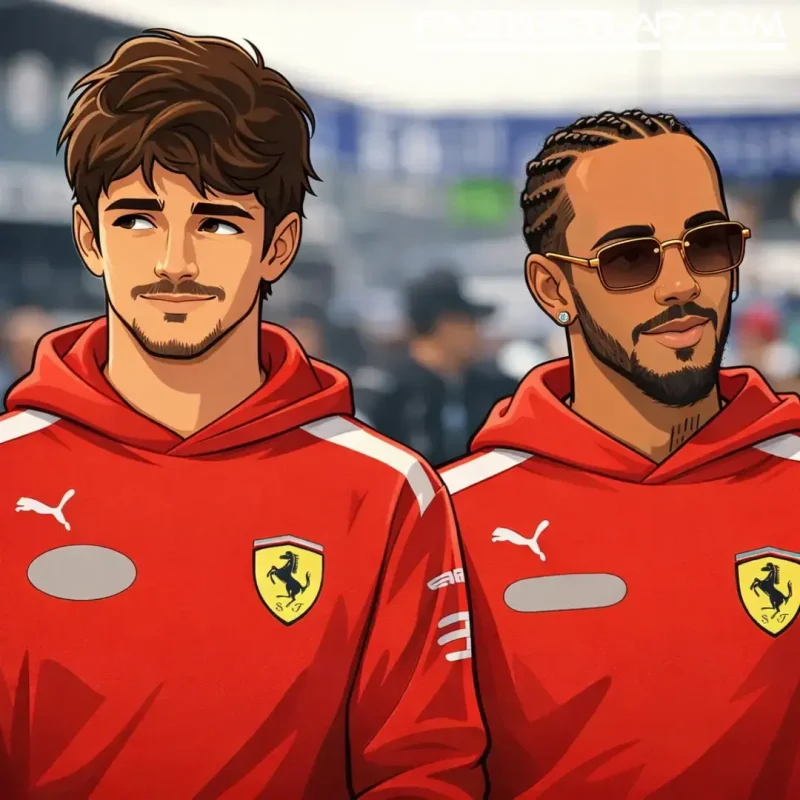
Rob Smedley has floated the idea that Hamilton could write a “Michael Schumacher story” at Maranello — a neat line, and one guaranteed to ricochet around the paddock. The comparison is irresistible because it’s Ferrari, because it’s Hamilton, because Schumacher is still the template for how you do this job properly at the Scuderia. But the obvious caveat sits right there in the numbers: Schumacher arrived at Ferrari in 1996 at 27. Hamilton turns 42 next January.
That doesn’t make the ambition any less real, but it does change the shape of it. Hamilton’s task isn’t to build a dynasty from scratch; it’s to take a team that believes it’s close, and turn “close” into titles before time makes the question irrelevant. In that sense, even a small disruption — a missed FP1 here, a heat protocol there — is part of the broader story. Ferrari’s margin for wasted weekends is smaller when the stakes are this high and the timeline is this loud.
So Austria begins with two teams sacrificing Friday mileage for the bigger picture, an FIA temperature watch that could force changes before the cars even turn a lap in anger, and the usual swirl of big-name commentary around the new era.
None of it will decide the championship on its own. But it will shape how smoothly — or how messily — the weekend comes together. And at this point in 2026, that’s often where the results start.