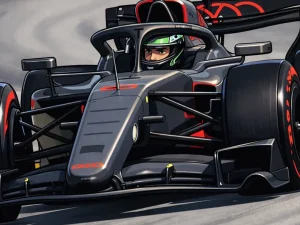
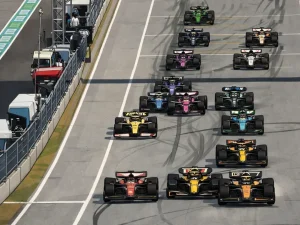
Lewis Hamilton rolls into Spielberg with the sort of momentum Ferrari have been chasing for years. Barcelona finally delivered the breakthrough: clean execution, genuine pace, and a win that didn’t feel like it needed asterisk or weather roulette to make it make sense. It’s revived the idea that 2026 might yet turn into a proper title fight — but the Austrian Grand Prix is where that notion either hardens into reality or starts to look like post-win wishful thinking.
The Red Bull Ring has a habit of stripping away hype. Short lap, big braking events, traction zones that punish rear instability, and enough high-speed commitment to expose any aero platform that isn’t fully settled. Ferrari’s leap has been in the chassis — the car’s now a challenger in the right conditions — and Hamilton’s win proved the team can execute under pressure. The question this weekend is more specific: can that performance travel to a very different circuit profile, in heat, with tyre management likely to matter as much as headline one-lap pace?
Because Mercedes still look like the reference package overall. Even in Barcelona, where Hamilton and Ferrari took the fight to them, Mercedes had the underlying speed to be “next best” and, on paper, Spielberg should be friendlier territory. Which makes this round feel like a quiet pressure point in the championship story: if Ferrari can hit Mercedes here, they can hit them almost anywhere.
At the centre of it is Kimi Antonelli, still leading the championship and still looking like the sharper Mercedes driver when it’s time to cash in. Barcelona was a reminder that even title leaders don’t get a smooth ride — Antonelli’s weekend unravelled with the kind of misfortune that’s been stalking George Russell all season — but he also didn’t need to do anything reckless. He was positioned to limit the damage until the retirement arrived. Now he gets a circuit that appears to suit the Mercedes strengths, and there’s a chance to reassert the sort of control that makes rivals start taking points math seriously before the season’s even hit its midpoint.
Russell, meanwhile, is stuck in that frustrating place where the ingredients are clearly there and the results keep arriving with an argument attached. Barcelona at least offered a reset: he ran ahead of Antonelli for much of the race and still finished a strong second. That’s not a driver floundering — it’s a driver waiting for the clean run that turns “close” into “consistent”. But the margins in a three-way fight are brutal, and Russell can’t keep donating weekends to bad luck, slow starts, or that one session where it doesn’t quite click. If he’s going to be more than a spoiler in his team-mate’s title bid, he needs a statement before the season’s rhythm sets.
And then there’s Red Bull, who arrive at their home race with a very different kind of tension. This isn’t about a one-weekend upgrade or whether the car likes kerbs; it’s about proving to Max Verstappen that the project still deserves his future. Contract clauses mean the paddock expectation is straightforward: Verstappen is on course to be a free agent next year. Red Bull’s job, starting now, is to make that decision uncomfortable.
The uncomfortable truth is the car is unlikely to be a regular race winner in its current form — that’s the blunt assessment surrounding the team — but this phase is about more than trophies on Sunday. It’s about trajectory. Are they closing the gap with conviction, bringing meaningful performance, reacting decisively when weekends wobble? Or are they drifting, hoping Verstappen’s loyalty and history do the heavy lifting? With the summer break looming as a natural deadline for big decisions, the calendar is doing Red Bull no favours.
Heat is going to add another variable that could scramble the usual pecking order. A European heat wave is expected to keep temperatures above 30°C across the weekend, with a hint of rain somewhere on the horizon. That combination can turn Friday running into a misleading guide and make tyre behaviour the real differentiator — especially at a track where tiny gains are amplified by the lap time.
Session times are straightforward, a traditional weekend format at Spielberg:
– Friday 26 June: Practice 1 at 13:30 local (12:30 UK), Practice 2 at 17:00 (16:00 UK)
– Saturday 27 June: Practice 3 at 12:30 (11:30 UK), Qualifying at 16:00 (15:00 UK)
– Sunday 28 June: Race at 15:00 (14:00 UK)
What makes Austria compelling isn’t just the headline “Mercedes vs Ferrari” framing — it’s the way the weekend can tilt the psychology of the top end of the grid. Another Hamilton win and suddenly Ferrari’s season has a shape; the garage stops talking about “progress” and starts talking about “targets”. An Antonelli response and Mercedes re-establish the idea that Barcelona was a contained setback rather than the start of a swing. A Russell weekend where everything finally aligns, and Mercedes have a very different internal dynamic to manage.
And if Red Bull can’t show something — not miracles, just momentum — the Verstappen subplot is only going to get louder in the background noise of every media session from here to August.
Spielberg doesn’t do subtle for long. By Sunday night, we’ll have a clearer idea whether Hamilton’s Barcelona was the beginning of a championship chase, or the high point of a comeback story that still needs time.