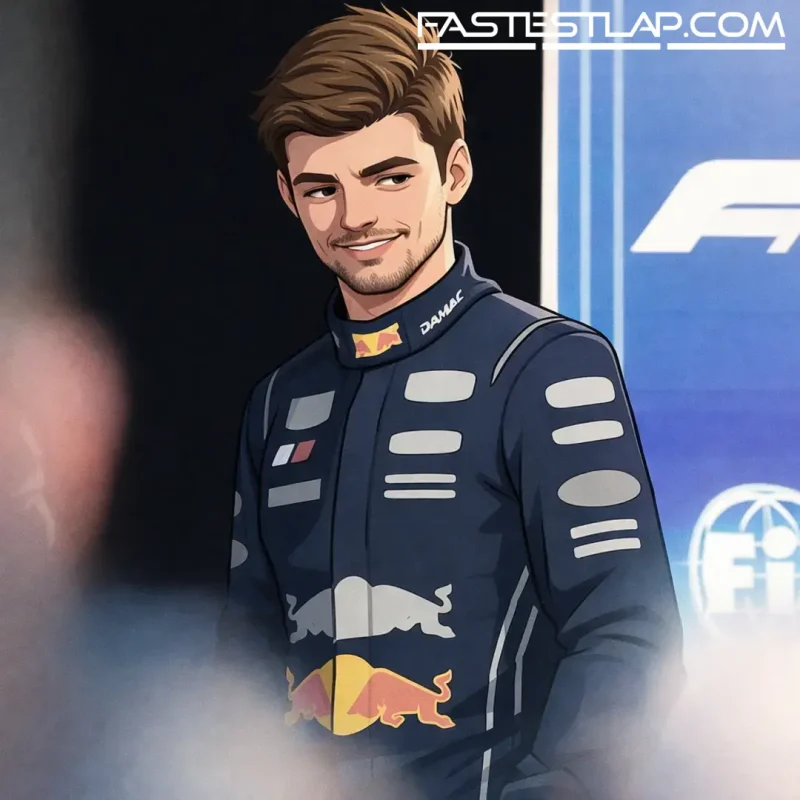
Max Verstappen walked out of Spielberg with his best Sunday of 2026 so far — and still sounded like a driver reading the small print.
Second place behind George Russell at Red Bull’s home race was the kind of result that normally kick-starts a narrative. The upgraded RB22 finally looked like a car Verstappen could lean on across a weekend, not just in flashes. He was in the pole fight, he was in the win fight, and over the final stint he reeled Russell in enough to make Mercedes glance at the pitwall screens more than once.
But he never got close enough to actually throw the car down the inside. Russell had the race under control when it mattered, and Verstappen’s charge stopped at “pressure”, not “attack”.
That distinction matters, because it’s exactly where Verstappen’s championship outlook sits right now. The numbers say he’s 98 points behind Kimi Antonelli at the top of the standings, and seventh in the drivers’ race. The bigger picture says Red Bull is fourth in the constructors’ table, still living too often in the world of damage limitation rather than domination.
So when Verstappen was asked the obvious question — if he’s done it once, why not again? — he didn’t bite. He didn’t even nibble.
“Yes, there are more races left than last year, but it’s a very big gap,” Verstappen said after the Austrian Grand Prix, keeping the focus firmly on Red Bull’s unevenness rather than his own momentum.
The reference point, of course, is last season’s late surge, when Verstappen nearly pulled off the kind of points swing that turns into paddock folklore. He clawed back 102 points of a 104-point deficit and almost caught Lando Norris for what would’ve been a fifth straight title — an extraordinary run that also flirted with the record for the biggest deficit overturned in a championship fight.
On paper, 98 points to Antonelli looks manageable by comparison. In practice, Verstappen’s answer was a reminder that comebacks don’t start with maths. They start with a car and a team that can deliver “normal” weekends as a baseline, not as a pleasant surprise.
“I think for us, we had very good pace,” he conceded. “But I think to fight for a title, we need to be more all-round.”
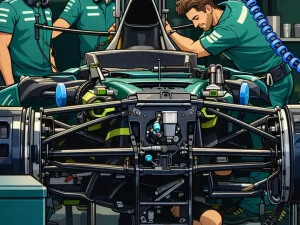
That word — “all-round” — was doing a lot of work. Because Verstappen wasn’t talking about a single weak corner type or a one-off strategy misstep. He was pointing at the kind of stuff that doesn’t show up in lap charts, but drags a season sideways: messy starts, operational sharpness, procedures and processes that can cost you two tenths here, a track position there, and — in a season where he’s already giving away nearly a hundred points — ultimately the whole narrative.
“We still have too many issues,” he said. “If that’s from the start to just procedural issues in the background that even I think you guys don’t know about, but I know about.”
It was an unusually candid window into where his frustration has shifted this year. Earlier in a difficult season, the frustration tends to be obvious: a snappy rear, poor tyre life, a car that doesn’t do what the driver asks. Verstappen now sounds like someone who believes the ceiling is coming back — but the floor is still too low.
And that’s the real takeaway from Austria. Red Bull’s upgrades worked well enough to put Verstappen in the conversation again, but one strong weekend doesn’t erase the bigger handicap: the team can’t afford “issues” anymore, not with Antonelli building a lead that changes the way everyone races.
Verstappen framed it without drama, but the message was blunt. Before Red Bull can talk about turning a gap into a fight, it needs to stop giving points away through the kind of unseen cracks that championship teams simply can’t have.
“It’s not a big criticism or whatever,” he added. “I think everyone is aware, we just always want to be better.
“We chase to be the best, so we just need to focus on all of those things, and then if you’re a bit more… rock solid, and we’ve shown that in the past, then, of course, it’s a different story.”
If there was any optimism, it came wrapped in restraint. Austria hinted that Red Bull can bring performance. The next step, Verstappen implied, is proving it can bring it cleanly — weekend after weekend — without the background noise.
“Hopefully it doesn’t take too long,” he said. “But we have still a little bit of work to do.”
In other words: don’t confuse a comeback story with a comeback car. Red Bull may have found speed at Spielberg. Verstappen is still waiting for the season to stop tripping over itself.