Silverstone did what Silverstone always does: it spat out a storyline that felt bigger than the chequered flag.
Charles Leclerc’s win wasn’t just a feel-good return to the top step after nearly two years without one — it landed with the timing of a well-judged undercut. Ferrari has been trending towards the front, and with Hungary and the Netherlands next on the calendar, there’s suddenly a sense that this wasn’t a one-off delivered by chaos, tyre luck, or a safety car in the right place. It looked, uncomfortably for the rest, like a car-and-driver combination that might actually be coming into its own.
And in doing so, Leclerc has also dragged the conversation back onto home soil in Maranello: what exactly is going on at the other side of the garage?
Lewis Hamilton’s recent dip in form has been impossible to ignore, but Leclerc winning in a way that felt composed and controlled reframes it. Ferrari’s SF-26 clearly has performance when it’s in the window, and Leclerc’s weekend at Silverstone made that window look wider than some have assumed. Whether Hamilton’s struggles are down to adaptation, set-up direction, or simply a run of weekends where nothing quite clicks, the uncomfortable truth is that Leclerc has provided a very clear reference point again.
Behind Ferrari’s headline, the championship picture took another twist. Kimi Antonelli and Max Verstappen both impressed enough to earn strong marks in the post-race verdicts, yet both left England empty-handed after late retirements. For Antonelli, it’s starting to feel like one of those title campaigns where the speed is real, the leadership is deserved — and the margins are still cruel.
A second DNF in three races is the sort of swing that takes a points advantage and turns it into a question mark. Antonelli’s lead is still a healthy 25 points, but it’s been trimmed in exactly the way a chasing pack needs: not by a rival out-driving him every Sunday, but by reliability and misfortune punching holes in the tally. Worse, this wasn’t a case of hanging on for damage limitation — he’d been reeling Leclerc in and was very much part of the fight for the win when it went wrong.
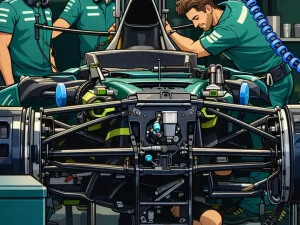
Verstappen’s afternoon had a similarly sour aftertaste, and Red Bull’s problems are beginning to read like a pattern rather than an outlier. A rear wing fault pitched him into the gravel — again. Two weekends in a row is the kind of repetition that starts raising eyebrows up and down the pit lane, because this isn’t about a driver overreaching on a damp kerb or getting it wrong in traffic. Aero-related failures are the sort that plant doubt in the driver’s mind and force engineers into a defensive posture, and Red Bull right now looks like a team reacting rather than dictating.
That Verstappen’s incident arrived on the same weekend Christian Horner was back in the paddock — 12 months after his dismissal — only added an extra layer of theatre. F1 loves its coincidences, and the paddock is never short of people willing to connect dots, even when the dots don’t want connecting. Still, the optics were unavoidable: the team’s internal narrative shifting again while the car’s external issues refused to go away.
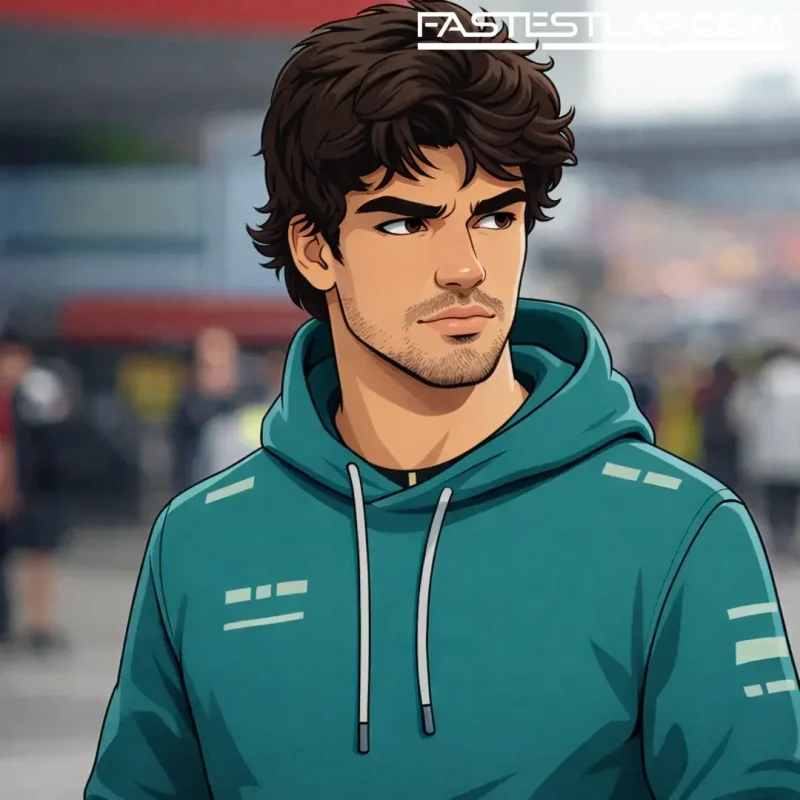
If all that was the grand opera, Lance Stroll’s race was a brisk lesson in the FIA’s modern track limits regime. Three separate five-second penalties in nine laps is about as clean a summary of “message received” as you’ll get from race control. Stroll picked up the trio of punishments for infringements between laps 33 and 42, and finished the day with six track limits breaches in total.
There will be the usual debate about whether that sort of punishment fits the crime, but the broader point is simpler: the system is designed to be automatic and dispassionate, and when a driver keeps nudging over the line, the sanctions stack quickly. In Stroll’s case, they stacked so quickly it became part of the broadcast narrative. At a circuit like Silverstone — fast, flowing, and brutally easy to extend on corner exit — it’s also a reminder that precision is still a performance differentiator, not just an aesthetic one.
Then there was the quietest little moment that didn’t feel quiet at all if you spotted it: Adrian Newey on the grid, leaning in to inspect Leclerc’s Ferrari SF-26. Newey has made a career out of seeing shapes and solutions other people miss, and he doesn’t do the casual glance the way most do. When he stops at a car, it’s because something has caught his eye.
Silverstone marked his third trackside appearance of the 2026 season, and his presence alone tends to tighten a few shoulders. In F1, looking is never just looking — it’s signalling curiosity, respect, and perhaps a touch of concern. That it was Ferrari’s car drawing his attention after a statement win only sharpened the edge.
So yes, the British Grand Prix gave us the usual mix: penalties, DNFs, and late-race heartbreak. But the bigger shift was this: Leclerc didn’t merely win at Silverstone — he made it feel repeatable. And in a season where the championship lead can still shrink quickly, and big teams are suddenly showing small cracks, that’s the kind of result that starts changing how rivals plan the next month, not just how they review the last weekend.