Toto Wolff isn’t in the mood for comfort blankets, and Mercedes’ 2026 season is the perfect case study in why.
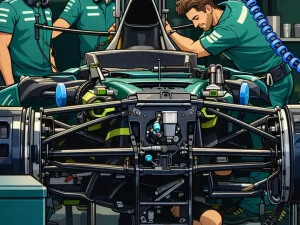
With the team setting the pace on outright speed but repeatedly being tripped up by nagging reliability faults, Wolff has made it clear he’d still take a quick car with “gremlins” over something bulletproof that leaves you staring at the rear wing of everyone else. It’s a very Wolff position to take: aggressive, slightly provocative, and rooted in the belief that championships are won by the organisation willing to live closest to the edge.
Mercedes has paid for that edge this year. Both George Russell and Kimi Antonelli have been hit by failures that have directly interfered with their title bids, turning sure points into nothing and tightening what should otherwise have been a more comfortable intra-team margin.
Antonelli’s bad luck has been particularly expensive. After retiring from the Spanish Grand Prix with a battery issue, he was set for a huge Silverstone haul only for a wheel shield failure to unravel his race. He’d been running second and, by the end, was hunting down Charles Leclerc for the win — until the problem dropped him down the order and left the points swing looking ugly. It was another punch in what’s otherwise been an impressive first half of the year at the front of the championship.
Even so, Antonelli still leads Russell by 25 points as the season nears its halfway point — a gap that has shrunk largely because Russell has had his own painful weekend. In Canada he was leading when a battery issue, similar to Antonelli’s in Spain, killed his race and handed away a win.
And yet Wolff’s message after the latest round was essentially: don’t change the DNA.
“I think we are such a performance [oriented] organisation on the chassis and engine side; we want to squeeze everything out,” he said. “I’d rather dial back a little bit on something that is really good, and fix some of the reliability gremlins rather than running behind performance.
“So far we’ve won seven races out of nine, and I’d rather have this than slow and reliable.”
That’s the key line, because it tells you how Mercedes is framing the trade-off internally. This isn’t a team unsure of its direction; it’s a team convinced it’s already built the most potent package and now needs to stop stepping on rakes.
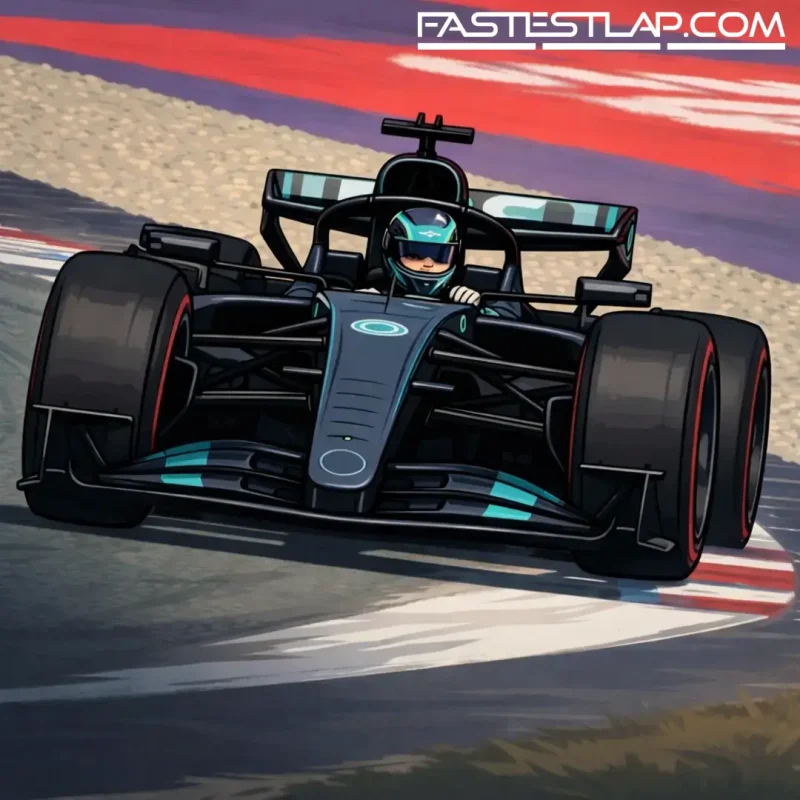
Russell’s weekend offered a different sort of frustration: not a terminal failure, but a performance leak that didn’t make sense on the face of it. He still finished second, but his race was complicated by a slow puncture on the W17 and, more tellingly, a straight-line speed deficit that couldn’t be pinned on engine power.
Wolff admitted the data made the issue obvious but diagnosing it was another matter entirely — the kind of problem engineers hate, because it sits somewhere in that murky territory between mechanical setup, alignment and drag, and doesn’t show up with a neat red warning light.
“He had, the whole weekend, a straight-line issue,” Wolff said. “We couldn’t see anything on engine power. It must have been down to some kind of mechanical situation, whether it was toe or something else, but definitely the data confirmed that he was down, but very difficult to identify.
“It was much better at the end of the race; we didn’t see that anymore, but nevertheless, something we need to understand.”
Mercedes is now planning extensive investigations before the Belgian Grand Prix — a telling detail in itself, because it suggests the team doesn’t view this as a one-off anomaly that disappears with a shrug. When a driver reports a persistent loss down the straights and the numbers back it up, the fear is always that it can reappear at the next track when you least need it.
Russell, for his part, sounded notably measured when asked about the championship situation. There was no theatre, no vague talk of destiny or “momentum” — just an unflashy assessment that Antonelli has, on balance, been the sharper of the two across the opening nine races.
Whether the points have been fair, Russell said, is debatable in the details. But in the round numbers, he felt the current 25-point deficit “is probably correct”.
“Whether the luck has balanced out or not, I’m not sure,” Russell said. “However, based on my performances and based on his performances over the course of these nine races, I think probably a 25-point gap is in his favour, is probably correct. He has done a better job than me this year to this point, so he deserves to be ahead of me.
“Whether it should be 25 points, whether it should be 10 points, whether it should be 35 points is a debate… I think anywhere from 10 to 30 points behind is probably about fair.”
He even flagged Monaco as part of the equation, pointing to the 15 points he feels he lost there after a drive-through penalty. It’s the kind of comment that reads less like complaint and more like a driver doing the maths in public — the way top-level teammates do when the margins start to matter.
From Mercedes’ perspective, this is what makes the Wolff quote so revealing. When you’ve won seven of nine, you don’t want to start redesigning the philosophy; you want to fix the breakages and keep your foot planted. But the sport has a way of punishing teams that assume they can tidy everything up on schedule. If the failures keep arriving, the “fast but fragile” stance stops sounding like swagger and starts looking like indulgence.
For now, Wolff is betting that Mercedes’ ceiling is worth the discomfort — and that reliability, the dullest virtue in F1, can be engineered back in without blunting the car that’s been winning races. The next few rounds will decide whether that confidence is clarity or complacency.