Kimi Antonelli isn’t buying into the paddock’s favourite new pastime: trying to crown Formula 1’s next Ayrton Senna before he’s even had time to properly move into his motorhome.
The Italian teenager has been the story of the season so far. Five straight wins, a title lead that’s starting to look more like daylight than a margin, and all of it achieved with the kind of unapologetic sharpness that invites the laziest of shortcuts in how people talk about him. When a driver strings results together like this at 19, the sport’s collective memory reaches for its most romantic reference points.
Antonelli, for his part, wants none of it.
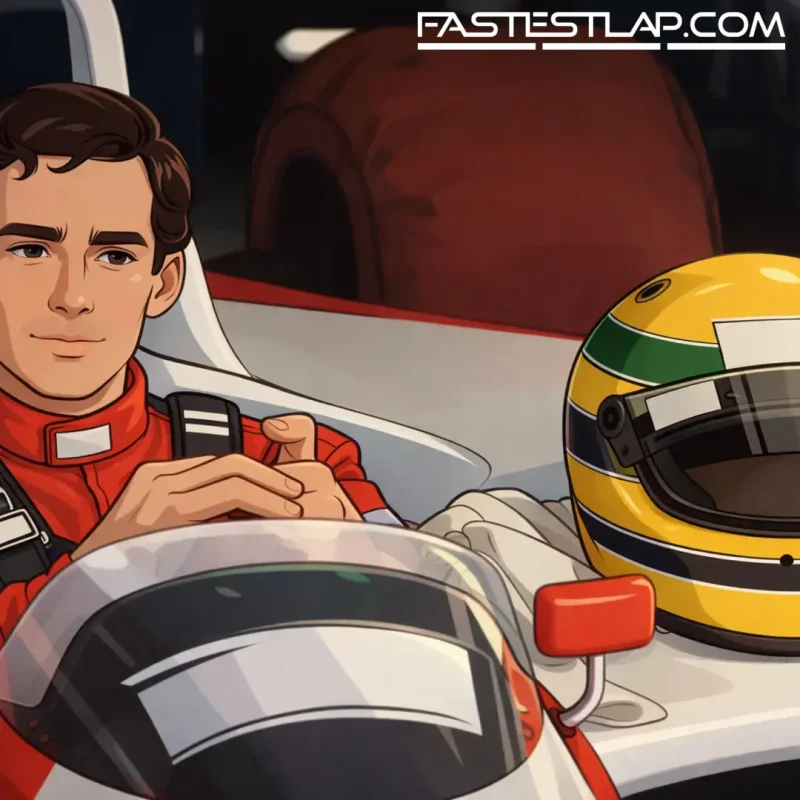
Asked about articles linking his surge to Senna, he insisted he hadn’t even read them — and, more importantly, said he doesn’t like the comparison.
“I don’t feel like I should be compared to someone who has made the history of the sport,” Antonelli said. “I haven’t done not even a single bit of what he’s been able to achieve, so I don’t feel like it’s very fair.
“Yes, he is my idol, he’s someone I get inspired by, but I just feel like it’s not really fair to get compared to him, especially at this stage of my career because it’s just the beginning.
“There’s still so much to achieve, so much to do, and so much to improve, and I feel like I’m still very far from his level.”
It’s a refreshingly self-aware answer from a driver currently being asked, week after week, to carry the weight of hype that normally takes a few seasons to inflate. Antonelli isn’t rejecting the admiration — he’s rejecting the premise. Senna isn’t a convenient adjective. He’s a yardstick that bends conversations into something unhelpful: less about what the kid is doing now, more about what history demands he becomes.
And it’s not hard to see why the comparisons have caught fire. His run really began to feel inevitable after he took his maiden victory in China, then kept on winning until he’d matched Lewis Hamilton’s best-ever streak. In a sport that’s always scanning for the “next one”, that’s catnip.
Monaco, though, is what really poured fuel on it.
Antonelli’s weekend in the Principality had the same effect these weekends always do: they turn performance into mythology. He took pole, controlled the pace from the front, and made a notoriously unforgiving race look almost procedural — a canter to victory, with nobody able to lay a glove on him. If you’re the sort inclined to open the history book at exactly the wrong moment, Monaco is where you’ll find Senna’s name stamped in bold.
Senna’s own Monaco legend spans the debut-day drama of 1984 — when he announced himself with a storming second place in a shortened race behind Alain Prost — through to six wins between 1987 and 1993, a run only broken by that infamous late-race crash while leading in 1988. And then there’s the pole lap in 1988, the one missed by the TV cameras, when he put 1.4 seconds on Prost and later described it as something beyond conscious control: “a different dimension.”
That’s the problem with Monaco. It doesn’t just flatter drivers; it tempts everybody else into trying to make art criticism out of lap time.
Antonelli’s response reads like a driver already learning one of the harder skills in modern F1: managing the narrative without sounding like you’re managing it. He didn’t swat the question away with PR mush, and he didn’t perform humility for effect. He simply drew a line between inspiration and imitation, between admiring an icon and being asked to wear his silhouette.
That matters, because the comparison isn’t just unfair — it’s limiting. Senna’s story is finished, complete, preserved in amber. Antonelli’s is barely a prologue, even if the opening chapters have been ludicrously strong. Five wins and a championship lead before 20 is headline stuff, but it doesn’t obligate him to become a tribute act, or to have every aggressive overtake framed as a “Senna-esque” moment.
If anything, Antonelli’s reluctance hints at a driver who understands that the fastest way to lose your footing is to start running in someone else’s shoes. The form is real, the speed is obvious, and the title picture is tilting in his direction — but he’s right to insist the work is only starting. F1 has a habit of building statues early, then acting surprised when the human being inside them struggles to breathe.
For now, Antonelli is doing the sensible thing: racing like himself, speaking like himself, and leaving the sainthood to the historians.