The paddock always treats Saturday morning in Barcelona like a final exam. With the Circuit de Barcelona-Catalunya offering every type of corner you can throw at a modern F1 car, FP3 isn’t just a warm-up before qualifying — it’s the last clean hour to decide whether you believe in what you built on Friday.
That’s the mood as the 2026 Barcelona-Catalunya Grand Prix weekend rolls into its final free practice session, running from 12:30 local time, with 60 minutes on the clock and a very familiar track ready to expose anything slightly out of balance. If your car isn’t rotating where it should through the long, loaded stuff, or it’s sliding its tyres into a mess by the final sector, you don’t need a debrief to tell you you’ve got work to do.
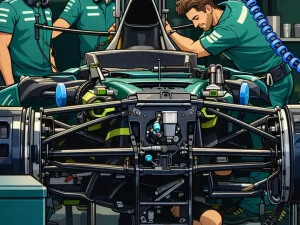
FP3 at this venue tends to strip teams down to priorities. Some will spend the first part of the session chasing a baseline they’ve somehow not found yet — front-end bite, rear stability, a tyre that doesn’t overheat as soon as the driver asks a little more from it. Others, typically those already comfortable, will look almost boring: a couple of measured runs, a quiet tweak here and there, then a qualifying simulation to lock in wing level and ride-height window.
And the timing matters. By now, everyone has a notebook full of Friday data and a list of overnight changes made in the hope of finding something — a cleaner balance, a more consistent tyre, a car the driver can lean on when the grip comes up. FP3 is where those decisions either look smart or start to look expensive. A car that suddenly wakes up in the first 15 minutes can transform the complexion of the afternoon. One that doesn’t respond at all can send the engineers into damage limitation mode for qualifying: minimise the loss, protect track position, hope Sunday’s strategy can rescue the points.
For drivers, it’s the most psychological hour of the weekend. You’ll see them probing the braking zones, inching closer to the kerbs, checking whether the car will stay with them as they build speed — because whatever confidence they can bank now is what they’ll spend in Q2 when the track gets busier and the margins get smaller. Barcelona has a way of punishing doubt: one hesitant turn-in becomes a compromised exit, and that becomes a lap time that never really recovers.
There’s also an unspoken political layer inside every garage. FP3 is where the “we’re close” radio talk stops and the stopwatch starts telling the truth. If a team brought an adjustment path for the weekend — a direction they believe is faster — Saturday morning is when they decide whether to fully commit. Get it right and you look decisive. Get it wrong and everyone’s suddenly asking, quietly but pointedly, why you moved away from what was working.
Expect the session to follow the usual Barcelona rhythm: early installation and system checks, then a gradual escalation into low-fuel runs as teams try to put a tidy lap together before qualifying. The track’s sensitivity to balance means you’ll often see small setup variations explored even within a single run plan, with drivers feeding back almost corner-by-corner nuances. It’s not glamorous, but it’s where laps are made.
Whatever happens, FP3 won’t hand out trophies — but it will draw the map for the rest of Saturday. The teams that look settled here tend to look sharp when it counts. The ones that don’t? They’re the ones you’ll see rolling the dice on run plans in qualifying, chasing lap time with urgency rather than clarity.