
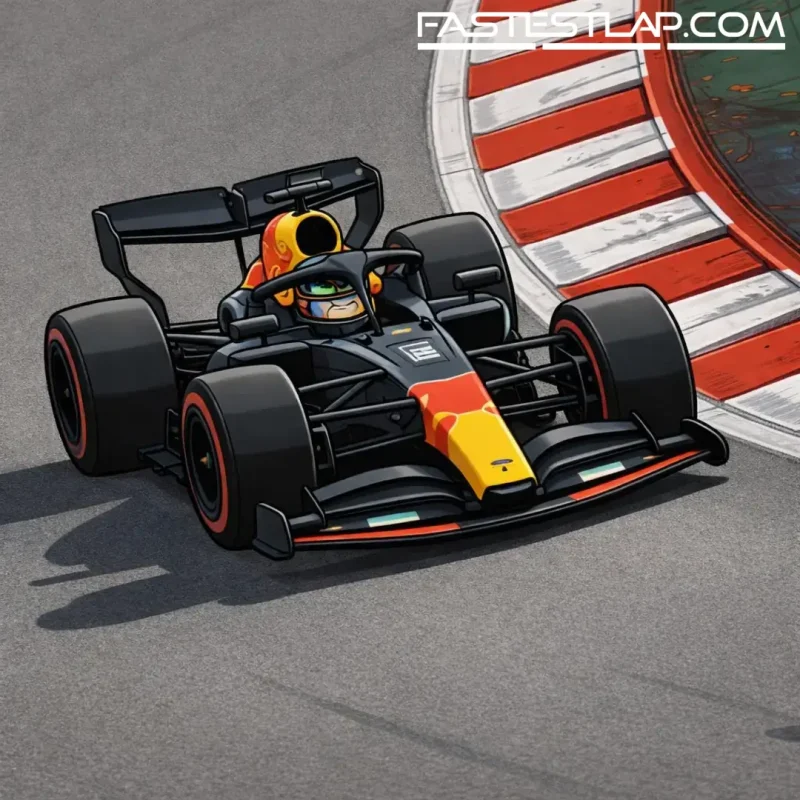
Qualifying at the 2026 Barcelona-Catalunya Grand Prix has that familiar, slightly unforgiving feel to it: months of preparation, a full weekend of set-up work, and then 45 minutes where any small mis-step gets magnified by the stopwatch.
The session gets underway at 16:00 local time (15:00 in the UK), and with the Circuit de Barcelona-Catalunya once again hosting one of the calendar’s purest “tell me what you’ve really got” Saturdays, teams will be leaning heavily on execution as much as outright pace. This place doesn’t flatter a car that’s peaky, or a driver who needs three laps to switch on.
The format is the standard three-stage knockout: Q1 runs 18 minutes, Q2 15, and Q3 12. That sequencing matters around Barcelona, not because the rules are different, but because the circuit tends to punish anyone who tries to get cute with timing. Leave it late and you’re vulnerable to a yellow flag, traffic through the final sector, or simply not having enough margin to do a second attempt properly. Go early and you risk being the benchmark that everyone else improves on as the track comes to them.
And it usually does come to them here. Barcelona qualifying has a habit of evolving quickly once rubber goes down, particularly in the final minutes of Q1 and Q2 when the circuit is at its busiest. That puts real pressure on the out-lap and the gap a driver leaves to the car ahead — too close and you’ll cook the tyres and lose the front end through the long corners; too far and you’re arriving at the line with everything gone cold. It’s one of those tracks where a “good” out-lap is almost a qualifying lap in itself.
What tends to separate the sharp operators is how cleanly they stitch the lap together. The Circuit de Barcelona-Catalunya is still the kind of place where you can’t hide a weak sector with one heroic braking zone. It’s about committing to long-radius corners, keeping the platform stable, and carrying speed without scrubbing the front tyres into early retirement. Get that wrong and the lap doesn’t just lose a tenth — it bleeds time all the way to the chequered flag.
There’s also an underlying strategic tension that always colours Saturday here: where to place your risk. A driver chasing the perfect lap can pay for it instantly if the rear steps out over a kerb or the front washes wide at the wrong moment. But being conservative is its own gamble, because Barcelona’s grid positions tend to matter on Sunday. If you don’t nail your one-lap rhythm, you can spend the race staring at a rival’s gearbox.
That’s why Q1 is rarely a formality, even for the front-runners. It’s long enough for two runs, but short enough that any disruption — a compromised first lap, traffic, or a driver forced to abort — can start a chain reaction. Teams will want to bank something representative early, then decide whether to chase extra lap time or protect tyres and hardware for later.
By Q2, the margins usually tighten and the session becomes less about raw bravery and more about being clinical: getting the car into the right window, hitting the prep lap, and not getting dragged into someone else’s mess. The drivers who look unruffled are often the ones with the clearest plan — not necessarily the ones taking the biggest bites at Turn 1.
Then comes Q3, 12 minutes of high-pressure minimalism. There’s barely room for more than two proper attempts, and if you’re not decisive with your run plan you can end up with one shot, not two. That’s where teams earn their money on the pit wall: releasing their cars into the right gaps, reacting instantly if a lap gets scrubbed, and making sure their driver isn’t forced into a compromised build-up.
From a paddock perspective, Barcelona tends to sharpen arguments, too. If a team’s car is fundamentally strong, it will usually show itself here. If it’s sensitive, it will usually bite. Qualifying is often when the tone for Sunday — and sometimes the mood inside a garage — is set. A clean, composed session can make a race feel manageable before a wheel has turned. A messy one can leave everyone firefighting through the night.
Either way, the brief is brutally simple: put the lap together, when it matters, with no excuses. That’s Barcelona. It doesn’t always deliver the most chaotic qualifying sessions, but it reliably delivers a fair one — and for teams trying to understand where they truly stand in 2026, that’s exactly the point.









