The paddock barely had time to exhale after Monaco and already the focus has swung to Barcelona — now under its Barcelona-Catalunya branding — with three of the more telling subplots of the early 2026 season converging in one place: teams banking mandatory rookie mileage, Alpine rolling the dice in the stewards’ room, and Lewis Hamilton sounding almost startled at how quickly Ferrari has put him into the thick of it.
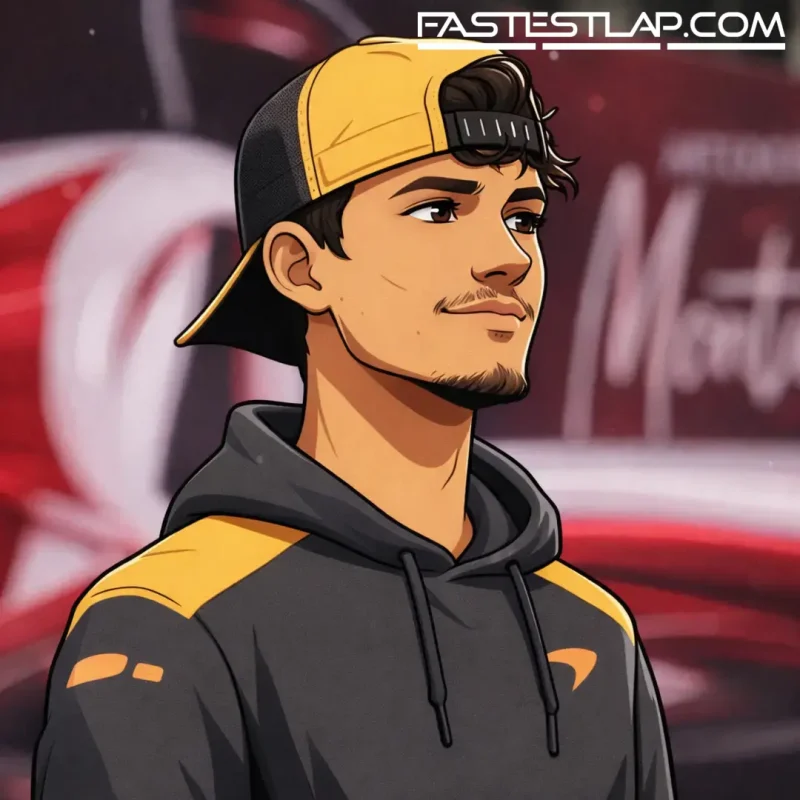
McLaren is the headline grabber on the sporting side. Lando Norris will sit out FP1 in Barcelona to hand the car to Leonardo Fornaroli, the reigning Formula 2 champion, for his first taste of an official grand prix weekend session. Fornaroli hasn’t landed a full-time F1 seat straight out of F2, but McLaren has clearly kept him warm with plenty of previous-car running since bringing him into its junior structure.
There’s an obvious, practical reason teams are doing this more aggressively: the Friday mileage is valuable and the calendar doesn’t stop. But there’s also a very 2026 undertone here. Even with McLaren’s current line-up tied down beyond next season, nobody in the pit lane is naïve about how quickly the driver market can become liquid once the competitive order shifts. FP1s like this aren’t charity runs; they’re audits. Fornaroli will be judged on the boring stuff — how cleanly he works through the programme, how quickly he finds the operating window, whether the engineers trust the feedback — because that’s what teams lean on when the phone starts ringing in earnest.
Williams is playing a similar hand, but with a slightly different rhythm. Luke Browning will take over Alex Albon’s car in FP1 on Friday, and he’s not just getting a one-off. Williams has confirmed Browning for the next two FP1 outings: Albon’s seat in Barcelona, then Carlos Sainz’s car in Austria two weeks later.
For Browning, it’s a particularly modern balancing act. He’s been combining Williams reserve duties with a Super Formula campaign in Japan, and the value to Williams is as much in having a driver match-fit and immersed in high-downforce racing as it is in the headline “young driver” box being ticked. For Browning, the logic is simpler: you don’t get many clean auditions in F1 machinery that comes with real engineering attention and meaningful track conditions. Two consecutive Fridays is a signal Williams wants more than a courtesy cameo — it wants a proper read.
While the rookies are being measured on stopwatches and radio clarity, Alpine is heading into Barcelona with paperwork and bruised feelings from Monaco. The FIA has scheduled a hearing for Thursday afternoon after Alpine lodged a Right of Review petition over the penalties that hit Pierre Gasly.
Gasly’s Monaco still stings because it looked, for a moment, like a proper statement result. Instead, two instances of pit-lane speeding brought a 10-second time penalty that dropped him from third to seventh at the flag — a swing that hurts in any season, but especially in one where the midfield points arithmetic is already shaping up to be vicious. Gasly didn’t hide the emotion afterwards, describing himself as “heartbroken”, and Alpine has clearly decided it has enough grounds — whether procedural or evidential — to at least force the conversation.
The hearing itself won’t be about sympathy; it’ll be about whether the petition meets the threshold to be heard in full. If Alpine clears that gate, there’s then the more dramatic possibility of Monaco’s final order being revisited. That’s rare territory, and it’s why Thursday matters: Alpine isn’t just fighting for seven points, it’s testing how elastic the regulatory framework is when a big result has already been banked, celebrated, and filed away.
Off-track, one of the weekend’s more quietly telling Monaco moments came via a set of photos from the grid: Adrian Newey, notebook in hand, doing what Newey does — drifting between cars and details with the air of a man who never really switches off. He was seen taking a close look at Alpine and McLaren machinery ahead of the race.
None of that needs dressing up as a conspiracy; Newey has always been an observer as much as a designer. But in a season where every small gain feels amplified, the sight of him inspecting rival solutions will always carry an extra charge. Even if it’s just curiosity, it’s the sort of curiosity that has shaped title fights before.
And then there’s Hamilton — whose tone in recent rounds has been the most revealing part. After back-to-back second-place finishes, he’s climbed to P2 in the Drivers’ Championship, a fact he sounded genuinely surprised by given how he characterised Mercedes’ early-season pace. He also insisted his first win as a Ferrari driver “couldn’t be closer”, which is about as close to a public promise as Hamilton ever gets without making one.
The immediate sting for Mercedes is that those results have moved Hamilton ahead of George Russell in the standings, with Russell failing to score over the same period. More broadly, the competitive picture has sharpened: Kimi Antonelli has been the last car standing between Hamilton and victory in each of the last two races. That’s not just a storyline, it’s a trendline — Ferrari is close enough now that the difference between “nearly” and “done” is going to come down to execution, upgrades, and the kind of weekends where you don’t leave anything on the table.
Barcelona tends to strip the romance out of form and expose what’s real. This year it also arrives loaded with consequences: rookies with a rare chance to look credible in serious cars, Alpine trying to claw back a Monaco podium by legal argument, and Hamilton sensing the door to a first Ferrari win is no longer theoretical. In early June, that’s already a lot of pressure for a Friday morning.