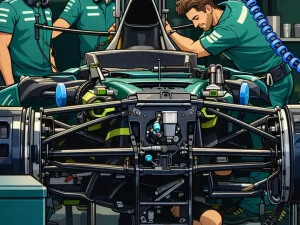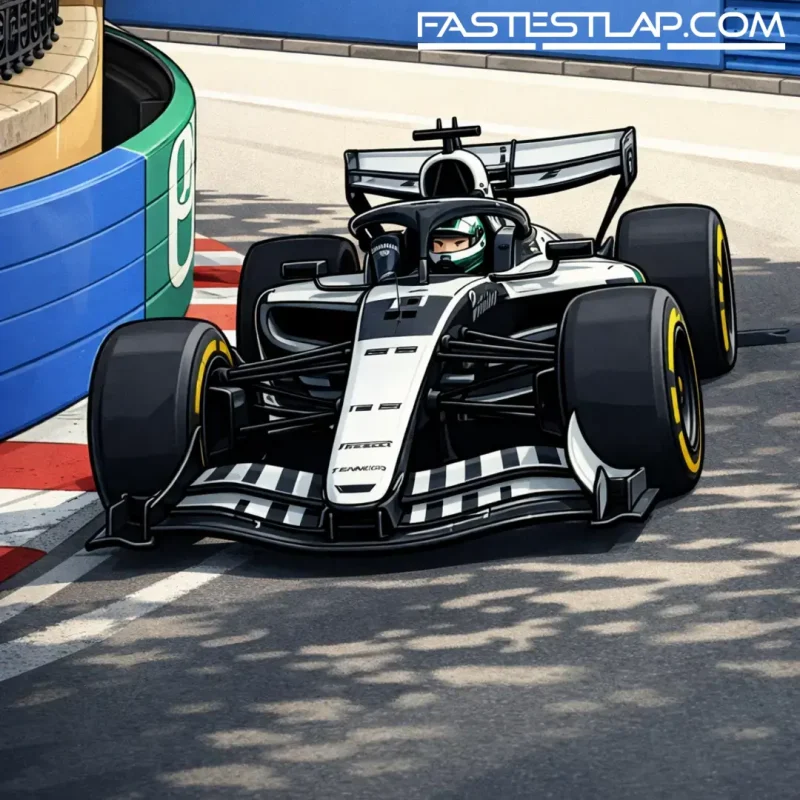
Cadillac’s first seven grands prix in Formula 1 have been almost suspiciously… normal. No public stumbles, no panicked U-turns, no weekly crisis meetings played out through the media. Just a tidy, competent new team doing the unglamorous work at the back of the grid and quietly making sure it looks like it belongs.
And that, Graeme Lowdon reckons, is where the danger starts.
“It’s always a two-edged sword,” the Cadillac boss said in Monaco, where the team rolled out a brand-new hospitality unit with the sort of polish that usually takes newcomers a season or two to find. “You turn up looking the part, then people are expected to be at that level almost instantly.”
Cadillac might still be last in the Constructors’ Championship, but the early competitive baseline is better than many expected from a debut operation that had to fight its way onto the grid in the first place. The MAC-26 has been in the mix with established midfield machinery on raw pace at times, and Cadillac has even found itself trading blows with Aston Martin’s AMR26. Aston Martin is a point to the good thanks to Fernando Alonso’s 10th in Monaco, but Cadillac left that weekend feeling it had let something slip: Sergio Perez finished ahead of Alonso on the road and would likely have banked a point himself but for a time penalty.
Those are the kinds of “almost” moments that change a paddock conversation overnight. When points look plausible rather than mythical, the tone inside a garage shifts. So does the external noise.
Lowdon’s argument is that an encouraging start can become its own trap. Every update that works — and Cadillac has managed to bring something to “pretty much every race”, as he puts it — stretches the elastic on expectation. The team isn’t talking itself into fairy tales, but it’s also not allowed the luxury of being treated like a plucky newcomer learning the ropes anymore, because it has already demonstrated it can do the basics properly.
“If you make a step forward, it raises everyone’s expectations, but that comes with the territory,” Lowdon said. “You can either see them as a massive problem, or you can embrace them. I think it’s better to embrace them.
“But you can get into that territory where the expectations are just too high. The way around that is we have huge respect for all the teams that we compete against… making sure everyone really understands how competitive this game is.”
That’s the tightrope for any new outfit under the cost cap: you need early competence to convince sponsors, attract staff and keep internal belief high — but the moment you look functional, you’re judged by the same standards as teams with decades of institutional memory.
Lowdon, at least, has lived this before. He was central to getting Virgin Racing onto the grid in 2010, stayed through the Marussia years, and then disappeared from the F1 front line after resigning late in 2015. His return with Cadillac this season — beginning in Melbourne — has looked like the work of someone who knows exactly where new teams get caught out.
A big part of his pitch is that “cost cap” isn’t new to him as a concept, even if the sport’s modern version has formalised it. As he dryly noted, much of his motorsport career was cost-capped simply by “reality”. And that experience shapes the way Cadillac has approached its launch: not just building a car and hiring race engineers, but putting the operational scaffolding in place early enough that the machine doesn’t seize up the first time the calendar turns brutal.
He pointed to the hospitality unit as an example of how far back the planning started — the project began “miles before we got an entry” — because Cadillac didn’t want to arrive half-built and apologetic. It’s an interesting tell, because hospitality is often dismissed as paddock vanity. In reality, getting it right is a proxy for whether a team can execute, travel, hit deadlines and integrate with the circus without drama. Monaco, of all places, exposes any weakness in logistics within about five minutes.
“If we’re not ready, we won’t be ready — and it’ll be very visible,” Lowdon said. “The 2026 Monaco Grand Prix doesn’t wait for us.”
What tends to get overlooked in the conversation about new teams is that they’re doing two jobs at once: racing now and building for later, with the “later” work often happening on multiple continents. Lowdon highlighted Cadillac’s parallel infrastructure push — a major factory build in Indianapolis, plus new facilities in Charlotte and Silverstone — while also running the week-to-week demands of its first F1 campaign.
“All of these projects are huge projects on their own, as well as building the Formula 1 team, and operating a team at the same time,” he said. “The two are really different.”
That’s also why he’s wary of taking too much credit for the clean start. Lowdon is keen to frame it as a product of hiring well and getting committed people into the right roles early, rather than some personal masterplan. But there’s an edge to how he talks about perception: Cadillac’s sharp presentation has helped the team be “accepted… very quickly”, he said — yet that welcome comes with the immediate expectation that it performs like everyone else.
It’s the familiar paradox of modern F1. The sport wants new blood and fresh brands, but it has very little patience for the messy bit where newcomers learn. Cadillac has, so far, avoided giving anyone an easy punchline, and the MAC-26’s steady development has kept it in touch with the teams it needs to measure itself against.
Now comes the harder phase: staying disciplined when the paddock starts whispering that points are there for the taking, that a “proper” scalp is imminent, that the debut year should be more than just respectable. Lowdon’s message is essentially a warning against believing your own good press — even when the evidence says the groundwork is real.
Bold ambition is one of the “core values” Cadillac talks about internally, he said, but he’s adamant that doesn’t mean swagger. “That’s not being blasé,” Lowdon insisted. The intent is to be “additive” to F1 and build something competitive — while remembering that this is, in his words, “the most difficult team game in the world”.
Cadillac’s first seven races suggest it understands that. The next seven will tell us whether it can keep its head once the rest of the paddock starts expecting more than competence.