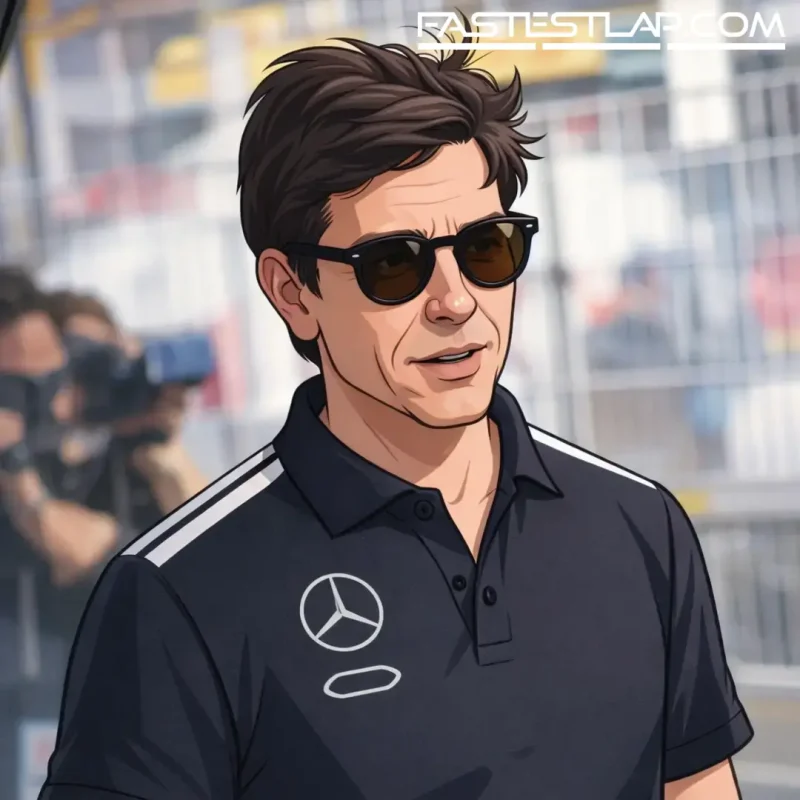
Toto Wolff has made it pretty clear Mercedes aren’t willing to just shrug off the Monaco pitlane speed saga — even if they know, deep down, that the chances of getting anything meaningful back for George Russell are slim.
Pierre Gasly’s return to the podium after Alpine successfully triggered a right of review has left more than one rival team feeling like they’ve been mugged by the calendar as much as the regulations. Five drivers were found to have exceeded Monaco’s 60km/h pitlane limit, yet only Alpine took the issue back to the stewards within the relevant window. Their case hinged on what was accepted as “new evidence”: the official timekeeper acknowledged an error in the way the speed had been measured. Two penalties disappeared, and with them a chunk of Monaco’s result.
For Mercedes, the frustration isn’t theoretical. Russell was caught in the same net, and the knock-on effects spiralled. After being penalised for speeding, he then failed to serve that penalty correctly — prompting a drive-through that effectively ended any hope of salvaging a meaningful finish. He came home 12th.
Speaking in Barcelona, Wolff described the whole episode as one with “massive implications” for Russell. Mercedes’ argument is straightforward: the sport has now accepted the underlying measurement was wrong, and Russell’s race paid the price before anyone could act on that fact.
“It was a very unfortunate situation,” Wolff said. “And clearly we can all learn from that.
“Because you know that wasn’t something that just came up on Sunday, that suddenly 10 cars that were in breach of pitlane speeding… it’s something that was flagged before for us as a team, and especially for George, massive implications.
“He had difficult qualifying sessions, but he moved all the way back up there, and clearly, without the penalty, without us not serving it correctly, it would have been a totally different outcome for his race.”
That last line is the key nuance: Mercedes aren’t just complaining about a black-and-white “wrong penalty”. They’re staring at a chain reaction. If the original speeding call was flawed — as Alpine’s review suggests — then the entire sequence that led to Russell’s drive-through looks fundamentally different. In Wolff’s mind, you’re not only removing a sanction; you’re removing the conditions that caused the team to mis-execute the response to it.
He stopped short of claiming Russell was a guaranteed podium finisher, but he didn’t hide the broader point: in a championship that’s already being framed around small margins, losing what Wolff equates to 20 seconds of race time through a drive-through can shape a season.
“Whether he would have made the podium or just not is a different question, but a different outcome would have had an impact on his championship situation,” Wolff said.
The bigger irritant inside Brackley is the asymmetry of it all. One team gets a second bite because it moved quickly, the others are left to stew because the clock ran out before the timekeeping issue came to light. PlanetF1.com understands McLaren and Red Bull intend to challenge the stewards’ decision — a sign this isn’t settling quietly.
Mercedes, though, aren’t looking to take Gasly back off the rostrum. Wolff was explicit on that. What Mercedes want is for the FIA to explain what, if anything, can be done for the drivers and teams who were penalised under the same incorrect assessment but didn’t — or couldn’t — get the evidence in time to pursue review.
Asked about his reaction to Gasly’s penalties being overturned, Wolff said Mercedes had a “right to be annoyed” and that the team would be exploring possible “remedies” with the FIA.
“Now we are assessing, as we speak, what the Gasly situation does for George,” he said. “Obviously, there’s certain timing restraints, we wouldn’t appeal the Gasly results, certainly, but we would like the FIA to look at what could be the remedies for George’s race.
“I think we are having some timing limitations. That, and some other legal constraints, but definitely we have a reason to be annoyed, and I wish we could have had those conversations before the race on Sunday.”
This is the uncomfortable grey area motorsport keeps stumbling into: the rules are written to protect final results, yet the sport also wants to be seen correcting clear errors. The right of review exists for that reason — but it’s rigidly time-bound, and once the paddock moves on to the next round, “sporting justice” gets filtered through legal process.
Wolff conceded Mercedes are unlikely to get Russell’s penalties unwound. But he also made it sound like not trying would be negligent.
“For George, drive through if it didn’t happen at the end, is equivalent of 20 seconds race time,” Wolff said. “What would 20 seconds race time have meant for his result?
“Do we think that we realistically have a position, a chance of reverting the result? I don’t think so, but we definitely have to give it a go if we see that there is a millimetre of chance to do so and bring him back to whatever it was before.”
Even if nothing changes on paper, Mercedes’ agitation matters. Not because Monaco will be re-run in a courtroom, but because this is exactly the kind of episode that forces the FIA to clarify how it handles timekeeping errors, what constitutes “new evidence”, and whether the sport is comfortable with outcomes hinging on who gets to the legal mechanism first.
For now, Gasly has his podium back. Mercedes have their lawyers on speed dial. And the rest of the pitlane has another reason to look at Monaco and mutter that it always finds a way to be messy — even after the chequered flag.