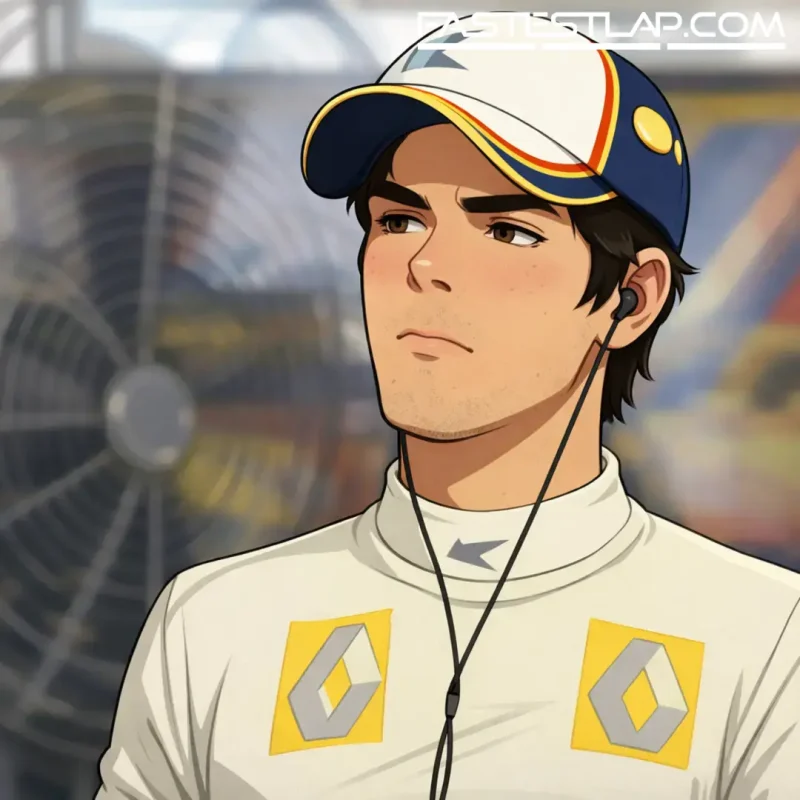
Nelson Piquet Jr has never been short on candour about how his Formula 1 story unravelled, but his latest reflections land with a particular sting given where Alpine finds itself in 2026.
Speaking about the management arrangement that tied him to Flavio Briatore during his Renault stint, Piquet called it “the biggest mistake” he and his family made. Not the wrong move to the wrong team, not a misread of his own readiness for the job — the choice of who was meant to be in his corner.
“The biggest mistake for me was having Flavio as my manager, as my mentor,” Piquet said. “That was our mistake – mine and my parents’ – not having someone we could trust. We should have had someone to advise us, to protect my interests.”
It’s the sort of line that cuts through the nostalgia that can creep into any look back at that era. Piquet’s point isn’t especially complicated: in a paddock where everyone has an agenda, you’re finished if you don’t have an advocate whose agenda aligns with yours. His frustration, as he tells it, was that he never really had that.
Briatore, he argues, was running a driver “pool” — not nurturing a single career. “He had six, seven or eight drivers… I was just a number in the game,” Piquet said. “He did whatever he needed to do with the puzzle to make the biggest profit.”
That matters because it frames Piquet’s time at Renault less as a straight fight he lost to Fernando Alonso, and more as a situation where the imbalance was baked in before a wheel even turned. Piquet arrived on the grid in 2008 and made 28 starts for the Enstone team, but by the 2009 summer break he was out, having been comprehensively overshadowed by Alonso.
Briatore’s history at Enstone is well-worn: the Benetton years, the Schumacher titles, then the second act with Renault and Alonso almost a decade later. He was also, by Piquet’s account, the wrong kind of presence to have as both the team’s powerbroker and your personal “mentor” when you’re trying to establish yourself.
That relationship is inseparable from what came next. Piquet’s exit in 2009 reopened a wound from the 2008 Singapore Grand Prix — the deliberate-crash scandal that eventually exploded into public view after Piquet went to the FIA about the circumstances surrounding his race-ending incident at Marina Bay. He was offered immunity; Briatore received an FIA ban that was later overturned by a French court.
There’s no neat way to write about that episode without acknowledging how it has defined the public perception of everyone involved. For Piquet, it became the shadow over a career that, on paper, barely had time to breathe. For Briatore, it’s the stain that never quite disappears, even as the sport has steadily moved on.
And yet here we are: Briatore is back at the same factory, effectively running the organisation again. Alpine — Enstone by another name — has appointed the 76-year-old as a consultant under former Renault Group CEO Luca de Meo, with Briatore operating alongside managing director Steve Nicholls.
That context gives Piquet’s comments extra bite. They’re not just a former driver re-litigating old pain; they’re a reminder of how power in F1 can be cyclical, and how quickly reputations become “complicated” rather than disqualifying.
Piquet, now 40, has long since built a second life in racing away from grand prix weekends. He won the Formula E title in 2014-15 and has continued competing across endurance racing, stock cars and touring cars. There’s a sense, listening to him, that the anger isn’t about what he didn’t achieve in F1 so much as the feeling he was never properly equipped to fight for it.
Briatore, meanwhile, remains involved in driver management circles too, with Franco Colapinto linked to him — even though Colapinto is officially managed by Bullet Sports Management. Briatore previously managed Jack Doohan, though that relationship ended when Doohan left the team at the end of the 2025 season.
Piquet’s central argument is one most drivers would recognise, even if they’d phrase it more diplomatically: young careers are fragile, and the people you entrust with them can make decisions that are rational for their portfolio but ruinous for your trajectory. In that environment, “mentor” can be just another word — until it isn’t.
Alpine will insist, as any modern team would, that governance and accountability look very different now than they did in the late 2000s. That’s probably true. But Formula 1 is still a sport where relationships are leverage, and where yesterday’s characters reappear in today’s deals with remarkable ease.
Piquet Jr’s warning, ultimately, isn’t about Briatore alone. It’s about what happens when a driver becomes a chess piece rather than a project — and how, once you’re treated that way, it’s almost impossible to rewrite the story on your own terms.