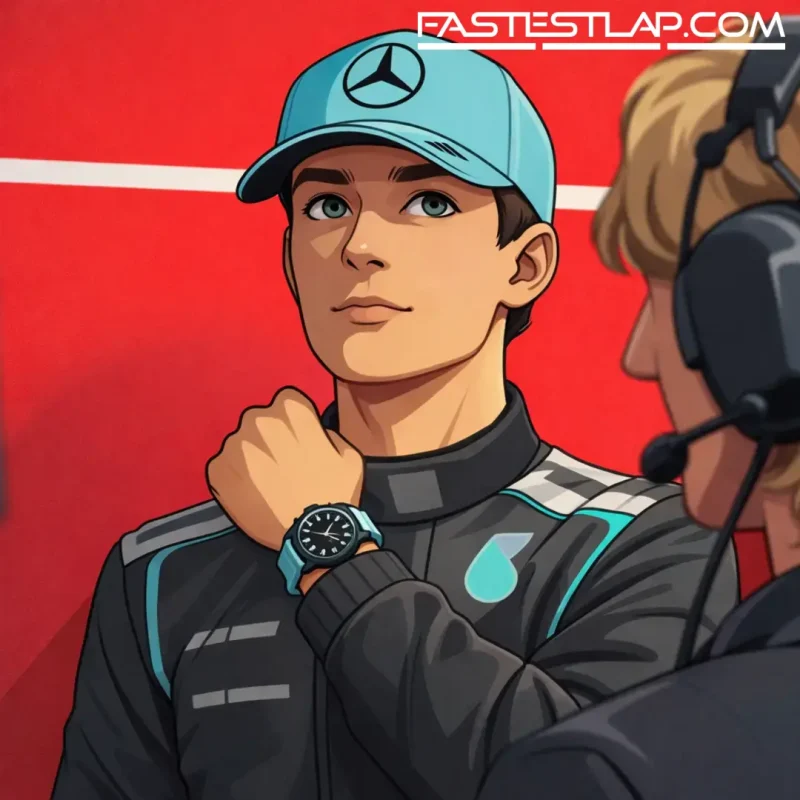
Mercedes is bracing itself for a long, slightly awkward wait before it can say with certainty why George Russell’s Canadian Grand Prix unravelled so abruptly — and why it happened without so much as a flicker of warning on the pitwall.
The team has already pinned Russell’s Montreal retirement on what James Allison described as a “catastrophic” battery failure, but the deeper forensic work won’t be quick. Deputy team principal Bradley Lord says it will be “several months” before the relevant hardware is back in the UK and ready for the kind of strip-down investigation that can deliver hard answers rather than educated suspicion.
That timeline matters for more than just curiosity. In a season that’s only five races old but already has a title narrative, Mercedes doesn’t have the luxury of treating this as a one-off inconvenience. Russell’s DNF — his first retirement of 2026 — has done real damage, leaving him 43 points behind team-mate Kimi Antonelli. Russell himself didn’t sugar-coat it afterwards, suggesting the championship is now Antonelli’s “to lose”. That’s a heavy thing to say in early June, and it tells you how costly a zero can feel when the car underneath you is quick enough to win.
What makes Mercedes’ situation particularly uncomfortable is the combination of severity and silence. Lord explained on the team’s Nu Silver Arrows Radio Show that Russell’s failure was essentially an ERS “kill” as he approached Turn 8 — sudden enough to wipe away the data stream the engineers rely on in real time.
“It’s always a funny feeling when you know one car has won the race and the other one’s retired through no fault of the driver,” Lord said. And that’s the split-screen reality Mercedes lived in Montreal: celebration on one side of the garage, disbelief on the other.
Lord was at pains to underline that Russell had delivered. He described Russell’s weekend as “brilliant” and went as far as to say he “would have been a very worthy winner” given the performance that brought two pole positions and the Sprint victory. In other words, this wasn’t a case of overreaching or an aggressive set-up choice catching the team out. From Mercedes’ perspective, it was points left on the table by the cruelest kind of failure — the type that arrives unannounced and leaves everyone staring at dead screens.
Evan Short, Mercedes’ trackside electronics leader, offered a revealing glimpse into how it looked from the pitwall. Asked whether telemetry typically shows any early clues before a failure like this, he admitted: “In this particular case, very little.”
That’s the nightmare scenario for any modern F1 operation. Short explained that the first sign wasn’t a temperature spike or a voltage anomaly; it was simply that “all the squiggly lines” stopped. The instinctive reaction, he said, is to assume something has gone wrong with your own laptop — until you realise nobody has data, and then you look up to see the car coasting to a halt.
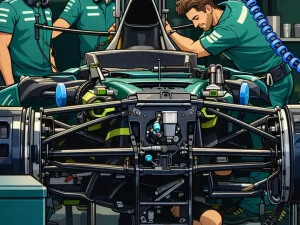
Mercedes did recover the module and remove it from the car, but even that isn’t a straightforward “ship it and see” exercise. Lord said it required “unusual safety procedures” before it can be transported back to the factory in the UK. That’s where the months come in: logistics, safety handling, then the painstaking work of correlating whatever clues exist in the seconds before failure with what the damaged hardware can physically reveal once it’s on the bench.
Allison’s initial assessment included evidence of heat damage and a battery found in a “fairly unhappy” state, but that’s only the start of the story. The bigger question — and the one with potential knock-on consequences for the rest of Mercedes’ season — is whether this was a freak defect confined to one component or a symptom of something systemic that could bite again.
Short hinted that the team is combing through what it does have, even without the hardware. “I’m sure there’s going to be some clues in the seconds leading up to the failure,” he said, which is about as close as you’ll get to optimism in this kind of post-mortem. The reality is that sudden electrical failures can be brutally binary: one moment everything looks normal, the next the car is a passenger.
For Russell, the frustration is obvious. Montreal has been a venue where he’s looked at home in recent years, and 2026 was shaping up as another statement weekend until it ended with him parked up and watching the points disappear. For Mercedes, there’s an additional tension: it’s one thing to ask a driver to absorb a retirement, another to do it while his team-mate is building a championship lead.
Lord’s closing point, though, is where the stakes really sit. Mercedes isn’t only trying to understand what happened; it’s trying to ensure it doesn’t happen again “on any of the other modules in the future.” That implies caution, scrutiny, and perhaps some uncomfortable internal conversations about risk, reliability margins and what gets changed — if anything — before the next failure forces their hand.
In a title fight that’s already tilting one way inside the same garage, Mercedes can’t afford many more mysteries like this. The cruel twist is that the answers may not arrive until long after the damage is done.