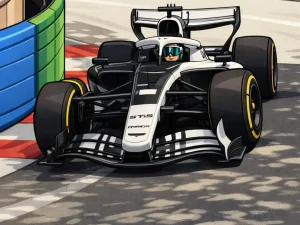
Miami’s Sprint weekend is about to get a little less claustrophobic for teams and drivers. The FIA has confirmed that Free Practice 1 at the Miami Grand Prix will run for 90 minutes rather than the usual 60 — a small scheduling tweak on paper, but one with outsized consequences given the state of play in 2026.
Miami is the first proper glimpse of the revised 2026 package in anger, and it arrives in the most unforgiving format on the calendar: a single practice session before parc fermé considerations and Sprint commitments start compressing the decision-making window. In that context, an extra half-hour isn’t a luxury; it’s damage limitation.
The timing matters. After three rounds’ worth of early-season running, the FIA says it has already been through an April round of discussions and regulation adjustments. The changes aren’t cosmetic. They go to the heart of how these cars deliver performance, and how clearly that performance comes across on track.
Among the tweaks confirmed are revisions to the maximum recharge allowed over a lap and to “superclipping” peak in qualifying — the latter a niche-sounding term that, in practice, feeds straight into how the cars hit their headline numbers on a single lap. The intent, the FIA says, is to better showcase performance. Read that as: the sport has seen enough early evidence to know where the new regulations aren’t landing as cleanly as hoped, and it wants the product to look and feel like top-level F1.
There’s also a reduction in maximum boost power during races, alongside adjustments addressing car behaviour after a poor start. Again, that’s the kind of detail that only gets corrected quickly when the paddock has identified something that’s either messy, potentially unsafe, or simply at odds with what the rules are trying to achieve.
So why stretch FP1 in Miami specifically? Because it’s a Sprint weekend, meaning it’s the only meaningful open practice time available. With regulation parameters shifting — and with teams having only a handful of events’ worth of real-world correlation — that extra 30 minutes becomes precious breathing room for baseline work, system checks, and the inevitable quick-fire comparisons when the data doesn’t quite match the simulations.
It’s easy to forget how little “normal” time teams get on a Sprint weekend to understand a car in evolving conditions. Now layer in a rule set that’s still being fine-tuned after the opening trio of races. An extended session gives engineers more latitude to run through the essentials without immediately gambling on set-up direction, and it gives drivers a better chance to calibrate braking, deployment feel and balance without the sense that every lap has to be “useful” in the narrowest possible way.
The FIA said the change was agreed after consultation with “all stakeholders”, which is diplomatic shorthand for an unusual alignment of interests: teams wanting the time to learn, the FIA wanting the Miami weekend to run smoothly under the updated rules, and F1 wanting the spectacle to look coherent when the spotlight hits.
Miami will still be Miami — the usual high-pressure choreography of a Sprint weekend isn’t going away — but the extra practice time should at least reduce the likelihood of teams arriving in qualifying and Sprint sessions still guessing at fundamentals. With so much attention on how 2026 is shaping up, the last thing anyone needs is a headline weekend dominated by preventable teething issues that could’ve been spotted with a few more laps.
The FIA hasn’t dressed it up as anything grand. It’s simply a 90-minute FP1. In reality, it’s an admission that, right now, the sport is still learning how this version of F1 wants to behave — and it wants that learning done on track, not in the stewards’ room or through panicked overnight rebuilds.