Mike Gascoyne has lived most of the modern F1 story from the sharp end: the big teams, the midfield graft, the late nights when “aero concept” wasn’t a PowerPoint phrase but something you physically carved out of carbon and conviction.
And yet the most striking thing about his latest chapter is how familiar it sounds.
Gascoyne, best known to many fans as the technical mind behind Jordan’s late-1990s surge, has taken a chunk of Formula 1’s playbook and aimed it at a very different kind of performance target. His company, MGI Engineering, is now building long-range autonomous military drones — a defence-sector application that, uncomfortably or not, sits squarely in the same engineering Venn diagram F1 has been drawing for decades.
This isn’t a designer dabbling on the fringes, either. Gascoyne’s pedigree is substantial: McLaren, Sauber, Jordan, Renault, Toyota, and the Team Lotus/Caterham era all appear on the CV. But if there’s one entry that still frames his reputation, it’s Jordan.
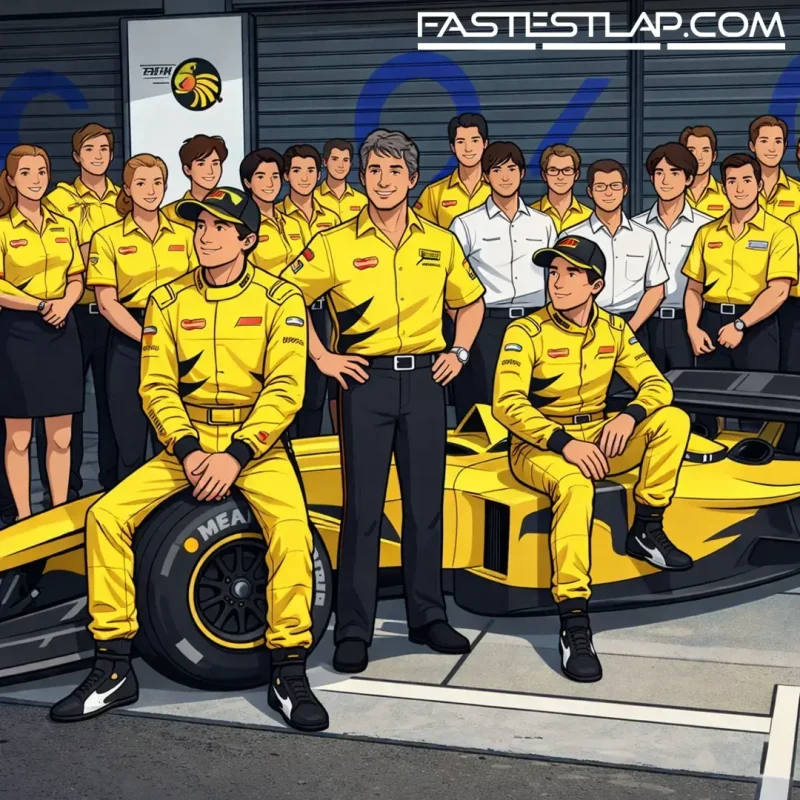
Eddie Jordan brought him in to replace Gary Anderson, and Gascoyne delivered the 1999 Benson & Hedges Jordan, a Honda-powered car that actually converted promise into trophies. Two wins — France and Belgium — and a third-place finish in the Constructors’ Championship marked the high-water point of that team’s competitive life. In an era when midfield fairytales required more than a good Sunday, Jordan had a genuine machine.
Gascoyne left the F1 paddock in 2012, but he didn’t leave the underlying obsession behind. For more than a decade, he’d been running MGI Motorsport alongside his grand prix commitments, a venture now operating as MGI Engineering with a focus on lightweight composite solutions and the sort of design thinking F1 has weaponised: reduce mass, control airflow, pack performance into a tightly constrained volume, and instrument everything.
Those same instincts have, in MGI’s case, been steered into drone development. The company’s Tigershark and Skyshark platforms are described as faster and lighter than rivals — claims that, to anyone who has sat through an F1 technical debrief, sound like the beginning and end of the competitive argument. Speed, weight, efficiency. The rest is details.
What will raise eyebrows in the paddock, though, is the explicit crossover in sensors and systems. MGI’s drones use F1-style sensors to map a battlefield environment, including provision for navigation resilience if GPS is jammed. Strip away the context and it’s classic race-team logic: build redundancy, assume your reference signals will lie to you, and keep the vehicle functional when the environment gets hostile.
Gascoyne himself is unapologetic about where the advantage comes from. “Formula 1 is 25 years ahead, as an industry, as teams will spend any amount of money to get ahead,” he said, framing the sport as a unique accelerant for aerodynamics, materials, and systems integration. It’s a familiar argument — and largely true — even if the moral and political landing zone is far messier when the end product isn’t a lap time.
He also leaned into the national angle, pointing out the UK’s depth in F1 and aerodynamics and arguing it’s “ideally placed” to export that knowledge into defence. That’s a line you’ll hear around Silverstone and in the motorsport supply chain with increasing frequency in 2026: F1 may be a global circus, but its most concentrated engineering ecosystem is still clustered in Britain, and it’s always looking for the next revenue stream when budgets, regulations, and competitive cycles turn.
MGI is now one of three UK suppliers selected by the UK government to provide long-range strike capability missiles, alongside MBDA UK and Rotron Aerospace. However you feel about that — and plenty in motorsport will feel conflicted — it underlines something F1 people sometimes forget: the skillset that builds a race car isn’t niche. It’s broadly, powerfully transferable.
That’s the uncomfortable punchline of F1’s technological self-mythology. The sport loves to sell its relevance in clean, crowd-pleasing ways: faster hospital care, improved road safety, better sustainability. Those stories are real, and when they’re true they deserve to be told. But the same competencies also plug seamlessly into defence, surveillance, and weapons programmes, because the engineering questions rhyme: how do you make it lighter, stronger, more efficient, harder to disrupt?
If you want the more palatable example of F1’s “technology transfer” — the one that doesn’t come with a geopolitical aftertaste — it’s right there in healthcare.
In the UK, pit stop principles have been applied in hospitals, most notably through a partnership between Ferrari’s F1 operation and London’s Great Ormond Street Hospital. The premise was disarmingly simple: if a race team can choreograph a high-stakes handover with near-zero ambiguity at 300 km/h, why can’t a medical team do the same in an operating environment?
Ferrari’s technical staff observed processes and offered insights that will sound familiar to anyone who has watched a team descend into chaos because responsibility wasn’t clear. The verdict: appoint a clear leader — effectively the lollipop person — then strip out inefficiency, formalise the workflow, and make it repeatable. Out of that came a seven-page step-by-step guide for patient handoffs.
The results were stark: a 42% reduction in technical errors and 49% fewer information omissions. Most importantly, lives were saved.
Put those two threads next to each other — drones on one hand, hospital handovers on the other — and you get a cleaner, more honest picture of what Formula 1 really is in 2026. It’s not just entertainment, not just engineering theatre, not just a marketing platform for whatever the industry wants to be seen as this year. It’s an elite problem-solving machine.
The only question, as Gascoyne’s latest move makes plain, is where that machine gets pointed next.