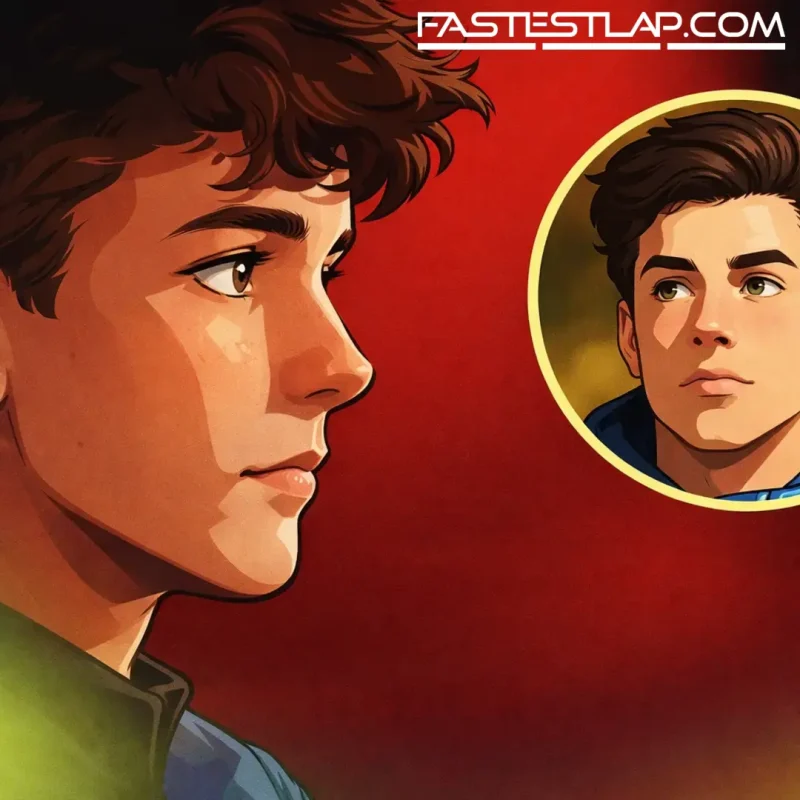
Oliver Bearman isn’t interested in dressing it up as “one of those things”. A month on from Suzuka’s most violent moment, the Haas rookie has put Franco Colapinto squarely in his sights, calling the Alpine driver’s late move before their Japanese Grand Prix accident “unacceptable” in the context of Formula 1’s new 2026 speed differentials.
Bearman’s crash, a brutal 50G impact that left him limping away from the wreckage, was followed by reassurance that he’d escaped with little more than a bruised knee. The scarier part, as he tells it now, is how quickly a routine piece of racecraft can become a loaded weapon when one car is arriving with deployment and the other is deep into harvesting.
Speaking on the *Up To Speed* podcast, Bearman described an incident that, in a different regulatory era, would have sat in that murky grey area of hard-but-fair defence. In 2026, he argues, it tipped over into something else.
“That’s the first time really in history, or at least in as long as I can remember, that two cars fighting for position have such a massive speed delta, and that’s really an unfortunate consequence of these regulations,” Bearman said. “Franco moved in front of me to defend his position.
“Last year it would have been absolutely on the limit, but probably acceptable with just a five or 10km/h speed delta. But with 50km/h, he didn’t leave me enough space and I basically had to avoid a much, much bigger crash.”
The detail that will sting Colapinto — and will certainly be replayed in drivers’ private conversations — is Bearman’s insistence that the Alpine driver knew exactly what was happening behind him.
“I saw him look in his mirror and go left, which is not good,” Bearman said. “He saw me coming and moved. Last year it would have been fine; this year he sees me coming too late. I’m arriving with such a speed delta that at that point it’s too late to move.”
That speed delta, Bearman notes, is the sort of thing you associate with a car trundling on a cool-down lap being caught by someone flat-out, not two drivers fighting over the same bit of track. And at Suzuka, with the approach to Spoon Curve compressing everything, his options evaporated in an instant: stay in it and risk spearing into the Alpine, or take evasive action onto the grass and hang on.
He chose the second — and still ended up with a destroyed car.
What adds another layer, in Bearman’s view, is that the risk had already been flagged in the room. The increased closing speeds and how to manage them in combat had been a topic at Friday’s drivers’ briefing. Bearman says there was a clear, shared understanding that drivers would need to defend earlier and be more conservative with late movements because the closing rates are so much higher than what F1 has conditioned them to expect.
“It was something we spoke about on Friday, which makes it even more frustrating,” he said. “We said among all the drivers: we need to give each other a bit more respect, move to defend your position a bit earlier, because the speed deltas are much higher than we’ve ever had in our sport. And then two days later that happens.”
In the immediate aftermath at Suzuka, Haas team principal Ayao Komatsu played it down and absolved Colapinto of blame. Bearman’s tone now is very different — and it’s hard not to read it as a driver drawing a line for the rest of the grid as much as for Colapinto. If the sport is going to keep asking drivers to race with this kind of energy-management split, then the old habits around “one move late, one move hard” can’t survive unchanged.
Bearman, to his credit, doesn’t pin everything on one driver. He’s blunt about Colapinto’s decision-making, but he also points directly at the system that creates these mismatch moments in the first place — and suggests there’s already work being done with the FIA to reduce the extremes.
“We need to sort these things out between drivers, have a bit more respect between us, because I was really not happy with what he did,” he said. “But I also think there are a few tweaks we can make with the FIA, and we’ve been working very well together to try and avoid these big speed differences in any case.”
The FIA, in its own post-race analysis, acknowledged that the 2026 cars’ increased closing speeds — driven by the reality that some cars are deploying energy while others are harvesting — contributed to the incident. And behind the scenes, the sport has moved quickly enough to indicate it knows it can’t wait for another “near miss that wasn’t” before acting.
The governing body has already chaired the first in a series of meetings aimed at refining aspects of the 2026 regulations before the season resumes in Miami next month. Technical experts from teams and power unit manufacturers met last week, with the FIA describing “constructive dialogue on difficult topics” despite the competitive instincts in the room. The broad agreement, according to the FIA, was that while the racing has been exciting, there’s a commitment to making tweaks around energy management.
A follow-up meeting took place on April 16, and a further “high-level meeting with representation from all stakeholders” is scheduled for April 20.
There’s also a human context to all this that the paddock can’t ignore. Colapinto has been on the receiving end of online abuse since Suzuka, enough that Alpine felt compelled to publish an open letter condemning it. The backlash came in a tense period already, following abuse directed at Esteban Ocon a fortnight earlier after a collision with Colapinto in China — an episode serious enough that FIA president Mohammed Ben Sulayem wrote to Ocon personally.
Bearman’s criticism is pointed, but it’s criticism within the sport, not a call for pile-ons outside it. The line between those two things can be thin in 2026’s always-on discourse, and teams are clearly wary of how quickly it can spiral.
As for Bearman, the physical effects appear to be fading, but the memory plainly hasn’t. “I’m glad I’m OK and happy to be completely fine,” he said. “Looking forward to Miami.”
He might be, but his message is really aimed at the bigger picture: F1’s new era has brought a new kind of danger into wheel-to-wheel racing, and if drivers don’t adapt — fast — the next one may not end with bruises and a podcast quote.