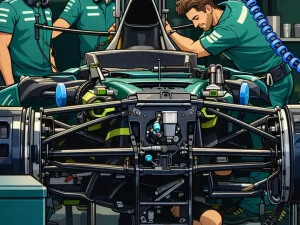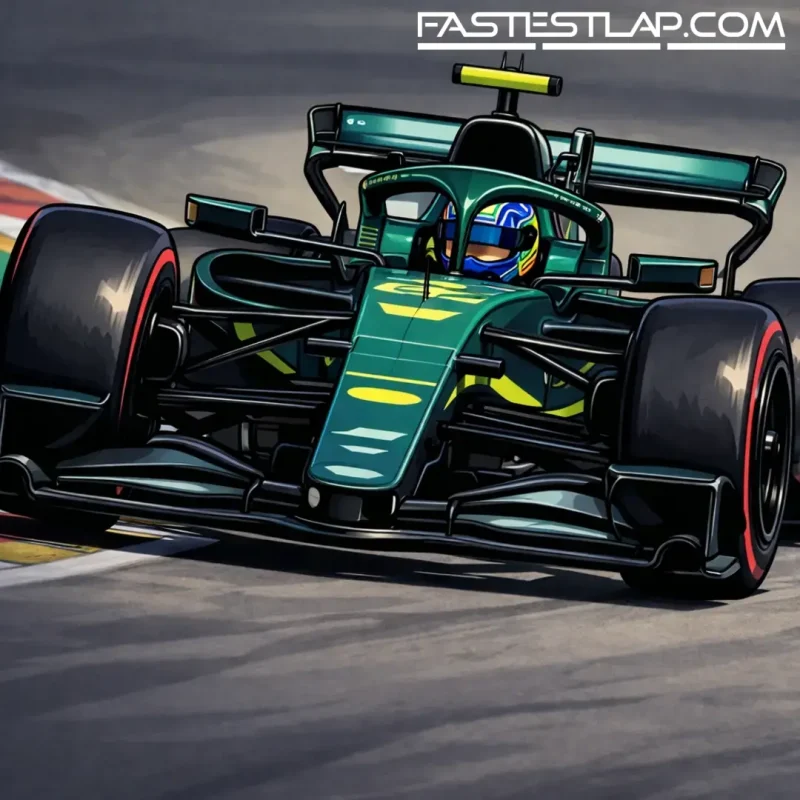
Aston Martin and Honda arrived in Barcelona needing something—anything—to interrupt the gloomy rhythm that’s set in over the opening stretch of 2026. What they left with wasn’t a points haul or a tidy narrative reset, but something the paddock tends to dismiss until it matters: alignment.
Honda Racing Corporation president Koji Watanabe revealed that the two partners held what he described as a “team gathering” during the Spanish Grand Prix weekend, a sit-down designed to get the whole project talking candidly and pulling in the same direction. In his words, it was an opportunity to “communicate openly and strengthen our trust” at a time when the on-track picture has been, by Honda’s own admission, “very challenging”.
It’s easy to roll your eyes at the corporate warmth—especially after a Barcelona weekend that was bruising even by Aston Martin’s current standards. The team locked out the back row in qualifying and neither Fernando Alonso nor Lance Stroll reached the chequered flag. For a partnership that began this season talking about ambition and a fresh start, the reality has so far been a weekly scrap at the wrong end of the grid, often in the same frame as Cadillac.
Monaco at least provided a sliver of relief. Alonso’s point there was the first tangible result for the Aston Martin-Honda era, but it’s also underlined the problem: this car-and-power-unit combination is having to fight hard for crumbs on weekends when others at the front are hoovering up the big prizes.
Watanabe didn’t dress it up. He acknowledged the results have been “frustrating” and stressed that the current position “is not where we want to be”. The more interesting part was the way he framed Honda’s response—not as a quick-fix chase, but as a test of culture. He leaned heavily on the company’s “challenging spirit”, invoking Honda’s difficult return to Formula 1 in 2015 as proof that a rough start doesn’t have to define the outcome.
That comparison is doing a lot of work, of course. The 2026 reset has scrambled the competitive order and pushed everybody into a development arms race, but Aston Martin’s approach has been notably different. Rather than aggressively spending updates in the opening phase of the season, the team has effectively chosen to take its lumps and aim for a major package expected over the summer.
That direction was set by team boss and design chief Adrian Newey, and—crucially—there’s been no hint from either side that the plan is being abandoned despite the bruises. If anything, Watanabe’s comments read like a public signal that Honda is in step with the strategy and wants the workforce to feel the partnership tightening, not fraying.
It also lands at a useful moment on the technical side. Honda has received the maximum two internal combustion engine upgrade opportunities following the FIA’s first ADUO (Additional Development and Upgrade Opportunities) assessment. The implication is clear enough: Honda has some room to move, but it’s not a blank cheque, and the fixes won’t be instantaneous. Watanabe has been careful on expectations too, conceding that “miracles cannot be expected” even once the upgraded ICE is installed in the AMR26s.
That honesty matters, because it reframes what “progress” is going to look like for this project in the short term. This isn’t a story where one upgrade suddenly turns a backmarker into a podium threat. It’s a story about reducing losses—cleaning up execution, tackling reliability, and making sure the gains they do find actually translate on a Saturday and Sunday. When you’re starting from a position of weakness, simply getting two cars to the flag consistently becomes a necessary first milestone, not a consolation prize.
Watanabe said he enjoyed speaking directly with members of the Aston Martin team during the Barcelona gathering, and that the relationship is “growing stronger every day”. Those aren’t throwaway lines in an F1 programme that’s still learning how to operate as a works-style pairing. The awkward phase of any new relationship in this sport comes when the results don’t match the promise—when the engineers are stretched, the drivers are answering the same questions every Thursday, and the pressure to “do something” becomes louder than the discipline to do the right thing.
Aston Martin and Honda are trying to resist that trap. The gamble is that patience now will buy them a bigger leap later, rather than small, expensive steps that don’t shift the baseline. Newey’s decision to hold fire until a larger summer push only makes sense if the foundations are being built in parallel—and if the two sides are candid enough to confront what isn’t working without turning every issue into a political fight.
For now, Watanabe’s message is simple: Honda isn’t going anywhere, and it’s not pretending the scale of the task is small. “As one team, we will continue to work hard together,” he said, adding: “We will never give up, no matter what.”
That’s the language of a programme that knows it’s in for a long season. Barcelona didn’t deliver the competitive turning point Aston Martin and Honda needed. But behind the scenes, the fact they felt compelled to get everyone in a room and talk frankly might be the first sensible step towards one.