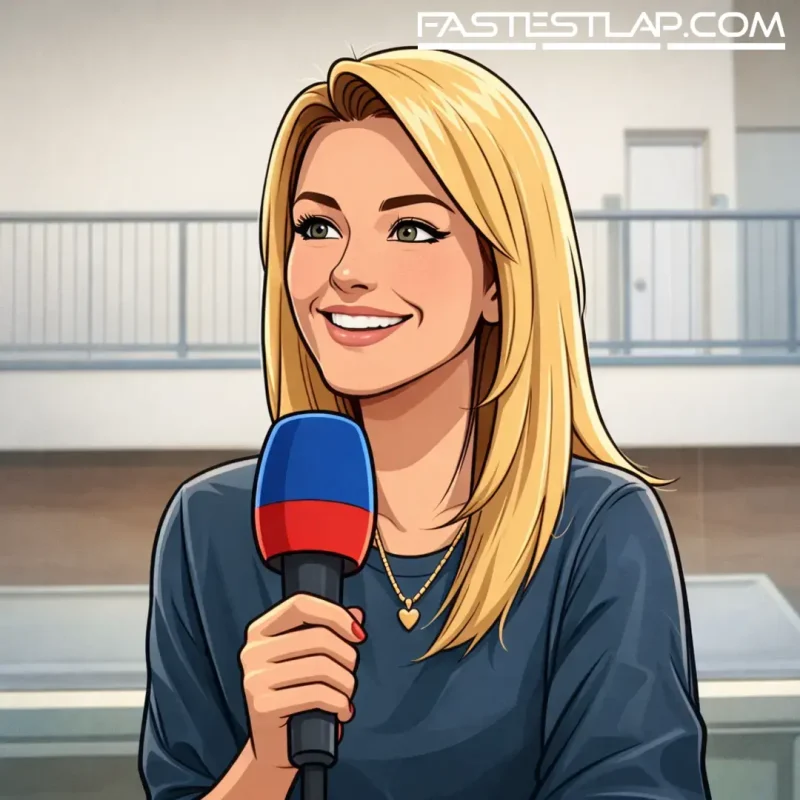
Rachel Brookes’ time on Sky Sports F1 has come to an abrupt end, with the long-serving pitlane presenter confirming she’s left the broadcaster with immediate effect after more than a decade on the channel’s coverage.
Brookes broke the news on social media in the build-up to this weekend’s Austrian Grand Prix, telling followers she’s “moving on to exciting new ventures” while making a point of stressing this isn’t a goodbye to the paddock. “I have left the Sky F1 team but F1 still has my heart & so I’ll still be involved in it,” she wrote, adding that she expects to be at next weekend’s British Grand Prix at Silverstone.
Sky, for its part, framed the change as part of a broader reshaping of its output. In a statement, a spokesperson said: “Rachel has moved on from the Sky Sports F1 team to take on new challenges as we evolve our coverage. Rachel has been an asset for the team and we wish her well in her new endeavours.”
The wording is the kind you often get when a long-running relationship ends without fireworks being lobbed over the fence, but it still lands as a jolt. Brookes has been a constant presence in the Sky setup through multiple eras of the sport — the presenter who could handle the live-grid chaos, the awkwardly-timed interruption, or the post-incident conversation when everyone’s trying to say something without saying too much. That’s a particular skillset in modern F1, where the paddock is more media-trained than ever and the temptation for teams to default to corporate autopilot is strong.
Her departure also comes in the shadow of a nasty episode she spoke about only recently: the online abuse she received following a tense interview with Max Verstappen in 2025. After the 2025 Barcelona Grand Prix, Brookes asked Verstappen directly whether his collision with George Russell in the closing laps had been deliberate — a question that, in any functioning sporting ecosystem, is obviously fair game. The backlash was severe enough that Brookes disabled comments on her Instagram profile.
Sources close to the situation insist Brookes’ exit from Sky is unrelated to her recent podcast appearance in which she discussed the fallout from that Verstappen interview. Still, the timing inevitably invites conversation around what the job now demands of on-air talent: not just the ability to do live television in the most frantic environment in sport, but the resilience to absorb the blowback that comes when fans decide the messenger is the story.
There was no shortage of support from within F1’s media circle once the news broke. Sky’s lead commentator David Croft replied to Brookes’ Instagram post with: “Good luck for the future Rach, we’re gonna miss ya xxx.” Lead presenter Simon Lazenby echoed that sentiment: “We will miss you Rach xxx.” Even Kelly Piquet, Verstappen’s partner, chimed in: “You’ve been amazing Rach! And will be very missed.”
That mix of voices matters because it underlines something easy to forget when the broadcast becomes background noise: these teams are tight units, built around routine, trust and an instinctive understanding of how to navigate a weekend. When someone steps away after that long, it’s not just swapping out a name on the running order. It’s losing a particular way of doing the job — the relationships built up with engineers and press officers, the ability to sense when a driver is about to give you something interesting, and when they’re about to give you nothing at all.
Brookes, meanwhile, has left the door open to whatever comes next. Her message made it clear she expects to remain involved in Formula 1 in a new capacity, and her plan to be at Silverstone next weekend suggests this isn’t a clean break from the sport — more a change of uniform.
For Sky, it’s another reminder that in 2026 the broadcast battle isn’t simply about who has the rights or who has the fanciest toys in the studio. It’s about people viewers trust, and the familiar faces who can carry a storyline from Thursday’s media pen to Sunday’s parc fermé without making it feel manufactured. Brookes has been one of those figures for a long time.
Whatever her next role looks like, she’s leaving one of the most visible seats in the paddock — and doing so at a moment when the pressure on those seats, and the scrutiny that comes with them, has rarely been more intense.