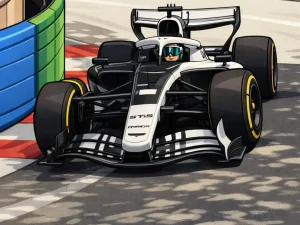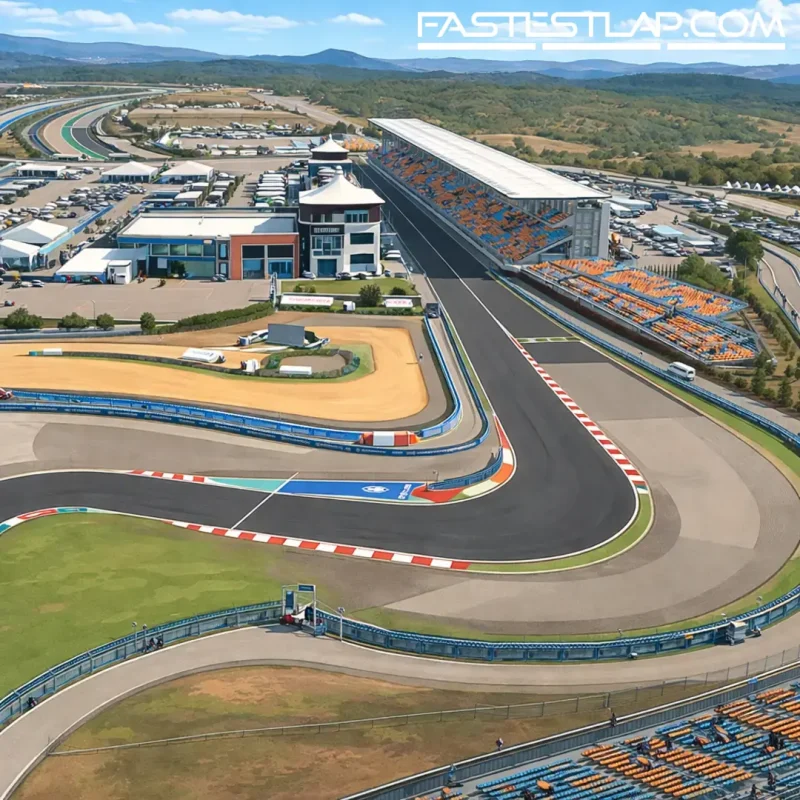
Formula 1’s long game with its calendar has taken another clear step: Istanbul Park is coming back, properly, from 2027.
A five-year agreement has been signed to return the Turkish Grand Prix to the championship on a full-time basis, ending the “in and out when needed” feel that surrounded its last appearances during the Covid-hit 2020 and 2021 seasons. For a circuit that’s never really stopped being talked about in the paddock — Turn 8 still does most of the marketing on its own — that matters. This isn’t a nostalgia slot or a one-off favour; it’s a statement of intent.
And it lands at an interesting moment. With the sport already juggling an increasingly locked-in roster of venues, every multi-year deal has a knock-on effect elsewhere. Türkiye’s return effectively pins down one more piece of what the 2027 schedule will look like, because these contracts aren’t signed in isolation. When you commit to five years at a venue with serious logistical demands and a specific weather window, you’re not just adding a race — you’re shaping the rhythm of a season.
That’s the real subtext. F1’s calendar is now a puzzle where the corners are already fixed: long-term agreements, regional groupings, freight efficiencies, and political realities all pulling in different directions. Istanbul Park isn’t simply “back”; it’s been given the kind of runway that forces compromises elsewhere, whether that’s with other European rounds fighting for space, or with events that live on shorter renewals and political goodwill.
For teams and drivers, the return is more straightforward: it’s a circuit they rate, on a layout that tends to reward confidence and commitment without being a one-dimensional downforce test. Istanbul has a habit of generating stories — sometimes for the right reasons, sometimes because conditions turn it into a curveball — but either way, it rarely feels like a paint-by-numbers Sunday. That’s increasingly valuable in a championship that’s trying to keep the racing product sharp while the business side keeps expanding.
Away from the calendar news, Audi’s internal reshuffle rolled on as it continues to settle its leadership structure for the new era. Mattia Binotto has now formally assumed team principal responsibilities after Jonathan Wheatley’s departure, but crucially, he hasn’t tried to pretend it’s a one-man job at the track.
Audi has appointed Allan McNish as racing director, a move that looks as practical as it is symbolic. McNish is already embedded in the project through his work leading the team’s driver development programme, and now he’ll take on oversight of trackside activity as well. In other words: Binotto gets the high-level support he openly said he needed at race weekends, and Audi puts a familiar, experienced operator in a role where process and decision-making speed are everything.
It also hints at how Audi wants its F1 organisation to function: not as a traditional pyramid with all the pressure funnelled upwards to one figurehead, but as a more distributed structure with clear trackside authority. In modern F1, that’s often the difference between a team that “has a plan” and a team that actually executes it under pressure.
There was also a notable bit of honesty from Colton Herta as he revisited how close — and how far — his Formula 1 chance really was back in 2023. Speaking on Beyond the Grid, Herta described the AlphaTauri option as “very real” before it fell away, while acknowledging the other Red Bull-linked possibility around Sauber felt less concrete.
The sting, he admitted, was what came after: that sense you don’t always get another roll of the dice.
“It was disappointing to have those two instances where I thought… maybe not so much on the Sauber one,” Herta said. “I thought there was a chance with that one, but the AlphaTauri deal seemed very real to me. And then when that didn’t happen, I was like, ‘Look, okay, kind of getting up there in age, probably won’t have another opportunity’.”
Herta is now trying to play the long game again, targeting a seat with Cadillac next season while balancing a Formula 2 programme and continuing to log FP1 mileage with Cadillac across 2026. The detail that matters isn’t just that he wants in — plenty do — but that his pathway is being built around actual on-track integration with an F1 project, not just wishful headlines.
Finally, one of the more revealing technical themes of 2026 has been the way teams have diverged on a shared aerodynamic headache: floor slot usage and how to extract performance without paying for it later in tyre behaviour. It’s the same underlying problem, but the grid has split into radically different interpretations — a reminder that even within tightly defined regulations, there’s still room for philosophy.
That variety is exactly why the floor has become the battleground again. It’s not just about peak downforce; it’s about how consistently the car holds its platform through a stint, what it does as grip falls away, and how much of the driver’s life is spent managing side effects rather than attacking.
Put all of that together and Friday’s headlines didn’t feel like scattergun news — more like a snapshot of where F1 is right now. The calendar’s getting more fixed, big projects are still building their internal power structures, and driver careers are increasingly decided by timing and admin as much as talent. Istanbul Park returning on a five-year deal is the cleanest piece of the lot, but it fits the wider pattern: Formula 1 is choosing what it wants to be in the late-2020s, and it’s doing it in ink, not pencil.