Formula 1’s new era was always going to be sold on technology and sustainability, but a handful of mid-season storylines are underlining a less glamorous truth: 2026 is also becoming a reliability and governance season, where the margins aren’t just measured in tenths but in battery health, stewards’ interpretations and the way the sport’s biggest names are handled in public.
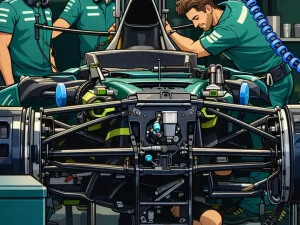
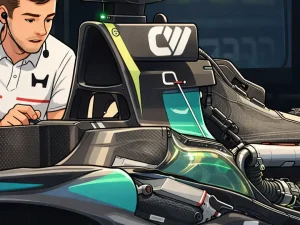
Mercedes, in particular, has spent the last fortnight learning how quickly a weekend can go from “points on the table” to “post-mortem” when the electrical side of the car isn’t playing along. Technical director James Allison has now said the battery issues behind George Russell’s retirement in Canada and Kimi Antonelli’s in Barcelona are largely “understood” — a line that will read like comfort food to anyone who’s lived through a mid-season reliability wobble.
The key word, though, is “largely”. Understanding a failure mode and ensuring it never happens again are two different races, and this season’s compressed development windows aren’t kind to teams trying to fix hardware without introducing the next weak link. It’s also not just a Mercedes works-team headache. Customer outfits have felt the ripple effects too, even if one of McLaren’s China problems was described as non-battery related after Lando Norris and Oscar Piastri failed to start. In a year of fresh technical rules, these early gremlins were predictable. What’s less predictable is how long they’ll linger — and who ends up paying for them in championship positions that can’t be won back once the summer break arrives.
That looming break is also why Max Verstappen’s situation is refusing to go away, no matter how often Red Bull’s camp tries to bat it back into the stands. Raymond Vermeulen has insisted the four-time world champion “will remain” loyal to Red Bull, a statement that’s as much about calming the market as it is about any concrete decision being made in June.
Verstappen has been linked with a move for 2027, with an exit understood to be available if he’s lower than second in the standings at the summer break. The uncomfortable detail for Red Bull is the current reality: Verstappen sits seventh, with only four races remaining before the August shutdown. That doesn’t mean he’s halfway out the door — but it does mean every retirement, every messy Sunday, and every point squandered now carries a political weight it simply wouldn’t in a more settled year.
And messy Sundays have a way of bleeding into everything else around a driver — including the post-race ecosystem that’s meant to hold the sport accountable without turning it into theatre.
Sky F1 presenter Rachel Brookes has spoken about the “horrendous” online abuse she received after a tense interview with Verstappen at the 2025 Spanish Grand Prix, when she asked whether his collision with George Russell was deliberate. Brookes said she was forced to disable comments on her Instagram profile because of the volume and intensity of the reaction.
It’s depressingly familiar: an on-camera exchange gets clipped, the context gets stripped, and the pile-on starts. F1 loves to market itself as modern and connected, yet still seems perpetually surprised when the worst corners of that connectivity are pointed at anyone perceived to have questioned the wrong hero. The sport can’t control every fan account, but it can control the tone it normalises — and the line between robust scrutiny and a gladiator-style feed of outrage is one it keeps flirting with.
Ferrari, meanwhile, is dealing with a different kind of pressure: the internal recalibration that follows the arrival of Lewis Hamilton, and the first time that recalibration has paid off with silverware.
Hamilton’s victory in Barcelona last weekend was his first for Ferrari and, more broadly, ended the team’s wait for a win stretching back to Carlos Sainz’s 2024 Mexican Grand Prix success. Former Ferrari race engineer Rob Smedley has suggested the team has fallen in “love” with Hamilton — and that the shift in focus hasn’t been “very nice” for Charles Leclerc.
Even if you take the phrasing as deliberate provocation, the underlying point is hard to ignore. Ferrari doesn’t do “neutral”. When a narrative takes hold inside that organisation — a saviour, a project, a new dawn — it tends to become self-fulfilling, because every department feels the same gravitational pull. Leclerc is talented enough to punch through any storyline, but in a team that runs on emotion as much as data, perception can quickly become part of performance.
Elsewhere, Mercedes found itself stepping away from a fight it initially chose to start. Russell has admitted the team “did not have a case” after Mercedes dropped its appeal over the Monaco Grand Prix result. The fallout from Monte Carlo left plenty of people irritated, particularly after Alpine’s Pierre Gasly was reinstated to third place. Russell’s own weekend unravelled into 12th after two separate time penalties — and in that context, Mercedes backing down feels less like surrender and more like a rare moment of realism in a paddock that often confuses persistence with principle.
Put all of it together and 2026 is starting to read less like a clean-sheet reset and more like an old-fashioned F1 grind: the teams that stabilise their systems — technical, legal, and cultural — will be the ones still smiling when the title picture finally stops shifting under everyone’s feet.