Leonardo Fornaroli’s latest two-day stint in a McLaren didn’t come with the fanfare of a race weekend, but inside the team it ticks a box that matters: getting a highly-rated junior to the point where “potential” starts turning into usable, session-ready competence.
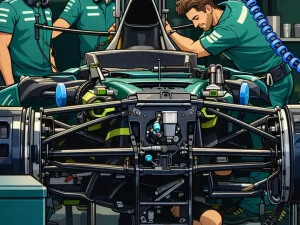
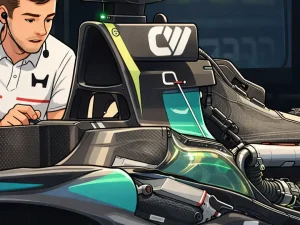
McLaren ran its reserve driver at Circuit of The Americas in the 2023 MCL60, logging 77 laps across the test. It was Fornaroli’s third outing under the team’s Testing of Previous Cars programme, another step in building familiarity with F1 machinery and the working rhythms around it — the sort of repetition that looks mundane from the outside and feels invaluable from the cockpit.
For Fornaroli, the background story remains the hook. He’s part of that small, increasingly scrutinised club of drivers who’ve won the F3/GP3 and F2/GP2 titles back-to-back — a list that includes George Russell, Charles Leclerc, Oscar Piastri and Gabriel Bortoleto. That kind of junior record doesn’t guarantee you anything in modern F1, but it does tend to put you on the shortlist in a hurry.
And yet, like Piastri before him, Fornaroli didn’t land a full-time seat at the first attempt for 2026 despite that clear junior success. That’s not a reflection on his pace as much as it is the reality of how tight the grid is and how strategic teams have become about timing: when to promote, when to park a talent in reserve duties, when to wait for the “right” seat rather than the first seat.
Former Invicta Racing boss James Robinson recently called the 21-year-old a “hidden gem” and said he’d like to see him make the jump to Formula 1 in 2027. Tests like COTA are how that argument gathers weight internally — not through lap times that never see daylight, but through the details that engineers and driver coaches obsess over: how quickly a driver absorbs direction, how consistent the feedback is, whether procedures become second nature, whether the basics (starts, pitlane discipline, tyre management) are being executed without eating up brain capacity.
“It’s always amazing to drive an F1 car,” Fornaroli said afterwards. “I’m grateful to McLaren for giving me another opportunity to get behind the wheel of the MCL60.
“I’m getting more comfortable with the car and also the team. The run plan was a step up from my last test in Silverstone.”
That last line is telling. TPC days aren’t just about mileage; they’re about building complexity. McLaren also worked practice starts into the programme at COTA, with Fornaroli pointing to how that helps him understand what it actually takes to operate an F1 car in a session environment rather than simply circulating.
“We got to do some practice starts, which continued to give me a better understanding of what it takes to drive an F1 car in a session,” he said. “Everyone in the DDP [Driver Development Programme] continues to support and push me with these tests as I continue my development.
“This was my first time driving around COTA. I really enjoyed it, and I am already looking forward to my next opportunity in an F1 car.”
McLaren’s wider context makes this more than just a promising youngster getting a day out. This is a team that’s won back-to-back Constructors’ titles, which brings its own pressure when it comes to talent management. The bar for any future race driver is higher because the environment is less forgiving: you’re not joining a rebuild, you’re walking into a machine that expects points, podiums, and precision immediately. In that sense, giving Fornaroli repeated, structured exposure to how McLaren operates — and how a modern F1 weekend feels from the inside — is as much about moulding him into the team’s way of working as it is about raw driving.
His next job is more familiar reserve-driver reality: simulator work, supporting the race team for the Monaco Grand Prix. It’s a reminder of how the development ladder looks now. You might be a champion in the feeder series, but the transition still runs through hours of sim correlation, procedure drills, and learning to speak the language of an F1 engineering group.
McLaren, for its part, knows exactly what a delayed graduation can look like when it’s handled well. Piastri arrived with a similar CV, had to wait, and then hit the ground running. Fornaroli’s COTA mileage doesn’t lock in his future, but it keeps him moving in the only direction that matters in this phase: towards being ready the moment a door opens, rather than scrambling once it already has.