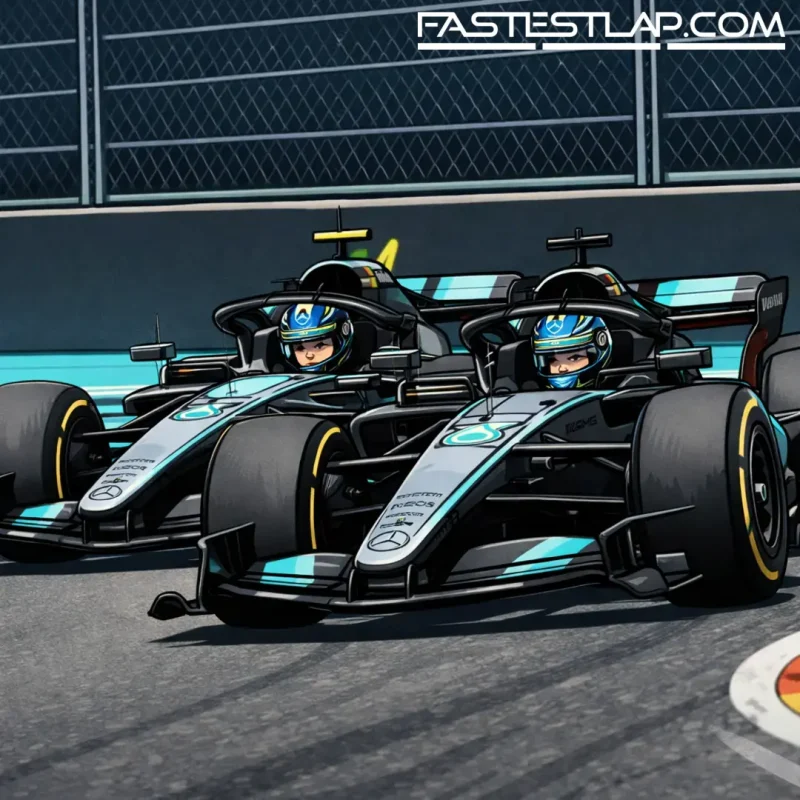
Mercedes is finally ready to show its hand in the first proper development skirmish of 2026, with the team set to roll out its maiden W17 upgrade package at the Canadian Grand Prix.
It’s been an oddly patient opening month from Brackley. While most of the grid arrived in Miami with their first meaningful batch of new parts for the new regulations, Mercedes stood still — and still kept winning. Kimi Antonelli’s victory in Florida preserved the team’s 100 per cent record from the season’s opening races, but the sense in the paddock was that the margins were starting to look a lot less comfortable.
McLaren, in particular, made that point loudly. Fresh off a marked step forward in Miami, the reigning double champions are expected to arrive in Montréal with more to bolt onto the MCL40. Red Bull’s RB22 also looked stronger as the first upgrade cycle kicked in, and Ferrari’s Charles Leclerc has been frank that the Scuderia ended up on the wrong side of that early development curve.
So yes, Mercedes bringing upgrades now is hardly a surprise. The more telling part is the message around them.
Toto Wolff has made it clear he’s not interested in selling Montréal as a turning point, nor allowing the narrative to drift towards “Mercedes responds, problem solved”. In his view, the only thing an upgrade package proves is what it does on a stopwatch — not what it promises in a briefing room.
“We bring our first update package of the year to Montréal, but we know that performance is only performance once it is delivered on track,” Wolff said, framing Canada as a step in a longer process rather than a decisive weekend.
There’s a pragmatic edge to that stance, and not just because team principals are paid to sound steady. Under these 2026 rules, development swings can be violent, and Miami was a reminder of how quickly pecking orders can tighten. Wolff pointed to the calendar as much as the competition: seven grands prix in 10 weekends before the shutdown offers plenty of chances to build — or lose — momentum in a hurry.
“Despite being in the middle of May, we are just four races into the season,” he said. “There is a long year ahead and, whilst this is an important weekend, it will not decide any outcomes.”
That calmness matters because Mercedes has something slightly unusual for a team leading both championships: genuine internal pressure. Antonelli hasn’t just arrived — he’s set the tone. The teenager leads the Drivers’ Championship from George Russell and has a 20-point cushion after three straight grand prix wins, giving Mercedes an enviable problem to manage as the car evolves.
The Constructors’ picture is healthier still, with Mercedes 70 points clear of Ferrari. But those numbers can flatter early-season form when rivals are still bringing their first “real” packages to the track. Wolff’s insistence that the team won’t “get too high” or “too low” reads as much like a message to the factory as it does to his drivers: don’t let the current table position distort the urgency.
Antonelli, for his part, sounds like a driver enjoying the run while fully aware it won’t last forever without constant progress.
“I have really good confidence in the car,” he said after Miami. “Obviously, we’re in a great momentum.
“Hopefully, the package is going to work as we hope, but also McLaren is bringing another package and the step they made this weekend was very big.”
That’s the real story heading to Montréal: not that Mercedes is upgrading — everyone upgrades — but that the team is entering the arms race a beat later than others while trying to defend a perfect record, a championship lead, and a rapidly intensifying fight at the front.
Antonelli also put his finger on what Miami revealed about this season’s texture. “We saw this weekend how much it flipped compared to the first three races,” he said. “So, we’ve just got to stay on top of the game.”
Canada will offer an immediate verdict, even if Wolff is right that it won’t “decide any outcomes”. If Mercedes’ new parts translate cleanly into lap time, it’s a statement that the early wins weren’t merely holding the line before a catch-up arrives — they were the foundation for sustained control.
If they don’t, Montréal won’t trigger panic in public, but it will sharpen the questions: how big was McLaren’s Miami leap, how quickly can Red Bull iterate, and can Mercedes keep threading the needle of developing the W17 while managing two drivers now separated by only performance and points?
Either way, the season’s rhythm is about to change. The first four races set the table. The next ten weekends will tell us who’s actually learned how to cook under 2026’s new heat.