George Russell’s Canadian Grand Prix ended the way a driver fears most: not with a mistake, not with a clash, but with his Mercedes simply deciding it had done enough.
Up front in Montreal, the race had been shaping into a proper intra-team scrap between Russell and Kimi Antonelli — the kind of duel that looks entertaining on TV but will have engineers quietly wincing at the pit wall. Mercedes had locked out the front row, briefly had to absorb Lando Norris muscling a McLaren ahead at the launch, and then settled into controlling the pace. “Settled”, though, is doing a lot of work there.
Russell and Antonelli spent the opening half trading punches rather than managing a comfortable one-two. The margin between them never really breathed. Every minor lapse at the hairpin, every time the cars got close enough for Overtake Mode to matter, it reset the argument. Neither could break the other’s DRS range for long, and the battle grew increasingly scrappy — not reckless, but tense, with the sort of rhythm you only get when two drivers know the car well and neither is prepared to be the one who blinks first.
Then, just before half-distance, it was over.
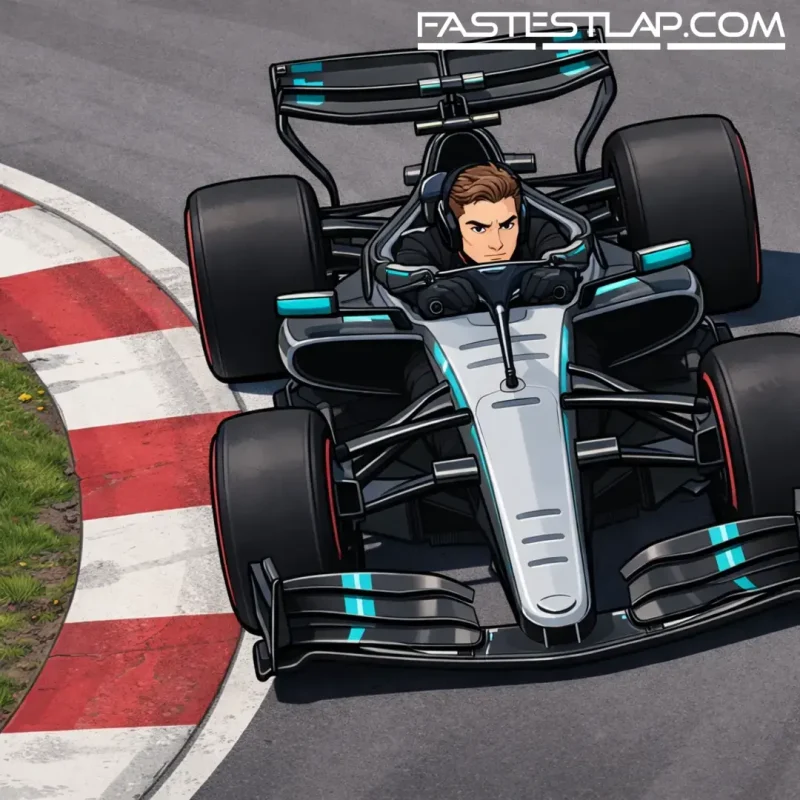
Russell ran wide at Turn 8, but the off wasn’t the story; the slowdown was. His W17 lost momentum on the exit and rolled to a stop, the lead evaporating in an instant. The reaction told its own tale. Russell, still strapped into the cockpit, was visibly incandescent — he hurled his headrest in front of the stranded car, climbed out, and posted up behind the barrier to watch the rest play out without him. It was a rare, raw piece of body language in a sport where drivers are trained to keep the mask on until the debrief.
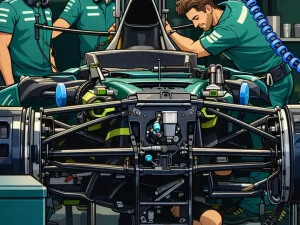
Mercedes quickly confirmed the problem was on the power unit side, a brutal way to lose what had been, at the very least, a podium locked in — and possibly a win, depending on how the second half of that fight with Antonelli would’ve unfolded. The retirement also triggered a Virtual Safety Car as marshals recovered the car, puncturing the race’s flow at exactly the moment it had been building toward a strategic and psychological crescendo.
Russell’s throw might yet add an unnecessary postscript. The stewards noted the incident, and while the sport isn’t exactly short of frustrated gestures, anything that looks like it could be construed as dangerous — even if it’s “only” a piece of padding — invites scrutiny. It’s the kind of avoidable detail that can turn a mechanical DNF into a weekend that keeps costing you on Monday.
The wider race narrative was already getting messy elsewhere. Norris, who’d briefly led at the start, also failed to see the chequered flag. The McLaren driver’s day unravelled with an apparent gearbox problem at the hairpin after the team gambled on starting both cars on intermediate tyres despite dry conditions — a call that dumped them into recovery mode early and left them exposed once the race settled into its real pace.
For Mercedes, Russell’s stoppage does more than remove a result from the spreadsheet. It interrupts momentum and invites the kind of internal recalibration teams hate having to do mid-season. An on-track fight between team-mates is one thing; losing one car from the lead to a power unit issue is another, because it sharpens every question around reliability, usage, and how aggressively the team can afford to let its drivers race. In Montreal, they didn’t need an argument over who should’ve been allowed to push — they needed both cars at the flag.
Instead, Russell was left standing trackside, staring at the circuit as if trying to will the outcome into something else, before eventually heading back to the paddock. The duel that had defined the first half of the Canadian Grand Prix didn’t end with a pass or a pit call. It ended with a silent car and one very loud moment of frustration.