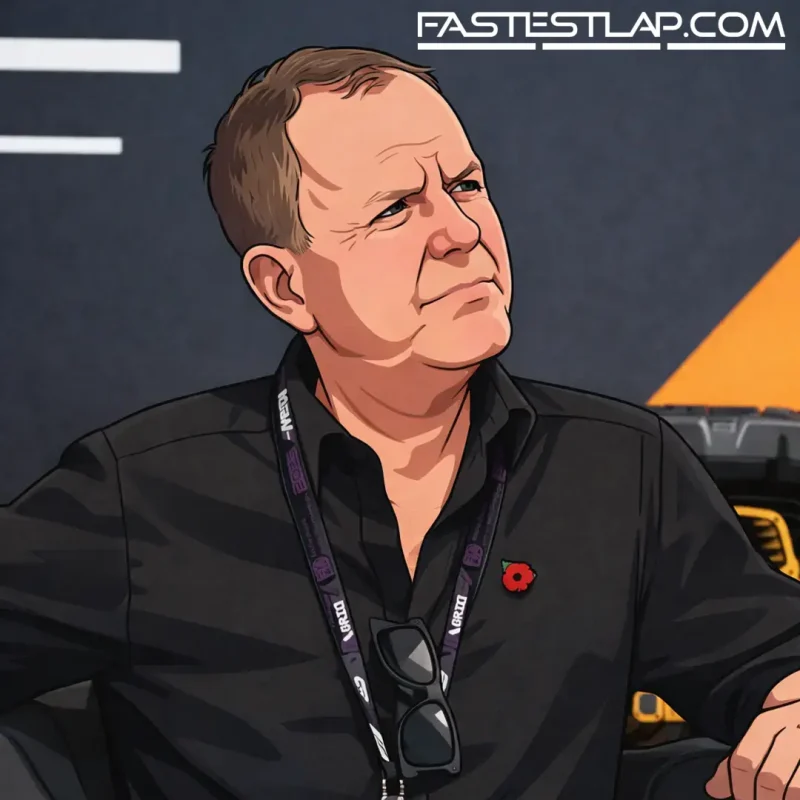
Martin Brundle’s line about Miami being a “relaunch” of the 2026 season isn’t just a neat bit of broadcaster shorthand. It’s an accurate read of how Formula 1 works when you drop a month-long gap into the calendar, throw in mid-stream rule tweaks, and then ask everyone to turn up in Florida pretending nothing’s changed.
Because plenty will have changed.
The cancelled Bahrain and Saudi Arabian Grands Prix have left the paddock in that rare state where teams have had time — real time — to react. Not the usual “we’ll bring a new floor in three races” rhythm, but a proper development reset where factories can iterate, simulate, manufacture and validate without having to pack it all into freight cases every other weekend. In a season already defined by the scale of the 2026 regulations, that’s a gift and a trap in equal measure.
Brundle’s expectation is that cars will look “dramatically changed” when they roll out in Miami. That fits with what’s been bubbling away in team briefings: the rate of learning is so steep this year that what you saw in the first three rounds may already feel like early-season prototype work. McLaren boss Andrea Stella has gone as far as predicting a “completely new car” across the next two races from Woking, and it would be a surprise if they’re the only ones arriving with something that looks — and behaves — meaningfully different.
That’s where Miami becomes more than just the next round. It’s effectively the first major convergence point of 2026: new-era cars, first-wave upgrades, and now an agreed package of regulatory tweaks introduced after April meetings among key stakeholders. The intent, as described, is straightforward enough — reduce the overall need for energy management and add safety improvements — but F1 never gets to take the simple route from intention to outcome.
Brundle called the changes a likely “step forward”, while also acknowledging the sport’s habit of discovering “unintended consequences” the hard way. He’s right on both counts. With these complex hybrids, you’re not only balancing laptime against deployment and harvesting; you’re balancing what the car feels like to drive, how predictable it is in traffic, and how safe it is when performance characteristics diverge abruptly between two cars on the same straight.
That last point has been one of the drivers’ recurring themes early in this rules cycle: closing speeds, and the difficulty of reading what’s happening ahead when so much of the car’s behaviour is dictated by battery state rather than engine note. Brundle made a pointed comparison to the older days — if someone missed a gear or had an engine let go, you could often detect it before you arrived on their gearbox at a rate that made your eyes water. Now, the warning signs are subtler, and the performance swing can be sharper.
In that context, “smoothing out the power delivery” isn’t a small calibration exercise. It’s a philosophical adjustment to how these cars race each other. And if Miami is the first proper test of that philosophy, it could also become the weekend where a few early-season assumptions get dumped in the nearest paddock skip.
Brundle’s other point is the one the teams don’t like saying out loud: we don’t know who’s got it right. Not yet. Early 2026 has already been a story of interpretation and compromise — who can run their intended concept in the real world, who is forced into workarounds, and who can extract performance without making the car miserable over a stint. A long break accelerates the shake-up because it gives the sharpest groups the chance to pivot quickly and the most stubborn ones the chance to double down.
That’s why Miami has the feel of a second opening chapter. It’s the first time this season that upgrades, regulation refinement and a big calendar pause all collide at once. If a team arrives having genuinely understood the new car, the new power delivery window, and the knock-on effects on racecraft, it can claw back weeks of momentum in a single weekend. If they guess wrong, they’ll spend the next phase of the season unpicking not just a slow lap time, but a direction.
And the drivers? Brundle’s view was as wry as it was true: satisfaction tends to correlate neatly with whether you’re winning. But Miami will give a clearer read on whether the latest changes make the cars more intuitive in traffic and less prone to the sort of speed differentials that raise eyebrows in briefings. If the tweaks do what they’re meant to do, the racing should be better for it — not magically, not overnight, but in the way F1 improves: by sanding down the worst edges while everyone continues to push the limits elsewhere.
So yes, call it a “relaunch” if you want. The more accurate description might be this: Miami is where 2026 starts telling the truth.