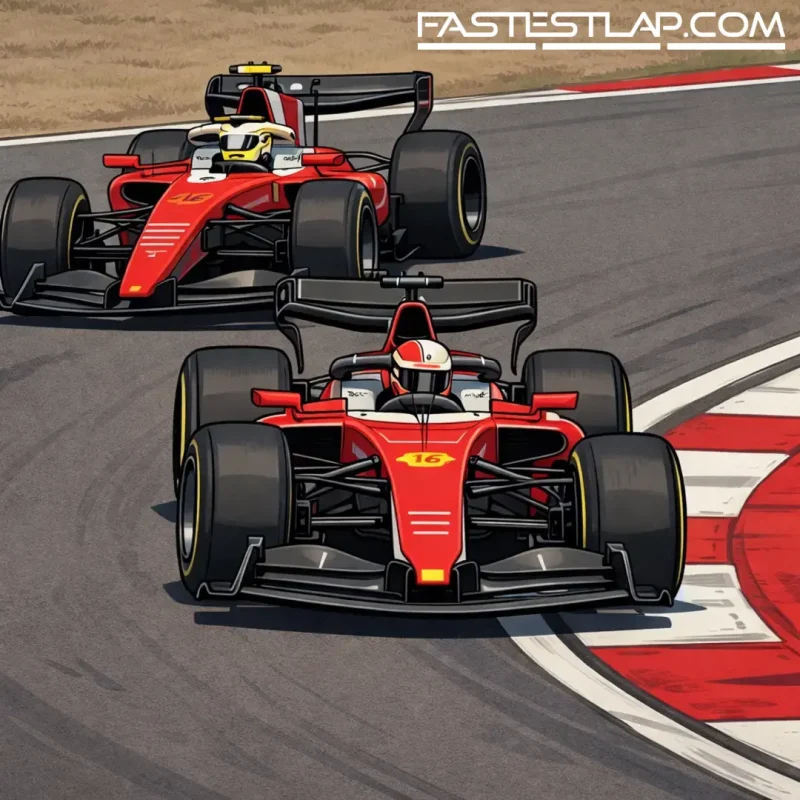
Ferrari didn’t arrive in 2026 with a broken car. If anything, the early weekends have underlined the opposite: the SF-26 looks well-mannered, it fires off the line, and in those first few laps it can even give Mercedes a proper glimpse in the mirrors. The problem is what happens after that initial flash of aggression, when the race settles and the lap times stop flattering you.
That’s where the mood in red has started to turn from “we’re close” to something more resigned. Charles Leclerc and Lewis Hamilton have both hinted at the same thing: whatever Ferrari’s doing right on chassis balance and launch performance, it can’t disguise a power unit that simply isn’t in the same conversation as Mercedes’ right now.
Ralf Schumacher, speaking on Sky Deutschland’s podcast, didn’t bother dressing it up. In his view, the window to genuinely hunt down Mercedes has already shut, and the battle Ferrari should be planning for is a more familiar one — keeping McLaren behind, rather than hauling the leaders back.
The early record backs up the pessimism. Mercedes has won all three grands prix so far and the Sprint in China. George Russell opened with victory in Australia, then Kimi Antonelli followed up with wins in China and Japan, making it a clean sweep for the Brackley outfit’s W17 and its HPP power. Ferrari, by contrast, has been stuck collecting bronze: three third-place finishes, achieved more by being the best of the rest than by applying sustained pressure over a race distance.
It’s not that Ferrari hasn’t shown teeth. The car’s smaller turbo has been credited internally with helping those “epic starts” that have briefly turned races into a fight. But once the tyres and fuel loads start dictating the real pace, Mercedes has tended to edge away rather than be dragged into a scrap. That’s the most damning part for Ferrari: the pattern has repeated across different circuits, not just one track-specific mismatch.
Japan was the first weekend where the picture shifted slightly, with McLaren stepping closer to the front. Even then, Ferrari couldn’t turn it into a two-team fight for the win. Leclerc finished third, Oscar Piastri slotted into second, and Mercedes still had control.
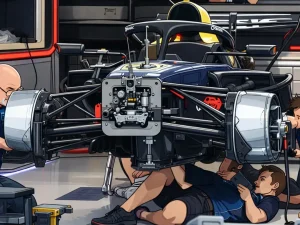
Ferrari’s next move is expected in Miami, where a significant chassis upgrade is lined up. Fred Vasseur has described it as “a package and a half”, language that tells you the team knows it needs more than minor trimming. But Schumacher’s point is the one Ferrari can’t ignore: a big aero or mechanical step can help you use what you’ve got, yet it won’t magically manufacture horsepower.
And that’s where the politics of this season’s technical rulebook may end up mattering almost as much as the parts Ferrari bolts on.
Formula 1 and the FIA are currently debating Miami’s position in what was meant to be a 24-race calendar but has been reduced to 22 after Bahrain and Saudi Arabia were cancelled. In normal circumstances, Miami would have been round six — important because that’s roughly when the Additional Development and Upgrade Opportunities (ADUO) programme was due to start influencing the power unit order.
ADUO is essentially the system designed to stop one manufacturer running away with the new-era engine rules by giving lagging engine suppliers extra scope to develop. FIA single-seater technical director Nikolas Tombazis has explained how it works: every five to six races, average power unit performance is assessed, and those below a set threshold receive benefits that accumulate through the season.
With Miami now the fourth round, there’s an argument that it could still act as the first ADUO “marker” because it was originally intended to sit later in the calendar. If that interpretation wins out, Miami becomes more than just Ferrari’s first big upgrade drop — it becomes the first chance for the rules themselves to start nudging the engine picture back towards the pack.
Schumacher sees that junction as the hinge point, but he’s not convinced it will be enough to flip the title fight. “It’s down to the update now,” he said, adding that he expects a “massive update” by Miami at the latest. He praised the way the Ferrari behaves — “you can see the car’s handling well” — and suggested Vasseur has things “pretty well under control” on the chassis side.
Then came the blunt conclusion: “I don’t think it’s possible [to catch Mercedes] anymore.”
If that’s harsh, it’s also a familiar story in the first phase of a new regulations cycle: the team with the best power unit gets to set the terms, and everyone else spends months deciding whether they’re chasing the leader or managing the pursuers. Schumacher’s forecast is that Ferrari’s season becomes a straight fight with McLaren for second, and he even pointed to a possible weakness in the McLaren concept — plenty of downforce, but not enough efficiency under the current engine regulations.
Suzuka, he argued, flattered McLaren because the first-sector Esses reward aero strength. On other tracks, that same philosophy could become a penalty if the car is dragging too much. The implication for Ferrari is obvious: if you can’t attack Mercedes, you’d better make sure your own upgrade path doesn’t hand McLaren the advantage in the more “normal” parts of the calendar.
After three rounds, Mercedes leads the constructors’ standings on 135 points, 45 clear of Ferrari, with McLaren a further 44 back. That’s not an unbridgeable gap this early in a season — but it is a gap that starts to feel structural when the leader is winning everything in sight and the chasing car’s biggest weakness sits in the one area the teams can’t quickly reinvent.
Miami will bring Ferrari’s “package and a half”. It may also bring the first meaningful consequence of ADUO and calendar reshuffling. Either way, it’s shaping up as the moment Ferrari needs not just a step forward, but a reason to believe the road to Mercedes still exists at all.