Miami was supposed to be a clean, modern snapshot of where Formula 1 is heading in 2026: Ferrari’s Hamilton era in full swing, Red Bull searching for traction in a new world, and the sport already arguing about what comes next. Instead, the weekend’s chatter spilled well beyond the circuit — into the politics of future engine rules, a rival category’s pit-lane flashpoint, and even a Le Mans subplot involving Max Verstappen.
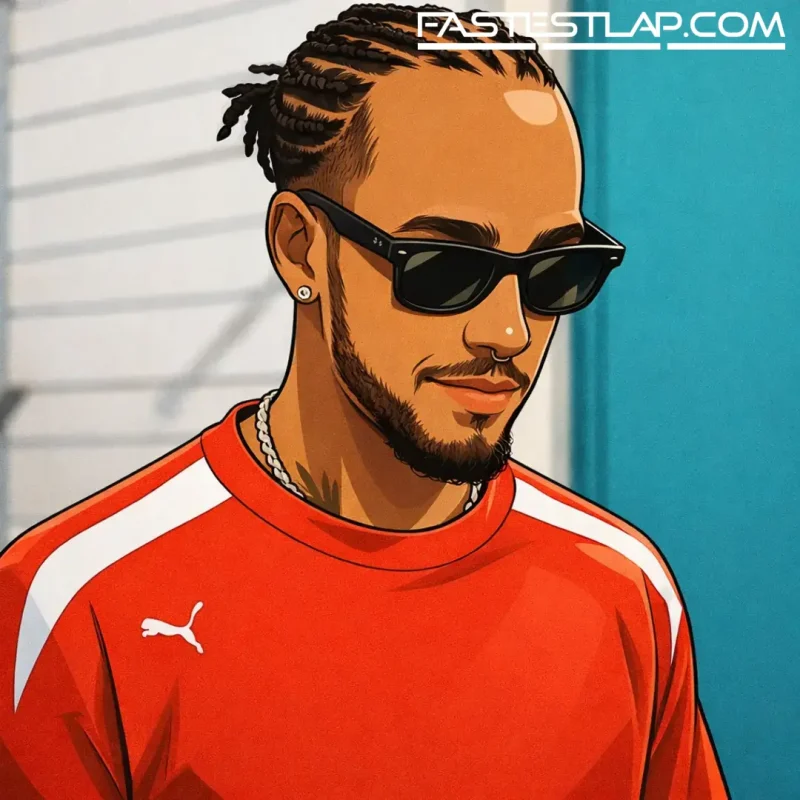
Start with Ferrari, because that’s where the most intriguing detail emerged. Charles Leclerc has been quietly studying Lewis Hamilton’s habits away from the stopwatch — not set-up tweaks or radio snippets, but the pre-track routine and the “approach” that precedes it. Leclerc’s takeaway is that there’s something foundational in how Hamilton builds his weekends, the kind of repeatable process that doesn’t show up on a timing screen but accumulates over seasons into the sort of record-breaking career the Briton has assembled.
It’s the sort of admission that carries weight inside a team like Ferrari. Hamilton arriving with that aura inevitably resets internal reference points, and Leclerc publicly acknowledging he’s effectively reverse-engineering his team-mate’s methodology says as much about Leclerc’s mindset as it does about Hamilton’s. There’s no defensiveness in it — more a recognition that marginal gains at this level often come from the unglamorous parts: preparation, consistency, and the mental choreography of hitting the track with the car and the session already mapped out in your head.
While Ferrari’s story had a professional edge to it, the spiciest confrontation linked to Sunday didn’t even happen in F1. Untelevised footage from IndyCar has brought to light a furious Romain Grosjean attempting to confront Marcus Armstrong in the Indianapolis pit lane, only to be physically restrained by Armstrong’s Meyer Shank Racing crew before the pair eventually came face to face.
Grosjean’s fiery reputation hasn’t exactly softened since his grand prix days, and this clip lands as a reminder of how quickly tensions can erupt when stakes are high and tempers are short — especially in categories where the pit lane can turn into a pressure cooker. The details of what sparked it may be debated elsewhere, but the imagery is unmistakable: a driver wanting answers now, not in a debrief room later.
Back in F1, the sport’s long-term direction continues to feel like it’s being negotiated in real time. The FIA announced on Friday that an agreement had been reached to tweak the balance between electric power and internal combustion for 2027 — framed as a settled compromise on paper, but one that already looks vulnerable to the usual realities: technical feasibility, manufacturer appetite, and the fact that “agreement” in Formula 1 often means “agreement until the first serious problem arrives”.
The headline number being discussed is a 60/40 split, and the immediate paddock reaction is familiar: nods in public, caveats in private. The difficulty isn’t just in writing the rule; it’s in delivering it without opening a fresh arms race or backing teams into solutions that compromise racing. Anyone who’s watched recent regulation cycles knows how quickly consensus can fray once engineers start modelling what the wording actually implies.
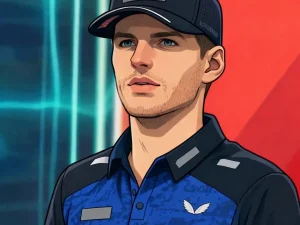
Then there’s Verstappen, who continues to loom as the sport’s most consequential weather vane — not just because he wins, but because he’s been among the fiercest critics of F1’s new regulations. After the Japanese Grand Prix he even floated the idea of walking away after the 2026 season, and now another piece of the puzzle has surfaced: talks with Ford over a potential future entry to the Le Mans 24 Hours.
It’s not a shock that Le Mans sits on Verstappen’s bucket list. What matters is the timing. When a four-time world champion is openly exploring top-level endurance possibilities while simultaneously questioning the direction of grand prix racing, it inevitably becomes part of the wider pressure on F1’s rulemakers and stakeholders. The series has always sold itself on being the pinnacle; it doesn’t like being treated as just one option on an elite driver’s menu.
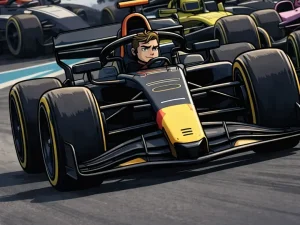
And finally, a note on Red Bull, because Miami offered a hint — however modest — that the team is starting to get its arms around its current machinery. Verstappen’s fifth place was billed as the best result so far for him and the team this season, and Laurent Mekies has been keen to stress that the step forward wasn’t simply a case of bolting new parts onto the car. The implication is that Red Bull’s breakthrough came from the unsexy work: understanding correlations, extracting performance from what’s already there, and aligning the weekend’s execution.
That matters because it suggests Red Bull’s ceiling might be higher than its early-season form implied. Upgrades can be copied, development curves can flatten, but a team rediscovering how to consistently “land” a car at different circuits tends to move faster once momentum builds.
So while Miami’s headlines look scattered — a Ferrari internal lesson, an IndyCar pit-lane blow-up, engine politics for 2027, Verstappen’s endurance flirtations, and Red Bull’s incremental recovery — they’re tied together by a single theme: elite motorsport is never only about what happens on Sunday afternoon. It’s about processes, power, and possibilities. And in 2026, all three are in play.