Monaco doesn’t need help being tight, unforgiving and chaotic, but the 2026 edition managed to add an extra layer: the feeling that the stewards’ room was as busy as the pitwall.
By the time the flags finally fell, the FIA had worked through a bulging docket of incidents — 15 that reached a formal ruling during the race alone — spanning everything from millimetric pit lane speeding to starts and restarts, red-flag rules, Safety Car etiquette and a couple of messy bits of contact in the post-red-flag scramble. Some calls landed in real time, others arrived after the chequered flag, and a few investigations ended with no action but plenty of lingering paddock chatter.
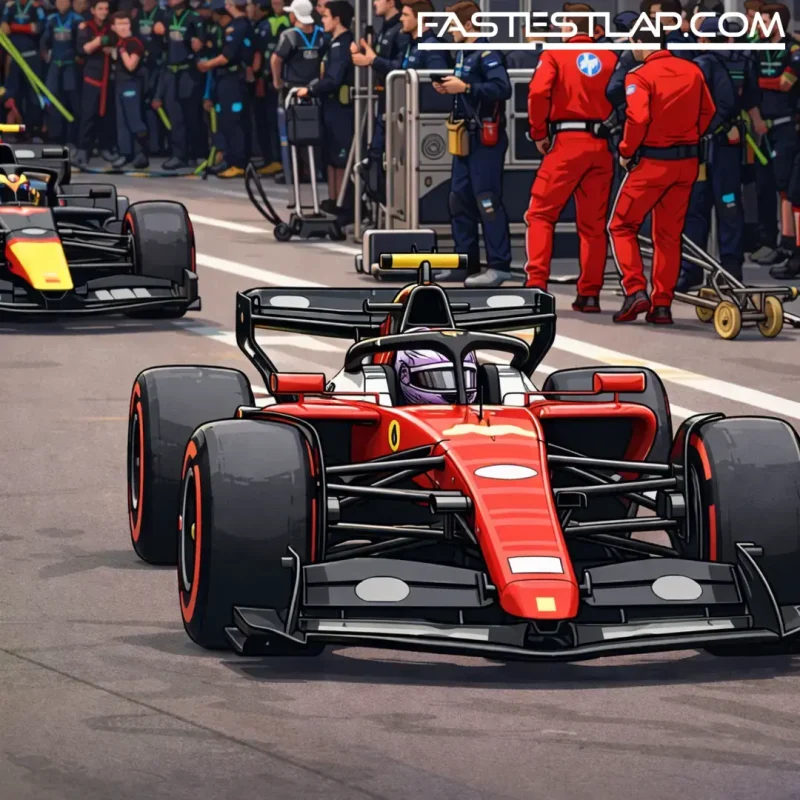
The theme that defined the afternoon, though, was pit lane speed. Monaco’s 60km/h limit became a trap with teeth, and the margins were brutal: several drivers were caught at 60.1km/h — the sort of “gotcha” that feels almost comically small until you remember the rule is the rule and the timing loops don’t do sympathy.
Lewis Hamilton was first to be stung, Ferrari’s day immediately acquiring that familiar Monaco tension: no room, no time, no forgiveness. The FIA noted Hamilton at 60.1km/h, and the stewards duly issued a five-second penalty.
Mercedes didn’t need long to join the party. George Russell followed Hamilton into the same net, also at 0.1km/h over, also receiving a five-second sanction. Oscar Piastri then added McLaren to the list — again 60.1km/h, again five seconds — despite being warned about the risk. Franco Colapinto was caught the same way, and then Pierre Gasly matched the pattern: 60.1km/h and a five-second penalty that, at Monaco, can be the difference between a champagne night and an exercise in damage limitation.
Gasly’s afternoon went from irritating to genuinely consequential late on, when he picked up a second pit lane speeding offence under Safety Car conditions, this time at 60.4km/h. There was no sporting advantage to be had with the field neutralised, but that’s not the point of the pit lane limit — it’s safety, and the regulations are written accordingly. Another five-second penalty followed.
The knock-on was huge. Gasly didn’t serve both penalties during the race, and after the chequered flag the total converted into a 10-second post-race addition, which dropped him from third on the road to seventh. That reshuffle mattered because it effectively handed the final podium place to Isack Hadjar — and it’s also why Alpine’s response has been so immediate. The team has already exercised its Right of Review, with mechanics seen measuring pit lane distance post-race, clearly hunting for “relevant new evidence” that could prompt the FIA to reassess the sanctions. If Alpine succeeds, Hadjar’s podium is suddenly under threat.
Away from the pit lane speed trap, Sergio Perez managed to collect a set of Monaco penalties that read like a checklist of procedural errors. First came a false start — specifically, being out of position. Qualifying 18th, Perez pulled into the 16th grid slot that had been vacated when Gabriel Bortoleto was forced to start from the pit lane. The stewards deemed that a “very significant advantage”, and the Cadillac driver was hit with a drive-through.
Then, as if Monaco needed a second bite at the same storyline, Perez was pinged again at the red-flag restart for being outside his grid box. That one became a 10-second penalty imposed after the race. He also received a driving reprimand for completing a practice start in the wrong location, judged to be in breach of the race director’s event notes. It was, in short, an untidy weekend on the operational side — the sort of thing teams normally keep locked down in Monaco because the circuit punishes even tiny mistakes.
There was also late-race discipline beyond the obvious. Lance Stroll, struggling with braking issues before his retirement, exceeded track limits four times. After being shown the black-and-white warning, the fourth breach brought a five-second penalty.
Hadjar, despite the podium benefit from Gasly’s penalties, had his own moments under the microscope. During the red flag triggered by Charles Leclerc’s late crash, Red Bull mechanics were spotted working on Hadjar’s car in the pit lane. The stewards’ report noted they were observed “attempting to change spark plug/coils” — work that isn’t simply waved through under red-flag restrictions — but crucially, it didn’t proceed once spotted and the car was returned to the condition it arrived in. The FIA took no further action.
Hadjar was also investigated under Safety Car conditions after Stroll’s crash for leaving a gap of more than 10 car lengths to the car ahead. Hamilton was flagged for the same alleged offence in the same phase. Again, both ended with no further action, but it underlined how tightly the FIA was policing neutralisation procedures on a day when the field repeatedly had to reset and behave.
The red-flag restart itself provided the usual Monaco cocktail: bunched cars, cold tyres and drivers trying to win positions where the track offers almost none. Nico Hulkenberg and Carlos Sainz tangled at the hairpin, with Hulkenberg arguing he’d been forced into the situation while taking avoiding action and at maximum steering lock in his Audi. The stewards didn’t buy it; they deemed Hulkenberg to have caused the collision and issued a 10-second penalty after the race.
Two corners later, Sainz was involved again — this time with Colapinto at Portier. Colapinto’s move up the inside ended with contact that spun the Williams and damaged Sainz’s rear wheel, ending his race. Yet despite the optics of the hit, the stewards ruled no further action: they placed the blame on Sainz for an unexpected change of direction as he tried to reclaim the racing line after previously allowing cars through following the Hulkenberg contact.
Put it all together and Monaco 2026 wasn’t just a race decided by barriers and bravery — it was shaped by a regulatory dragnet where being 0.1km/h over the limit mattered, grid box discipline mattered, and every Safety Car nuance was treated as worthy of scrutiny.
That’s not necessarily a criticism. Monaco has always tested judgement under pressure, and in 2026 it tested administration, too. The only real certainty is that the last word may not have been spoken yet — not if Alpine’s Right of Review has anything to say about who really finished on that podium.