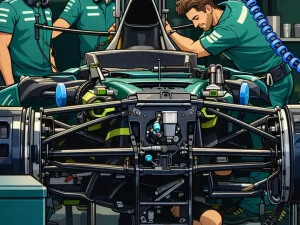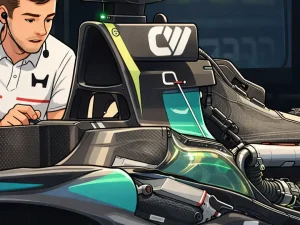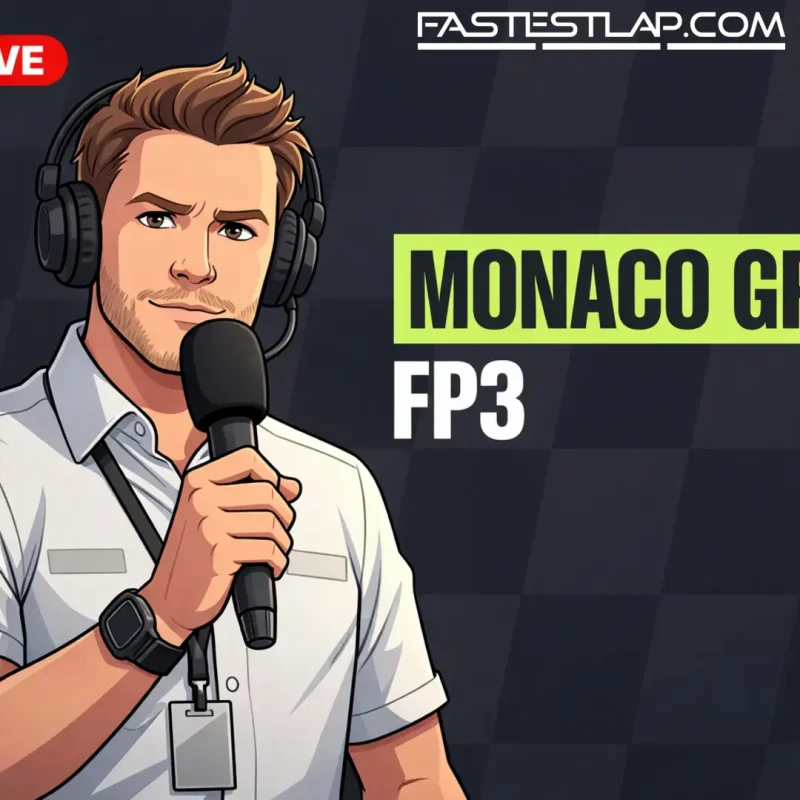
Saturday morning in Monaco always carries the same edge: the paddock’s awake, the grandstands are filling, and everyone’s pretending this is “just” another practice hour. It isn’t. FP3 around the Principality is a dress rehearsal for the session that actually decides your weekend, and every lap is a tiny negotiation between confidence and consequence.
Final practice for the 2026 Monaco Grand Prix gets under way at 12:30 local time (11:30 UK) and runs for 60 minutes on the Circuit de Monaco. That sounds routine until you remember what Monaco does to routines. The track doesn’t so much reward preparation as punish hesitation; it’s the one place where a driver can feel “on it” through sector one and still find the barrier with half a degree too much steering lock at the Swimming Pool.
This hour is about getting the eyes in — that slightly tired phrase engineers use because it’s true. Sight lines here are strange, braking points are referenced to paint lines and shadows, and the car feels different once the track starts to come to you. Teams will want drivers to build rhythm early, but they’ll also be acutely aware that an FP3 red flag can turn the entire session into a queueing problem. One blocked run, one aborted lap in traffic, and you’ve lost the chance to answer the only question that matters: can you commit through the fast change of direction without second-guessing the rear?
What you typically see in Monaco FP3 is a split personality. The first half is careful — systems checks, baseline laps, building temperatures without getting greedy on the kerbs. Then, once the track’s more rubbered-in and drivers trust the grip, it becomes a low-key qualifying simulation contest: a new set, an empty gap if you can find one, and maximum intent through the tunnel and into the chicane. If someone brings out a yellow, every other team will be fuming, not because of the incident itself, but because the opportunity cost is huge.
And that’s why FP3 is quietly one of the most psychologically revealing hours of the year. Some drivers need it. They use it to calibrate their braking and convince themselves the car will stick when they throw it at a corner that looks too narrow to accept a modern F1 car. Others almost don’t want it — too much time to think, too many chances for a tiny mistake to become a big one. Either way, the paddock watches the same things: who’s brushing the walls, who’s leaving a safety margin, and who’s already driving like the polesitter.
Set-up wise, it’s less about finding a perfect answer and more about choosing what you can live with. Monaco’s trade-offs are brutal: you want compliance over bumps and kerbs, but you can’t afford a car that feels vague when you ask it to rotate at low speed. If the rear is nervous, it’s a lottery at Mirabeau and the Loews hairpin. If the front won’t bite, you’re bleeding time everywhere and you’ll end up overdriving — which is how the barriers cash in.
Then there’s traffic, the great equaliser. Monaco doesn’t care if you’re on a flying lap or an out-lap; there’s only so much road. The best-prepared teams will manage gaps aggressively, and drivers will be vocal on the radio if they’re compromised. It’s not melodrama — it’s math. One ruined lap might mean you go into qualifying without a proper read on tyre warm-up, braking stability, or how hard you can attack the kerb at the first part of the chicane without unsettling the car. Around here, uncertainty is a performance penalty.
The other layer is risk management. FP3 is the final opportunity to test the limit before parc fermé locks you into the weekend’s direction and qualifying asks you to be perfect. That makes the opening minutes important: get a banker run done early, avoid being the person who turns the session into a recovery operation, and keep the car clean. No one wins Monaco in practice, but plenty of weekends get lost there.
So treat this hour like what it really is: not a warm-up, but a tone-setter. If a driver can roll out, find the groove quickly, and do it without flirting too hard with the Armco, that’s usually a sign the qualifying approach is coherent — and in Monaco, coherence beats heroics more often than anyone wants to admit.
FP3 begins at 12:30 local time, with qualifying later today. In Monte Carlo, the clock is always ticking — even when it says “practice.”