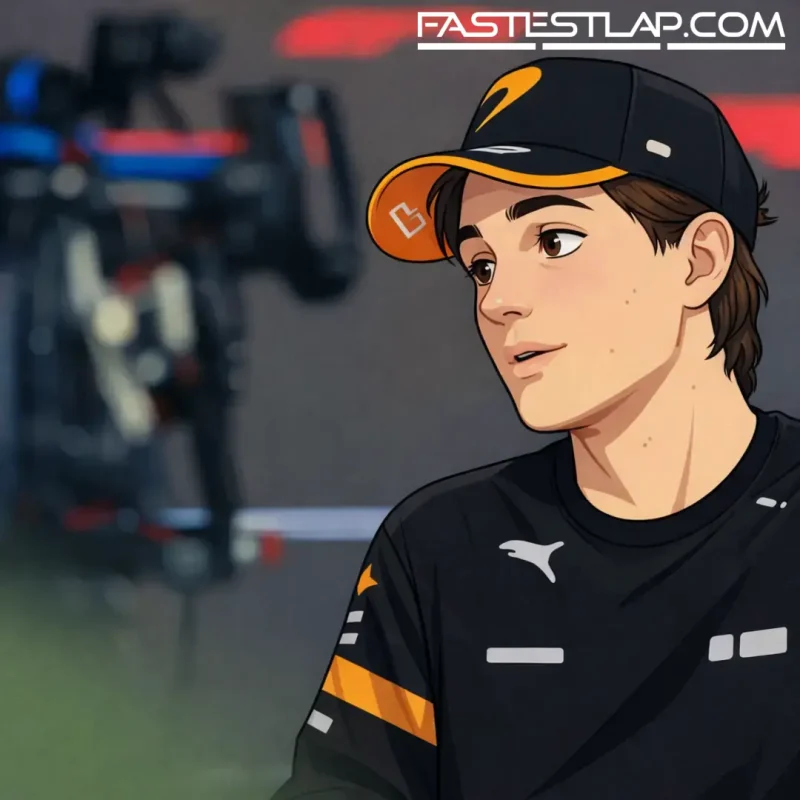
Oscar Piastri doesn’t look like a driver who enjoys getting dragged into politics, but even he sounded genuinely stunned by the FIA’s decision to reinstate Pierre Gasly’s Monaco podium after Alpine’s successful right of review.
The core of the mess is simple enough. Gasly finished third on the road in Monaco, then got dumped down to seventh once two separate five-second penalties for pitlane speeding were applied post-race. He was one of five drivers caught for the same transgression, but unlike the others he didn’t serve the sanction during the race because the penalties arrived too late to be dealt with at a pit stop. Instead, the time was added after the flag.
That should’ve been the end of it — except it wasn’t.
Alpine pushed the case into a right of review, and it landed because the official timekeeper (supplied and managed by Formula One Management, with stewards relying on that data) admitted a measurement error. The distance in the pit entry zone timing loops had been miscalculated, which meant Gasly’s “speeding” wasn’t just debatable, it may not have been real. More awkwardly for the sport, the stewards’ own paperwork acknowledged that the other pitlane speeding breaches from the race might not have been genuine either.
So Gasly’s third place came back. Everyone else’s pain, however, stayed very much in place.
That’s where Piastri’s frustration comes from — not simply that he’s lost a position, but that the system has effectively created two classes of penalty: the one you serve immediately because you accept the stewards’ data as gospel, and the one you can unpick later if the underlying measurement turns out to be flawed.
“I’m pretty mind blown by the decision,” Piastri said in Barcelona after qualifying. “Because how you can reverse a decision — that was ultimately wrong — but, when other people have been penalised for the same thing and served the penalty in the race… How you can then change one penalty, knowing that probably five or six other races have been impacted by that, is astonishing.”
It’s the kind of comment that lands because it’s hard to argue with the logic. In Monaco, Piastri did what drivers are generally told to do: take it on the chin, pit, serve the penalty, move on. Russell’s situation was even uglier — the Mercedes driver ended up outside the points, having received a drive-through for failing to serve the initial penalty correctly. In other words, Monaco didn’t just shuffle the order; it triggered a chain reaction of decisions and consequences that can’t simply be reversed by restoring one driver’s result weeks later.
And that’s the part paddock folk keep circling back to: what, exactly, is the “fair” outcome once the sport admits the measuring tool might have been wrong?
McLaren and Red Bull have indicated they intend to appeal the decision to rescind Gasly’s penalties. The competitive knock-on is obvious enough: Isack Hadjar was bumped down to fourth, Piastri to fifth. But beyond the immediate positions, there’s a bigger worry — the precedent.
Piastri, with a dry smile, spelled out how quickly this turns into a logic puzzle no stewarding document can solve neatly.
“I lost the position to Pierre because I served the penalty, so technically I should be P3!” he said. “But then, technically, George should be P3 and the whole thing is now a mess; it’s quite the predicament they’ve got themselves into, and I don’t know how you get yourself out of that one.
“Now the precedent, as it is, is you don’t serve the penalty, you take it to court, wait probably a few months to decide the race, and who the hell wants to go racing like that?”
That line — “who the hell wants to go racing like that?” — is the real sting. F1 lives on immediate consequence. The sport can tolerate controversy, even inconsistency, but it cannot thrive if results begin to feel provisional. Once drivers and teams start gaming the system on the basis that “we’ll sort it out later”, the whole weekend loses its finality.
And yet, the sport’s also boxed in by the uncomfortable truth that the review wasn’t based on a subjective interpretation; it was based on the timing infrastructure itself. If the data was wrong, ignoring it for the sake of convenience would be just as corrosive. You can’t loudly preach precision and then, in the next breath, shrug at a confirmed measurement mistake because fixing it is administratively inconvenient.
Piastri admitted as much when asked whether any solution can possibly satisfy everyone at this point.
“I think before you could kind of say ‘bad luck, it was wrong’, but it was wrong for everybody, and everyone was treated the same,” he said. “Now, it’s very, very murky how you judge that. So, obviously, I don’t think the race result will be canceled, but yes, it’s quite the situation that’s unfolded.”
That’s where F1 now finds itself: trapped between the need to correct an admitted error and the impossibility of rewinding the consequences for everyone else who reacted to the same data in real time.
Gasly’s restored podium might be legally tidy in isolation. In the broader context of how a Grand Prix actually unfolds — pit calls, risk management, driver behaviour under pressure — it’s anything but. The fallout in Barcelona is less about one Alpine result and more about whether F1 is comfortable opening the door to post-event litigation becoming just another strategic tool.
Because once that door is ajar, it won’t stay a one-off Monaco story for long.