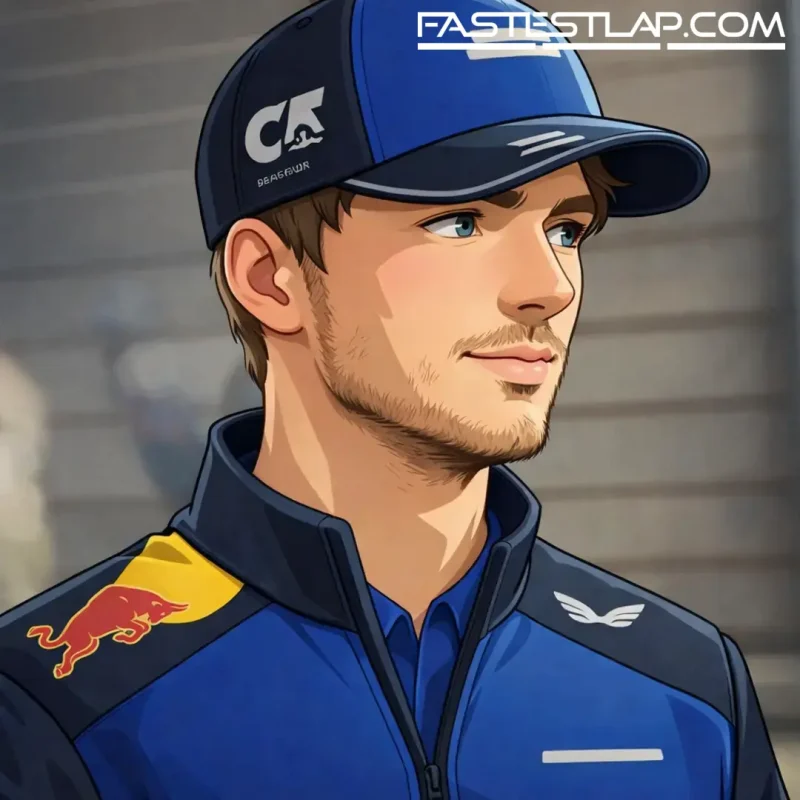
Juan Pablo Montoya has never been shy about saying what plenty in the paddock only mutter into their coffee. This time he’s aimed squarely at Red Bull’s uneasy balancing act with Max Verstappen: a four-time world champion who still wants to race anything with four wheels, even if it isn’t wearing an F1 number.
With Verstappen set to make his competitive debut at the Nürburgring 24 Hours in May, Montoya thinks Red Bull should step in and draw a hard line. Not because Verstappen’s GT ambitions are a distraction — if anything, he’s proved over the years he can juggle a packed calendar and still deliver on Sundays — but because of the brutal reminder that motorsport’s safety gains don’t erase risk.
Earlier this month the community was jolted by the death of Juha Miettinen in a multi-car crash during Nürburgring Langstrecken-Serie (NLS) qualifying. The session was abandoned before Verstappen was scheduled to take over a Mercedes-AMG GT3. For Montoya, that timing is beside the point. The incident, he argues, should be a trigger for Red Bull to reassess whether letting its biggest asset play in someone else’s sandbox is worth it.
“One-hundred per cent. No, sorry, 200 per cent,” Montoya said on the MontoyAS podcast when asked if he’d ban Verstappen from racing outside Formula 1. His reasoning is blunt: a broken arm, a broken leg — the sort of injury that can come from a relatively routine GT shunt — doesn’t just hurt Verstappen, it destabilises Red Bull’s entire competitive project.
“The money that Red Bull has invested in him should be enough reason to say: ‘Look, we gave you the chance, but with this accident we are reconsidering it and we think that this should not happen,’” Montoya said. “Personally, I would have done it if I had been the boss of Red Bull. I would have called Max and said: ‘Sir, please, don’t get in the car anymore.’”
It’s a very Montoya way to frame it — equal parts protective and uncompromising — but it lands on a real tension teams rarely enjoy discussing in public. Drivers are brands now, but they’re also operational lynchpins. If Verstappen misses races, Red Bull doesn’t just lose points; it risks an entire season’s direction, sponsor value, and the carefully engineered momentum that keeps a top team functioning.
Verstappen, of course, isn’t dabbling. He’s become increasingly active in GT racing through Verstappen Racing, and the Nürburgring 24 is not a track-day flourish. It’s one of the most demanding endurance races in the world, on a circuit that has a way of punishing even the smallest lapse — whether that comes from a driver, traffic, or the simple chaos of mixed-class racing at speed.
Montoya also doubts Red Bull will actually follow his advice, suggesting the team is “afraid of losing” Verstappen — an interesting choice of words that hints at the broader power dynamic. In modern F1, the very top drivers don’t just drive the car; they shape the atmosphere around it. Telling one of them “no” can quickly become a negotiation about far more than the original request.
There’s also a familiar historical echo in Montoya’s view. He recalled being invited multiple times during his own career to test rally cars, only for the opportunity to be shut down. “They never let me drive,” he said. It’s not hard to guess why. A rally stage doesn’t care who you are, and the return on investment for an F1 team is basically nil.
Red Bull, for its part, has already put its position on record. Team principal Laurent Mekies said earlier this year that the team needed no persuading to green-light Verstappen’s Nürburgring plan. Mekies has framed Verstappen’s off-track racing as something that actually feeds the main job, saying it brings him back “with more energy”.
That’s a view plenty of team bosses have privately held at different points — that the best drivers are often the ones who need to race, full stop, and that trying to cage that instinct can backfire. But even if you buy the psychological argument, it doesn’t make Montoya’s central point disappear: if the worst happens, nobody will be talking about “energy”. They’ll be talking about why a championship team allowed a generational talent to take on extra risk in a series it doesn’t control.
The uncomfortable truth is that both perspectives can be correct at once. Verstappen racing elsewhere may well make him happier, sharper, and more engaged. It also undeniably increases the number of scenarios in which Red Bull could find itself staring at a garage bay missing the one driver it’s built around.
This is where the Nürburgring tragedy sharpens the debate. Motorsport is safer than it’s ever been — and yet moments like this slice through the comforting assumption that professionalism and modern standards are a guarantee. They aren’t. They’re mitigation.
Montoya’s advice might be extreme, even paternalistic, but it reflects a question Red Bull can’t avoid now that Verstappen’s interests are widening: is this still a controlled indulgence, or is it drifting into a space where the downside is simply too big?
Red Bull has backed Verstappen’s Nürburgring debut once. If it backs him again after this month’s events, it won’t be doing so out of ignorance — it’ll be making a conscious call that the upside of keeping its star fulfilled outweighs the kind of risk that only becomes obvious when it’s already too late.