James Vowles isn’t pretending Williams has suddenly found a magic trick in the first months of F1’s new era. But he is, quite deliberately, drawing a line between the team he’s building now and the one that spent too many seasons waiting for problems to fix themselves.
Ahead of what’s expected to be a lively driver market as the 2026 pecking order settles, the Williams boss has been keen to stress that both Carlos Sainz and Alex Albon are still bought into the project — and, in his view, the car’s recent steps are exactly the sort of proof serious drivers demand.
Sainz arriving at Williams after losing his Ferrari seat to Lewis Hamilton was always going to be judged through the 2026 lens. New rules, new competitive map, and a chance for a reset: it was an opportunity, but also a gamble. The early returns have been modest on paper — Williams sits eighth in the Constructors’ standings with seven points — yet there are signs the team is at least moving with intent rather than simply hanging on.
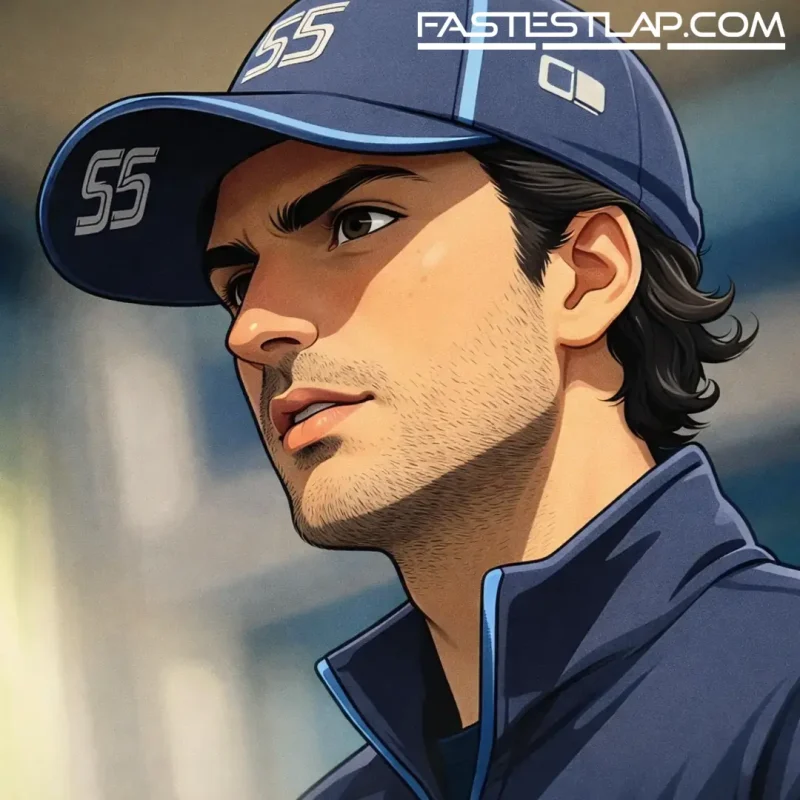
Sainz has put together back-to-back ninth-place finishes in Miami and Canada, and in Montreal he reached the final phase of Sprint qualifying. That’s not champagne territory, but it’s the kind of rhythm that stabilises a season and, crucially, tells a driver that the team can respond when it identifies performance.
When asked in Canada where the FW48 has improved since the season began in Melbourne — a weekend Vowles openly framed as a low point, with Williams struggling just to escape Q1 — his answer wasn’t the sort of soundbite you feed to a sponsor. It was a shopping list.
“A little bit of everything,” Vowles said, before detailing weight reduction, “a substantial aero package” and specific floor development that intensified around Miami, with further floor modifications already introduced in Japan. The telling line wasn’t about any single upgrade; it was the scale of the push behind it. Vowles pointed to “about 32 different work structures” between Japan and Miami alone, with only one of those being the headline aero kit. The rest, he explained, were about the methods — the way Williams is trying to bring performance to the car consistently rather than episodically.
It’s the kind of comment that reveals where he thinks the real battle is being fought. For a team trying to re-establish itself, the problem is rarely knowing *what* to improve; it’s building the pipeline that lets you improve *often*, without breaking the car in the process.
On the technical side, Vowles also flagged changes around “exhaust blowing” — including moving the exhaust position — plus rear suspension work that has allowed Williams to run the car “in a very different way” and find better balance through corners. He even referenced exploring “different ways of using the turbo” and using the power unit differently, noting that Williams is “still learning” but already doing “a much better job” than at the start of the year.
The subtext was clear enough: this is a team trying to close the gap to its works benchmark, and it believes that gap is shrinking. Vowles admitted it’s not yet where he wants it, but said the offset seen in Melbourne has reduced since.
That matters for more than lap time. In a year where plenty of contracts and ambitions are going to be tested, the quickest way to unsettle a driver pairing is to look static — to appear as if you’ve hit the regulations with no plan, then spend months improvising. Vowles’ pitch isn’t that Williams is already “there”; it’s that Williams is now set up to react and iterate at a “very high rate”.
He was candid about why he’s pushing the message. “It is really important to me and to my board… to demonstrate we’re not the Williams of old,” he said, adding that the old pattern would have been “a difficult winter” followed by “languish[ing] back there”.
That line — “not the Williams of old” — wasn’t aimed at rival team principals. It was aimed at the people inside Williams and, just as importantly, at the two drivers at the sharp end of the project. Vowles’ argument is that Sainz and Albon aren’t judging the team on whether it can occasionally sneak into Q3; they’re judging it on whether it has the infrastructure and processes to “fix and remedy problems when they come up”.
He doesn’t claim the job is done. “We haven’t done enough yet,” Vowles admitted. But he’s adamant the direction is right — and that the drivers see it too.
“In terms of ‘silly season’, speak to Alex, speak to Carlos,” he said. “They want to be part of this journey.”
In modern F1, “journey” can be a euphemism for “please don’t leave.” But the more interesting angle here is that Williams is trying to make the journey tangible: not with grand promises, but with a car that’s lighter, more aerodynamically evolved, mechanically better-behaved and — perhaps most significant — developed at a tempo that suggests a team finally confident in its own systems.
Sainz’s recent P9s won’t scare the front-runners, and Williams is still only eighth with seven points, but the early 2026 story at Grove isn’t about a miraculous jump. It’s about credibility — the kind that keeps a driver lineup intact when the market starts to move.