James Vowles doesn’t often stray into other teams’ disputes, but Monaco’s pit-lane fiasco has dragged everyone into it. With Mercedes, McLaren and Red Bull all pushing to re-open Pierre Gasly’s restored podium, the Williams boss has sided with the appellants — and he’s warned F1 has created a problem it can’t neatly put back in the box.
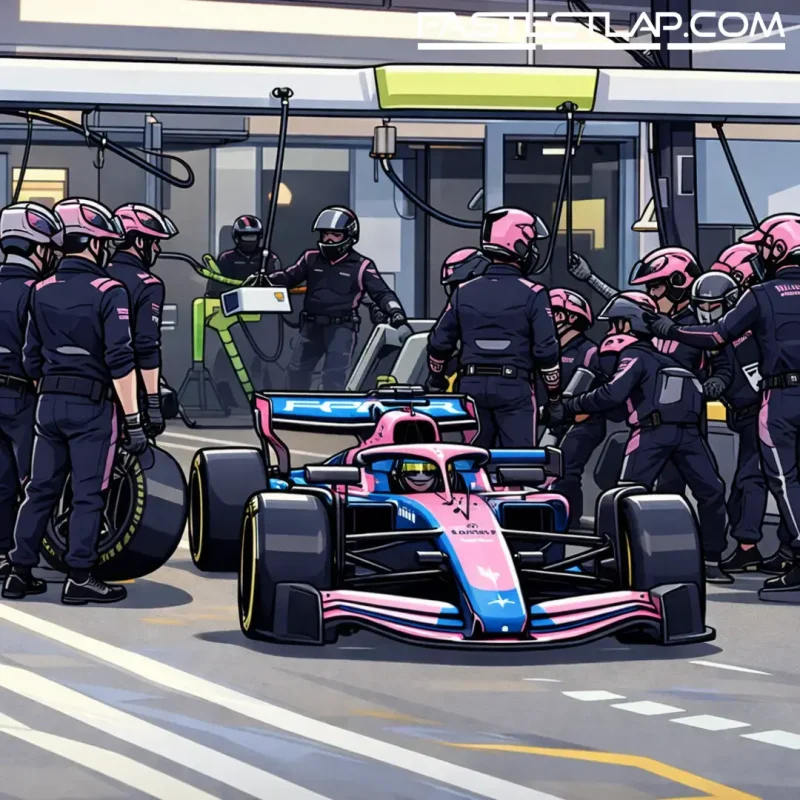
Gasly crossed the line third in Monaco before two five-second penalties for pit-lane speeding dropped the Alpine driver to seventh, promoting Red Bull’s Isack Hadjar onto the podium. Alpine, crucially, chose not to pit and serve the penalties in-race. That decision kept the result “alive” enough for a Right of Review, and the team used it — successfully — when a key detail emerged: Formula One Management’s measurement of a pit-lane timing loop was incorrect. With that correction in play, Gasly was reinstated to third.
That’s where the sporting headache begins. Lewis Hamilton, George Russell and Oscar Piastri were also penalised for speeding, but unlike Alpine they served their penalties during the grand prix. Now Mercedes and McLaren have lodged petitions for Review, and Red Bull has done the same after losing back the podium position Hadjar briefly inherited.
Vowles’ point is blunt: once you accept the underlying measurement was wrong, the sport has to answer for the consequences — and it’s not obvious how you do that without opening a can of worms.
“Here’s my view on it, it is not the first time it has happened,” Vowles said on Sky Sports F1, backing the efforts to overturn the reinstatement or at least revisit the wider implications.
He reached for a familiar example from earlier in his career, referencing a similar scenario in Singapore “when I was with a different team”, where the way drivers cut across the pit lane can effectively shorten the distance being measured if they’re not staying within the lines.
“If you watch on-board, you’ll see they are not driving in the white lines; they’re driving across the white lines, so you’ve shortened the distance,” he said. It’s a detail that teams obsess over and drivers barely notice in the moment — until the timing data spits out a speeding notification and you’re suddenly arguing over centimetres of paint.
Williams, Vowles explained, had already been stung by a speeding fine in Monaco practice and reacted in the only way teams realistically can: pull the margin down further. The nominal limit might be 60kph, but nobody runs right on the edge of it.
“If you look back at Monaco, we received a speeding fine on Friday, had a look into it and went: ‘Ah, this is what happened, and we tuned down our speed limit as a result of it because that is the regulation,” he said. “Nobody tunes their pit-lane speed limit to 60kph, it is always below that.”
There’s a quietly barbed implication there. If the loop measurement was off, then teams that reacted by adding margin — or drivers who happened to take a different line through the pit lane — effectively paid for an error that wasn’t theirs. And if some teams served penalties during the race while another team preserved the right to challenge, you’ve got an uneven playing field created by procedure rather than performance.
Vowles’ advice was refreshingly simple and, in this context, slightly loaded: don’t change what you do on Sunday.
“My advice to anyone is to drive on Friday and Saturday the same way you are going to drive on Sunday, don’t change your line, which is going to catch you out,” he said.
Even so, he admitted the Gasly reinstatement surprised him — not because Alpine didn’t have a case once the timing loop issue was established, but because of what it does to everybody else’s result.
“I’m surprised we have the reinstatement [of Gasly’s podium], but being frank, it doesn’t really affect us, but I think it creates a bit of a mess now,” Vowles said. “What do you do with George? What do you do with Piastri, who, in those circumstances, should have been on the podium as a result?
“That’s the mess I don’t feel comfortable about.”
In other words: if the system was wrong, and multiple drivers were penalised by that system, selectively “fixing” the outcome for the one case that remained contestable feels arbitrary — even if it’s legally consistent with the process. It’s the kind of scenario that leaves teams privately fuming, because it punishes those who followed the usual playbook: take the penalty, move on, salvage what you can on track.
Asked directly about the fresh round of appeals from Mercedes, McLaren and Red Bull, Vowles didn’t hedge.
“I would support them in that,” he said.
That support matters less in any formal sense — Williams isn’t party to the dispute — and more because it reflects the paddock’s broader discomfort. Monaco has always been a race where tiny margins decide big outcomes, but this one has drifted from razor-thin racing to a debate about timing infrastructure and procedural luck.
And once the championship starts being shaped by who happened to keep a penalty “in reserve” rather than who absorbed it in the race, it’s not just a stewarding controversy. It’s an uncomfortable reminder that the sport’s governance can still trip over its own machinery — and leave everyone arguing about what the correct result should have been, long after the chequered flag.