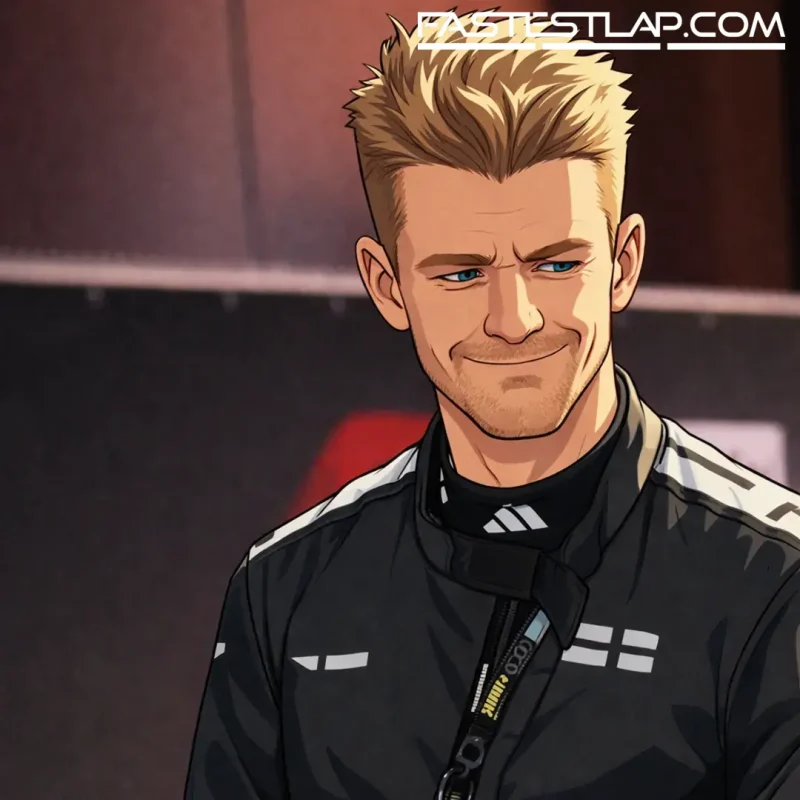
Nico Hülkenberg left Monaco feeling he’d been punished twice: once by the inevitable first-lap squeeze around the Principality, and again by a stewards’ decision he says came without the usual right of reply.
The Audi driver crossed the line ninth after a messy red-flag restart compacted the field into the kind of accordion traffic jam Monaco specialises in. But a 10-second post-race penalty for contact with Carlos Sainz at the Fairmont hairpin dropped Hülkenberg to 13th and wiped out what would’ve been another useful points haul for a team still building its 2026 identity.
What’s really rankled, though, isn’t just the verdict — it’s the process. Hülkenberg argued that the penalty appeared to arrive fully formed, without the typical summons to the stewards that allows a driver to explain what they saw, what they didn’t, and what they physically could or couldn’t do in a corner where you’re often committed long before the apex.
“Bit weird for me is that it was just immediately handed out, the penalty,” he said. “It’s not even like investigated, or that we needed to go and speak or explain to the stewards as it usually is. That was a bit disappointing obviously for us.”
In Hülkenberg’s version of events, the incident was less about a single misjudgement and more about the chain reaction Monaco produces when one car manipulates the pace and everyone else tries to avoid becoming collateral. He pointed the finger at George Russell for backing the pack up — a common tactic when penalties and gaps are in play, and one that can be legitimate within the rules, but which turns the restart into a concertina that snaps shut at the slowest corners.
“I watched the replay. For me, it all starts with George backing up the whole field, trying to create a gap for his penalty, which obviously creates a mess and chaos,” Hülkenberg said. “And especially Monaco, cars are tripping over each other.”
Hülkenberg described a crowded run down to the hairpin where he had Fernando Alonso to his right and an unfolding fight involving Esteban Ocon demanding attention at exactly the wrong moment. That, he says, is what forced him to the inside line into the left-hander — a place you can choose when you’re in clean air, but sometimes simply inherit when the road closes around you.
“Coming out of Mirabeau, I had Fernando on my right, on the inside, Esteban was fighting some other car, and then I’m looking left, right, left, right, and I have to avoid Esteban all of a sudden,” he explained. “That’s why I ended up on the inside in the first place.”
From there, the geometry gets unforgiving. Hülkenberg, at full lock on the inside, ran out of road on exit as Sainz took a more central track position, aiming to tuck in behind Alex Albon as the Williams cars accelerated towards Portier. Contact followed — the sort of nudge that’s often treated as “Monaco, lap one” until it isn’t.
Hülkenberg believes Sainz had options too, suggesting the Spaniard’s cutback tightened the available space at the worst possible time.
“I feel that Carlos is also on the outside,” Hülkenberg said. “He knows we’re all bunched up, he cuts back quite a lot. He could have also saved himself by staying a bit wider; he didn’t need to cut back like that.
“But at the end of the day, it’s lap 1, you have a car bunching up 10 other cars, so things do get tight, and it happens in racing, especially on lap 1 in Monaco.”
That framing — shared responsibility in a compressed restart situation — is exactly the kind of nuance drivers want to put in front of stewards face-to-face. It’s also where Hülkenberg’s frustration taps into a wider paddock tension: teams can accept penalties; they’re less willing to accept a sense that decisions are being administered mechanically, especially when those calls swing points and momentum for outfits living race-to-race.
For Audi, the timing stung. Ninth place would’ve meant two points and another small step in the right direction after the Sauber-to-Audi transition at the end of last season. Instead, Monaco became a story of “what might have been”, and Hülkenberg left with the kind of irritation that doesn’t fade quickly — not because drivers expect special treatment, but because they expect the same procedural rhythm every time.
Monaco will always produce incidents that look worse in freeze-frame than they feel from the cockpit. Hülkenberg’s complaint, in essence, is that the stewards judged a snapshot — and he never got the chance to explain the moving picture.