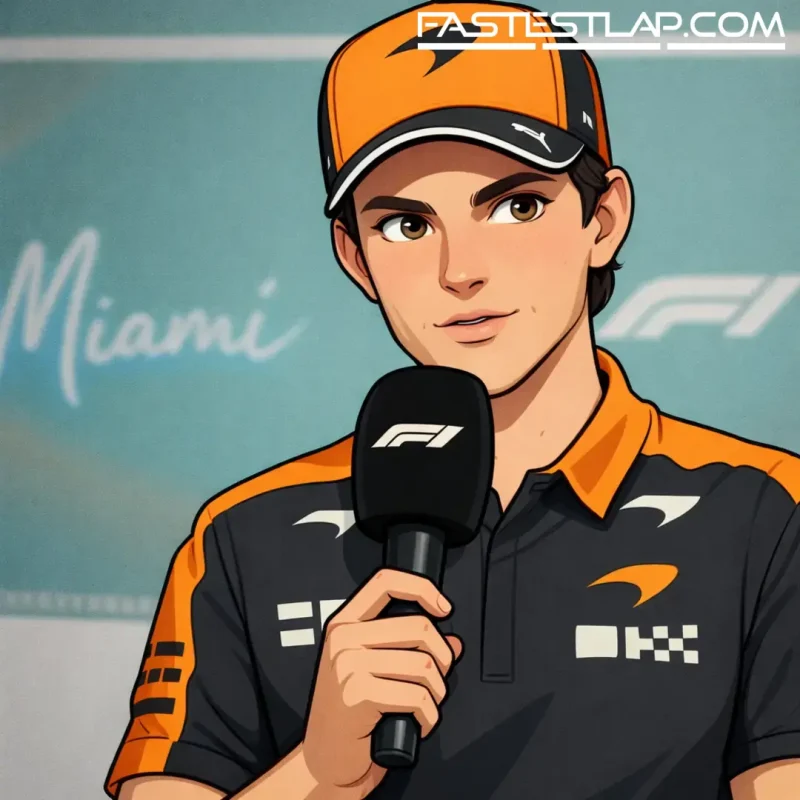
Oscar Piastri walked out of Miami with a podium, but not much belief that Formula 1’s first round of 2026 energy-management tweaks has made racing any less twitchy.
The FIA’s early-season intervention — agreed after discussions involving the teams, manufacturers, FOM and the drivers — was meant to take the edge off a growing list of complaints about harvesting and “super clipping”, and to address a safety concern that flared after Oliver Bearman hit the barriers in Japan when he misjudged his closing speed on Franco Colapinto.
On paper, the changes were straightforward. In qualifying, the maximum permitted recharge was trimmed from 8MJ to 7MJ to ease the need for aggressive harvesting on prep laps. In race trim, boost mode was capped at 150kW and MGU-K deployment limited to 250kW in certain parts of the lap.
In Piastri’s view, only one of those levers has shifted anything meaningful — and it’s the one that matters least on a Sunday.
“I think reducing the harvest limit in qualifying has helped a bit,” Piastri said in Miami. “It’s not fixed the problem or all the problems, but it’s helping with one.
“The races are basically exactly the same.”
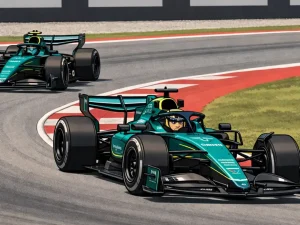
That frustration came with a very specific example attached: the moment George Russell’s Mercedes appeared in his mirrors and then, almost comically, was simply… gone. Piastri described the closing speeds created when Straight Line Mode and Boost Mode sync up as “pretty crazy”, and said the resulting swings in performance make it difficult for a defending driver to judge what’s coming.
“At one point George was one second behind me and managed to overtake me by the end of that straight,” Piastri explained. “It’s just a bit random. The closing speeds are huge and trying to anticipate that as the defending driver is incredibly tough to do.”
There’s an honesty in that description that cuts through the usual post-race soundbites. Drivers have always had to manage deltas — DRS, tyre offsets, ERS — but the 2026 cars are asking them to do it with a bigger speed differential arriving in a shorter time window. That doesn’t just change how you defend; it changes what a “safe” move looks like when you’re committing at 300km/h with imperfect information.
Piastri admitted the madness isn’t exclusive to the attacker either. He wasn’t thrilled by one of Russell’s moves, but then caught himself replicating the same kind of lunge a few laps later — not because his judgement suddenly changed, but because the car’s behaviour effectively pushed him towards it.
“Obviously for the overtaking driver, I wasn’t that pleased with one of the moves that George did,” he said, “but I kind of found myself almost doing the same move about five laps later, just because the closing speed is enormous.”
That’s the uncomfortable bit for the rule-makers: you can tweak numbers, but if the underlying concept produces these sudden “on/off” moments, the sport risks training drivers into the very behaviour it’s trying to calm down. And once that becomes normalised, you’re leaning on etiquette and reactions rather than regulation.
Piastri’s longer-term view was blunt. Without changing the engine formula itself, he doesn’t see a clean fix arriving via software-like adjustments. The new regulations are locked in until 2031, even if the FIA is pushing for V8s in 2030, and that leaves the championship living with the character of what it’s built.
“I think the collaboration again from the FIA and F1 has been good, but there are only so many things you can change with the hardware we have,” Piastri said. “So some changes in the future are still needed for sure. How quickly we can do it is the big question.”
Miami was only the third race of this new era, and the sport is already in that familiar early-regulation cycle: drivers saying it feels odd, engineers saying it’s working as designed, and the FIA trying to sand down the sharpest edges without pulling at a thread that unravels the whole sweater.
Piastri’s podium suggested McLaren has adapted well enough to fight at the front. His bigger point was that adapting doesn’t equal enjoying — and that the spectacle of dramatic closing speeds can quickly turn from “wow” to “what on earth was that?” when even the driver being passed describes it as random.
In 2026, Formula 1 has got what it asked for: a different kind of performance, delivered in different ways. The question now is whether it can make that difference feel like racing, rather than a sequence of energy-driven ambushes.