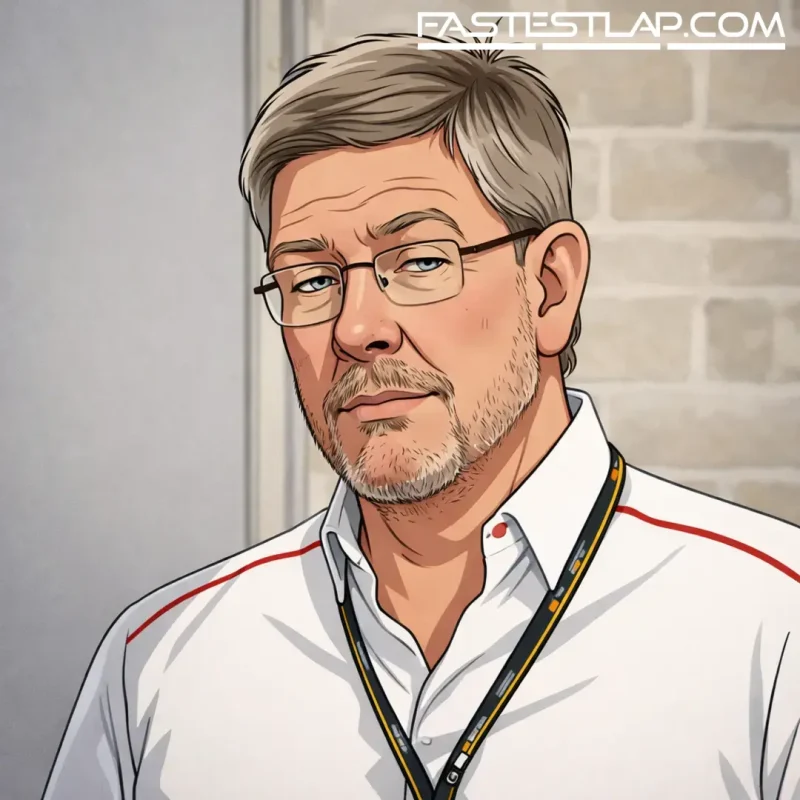
Ross Brawn is back in the sharp end of a pitlane — just not the one he made his name in.
Pramac Racing Limited has confirmed the 71-year-old has joined its board of directors and will operate as a strategic adviser to team principal Paolo Campinoti, a move that lands as something of a curveball even in a motorsport world increasingly comfortable with cross-series talent swaps.
Brawn hasn’t held an official role in Formula 1 since stepping away at the end of 2022, closing the chapter on a significant stint inside the sport’s power structure. After Liberty Media’s acquisition of F1, he became managing director (motor sports) and technical director at Formula One Management, with a heavy hand in shaping the ground-effect rules that arrived in 2022. Before that, his track record was already unmatched: championship-winning architect alongside Michael Schumacher at Benetton and Ferrari, then the improbable 2009 title as team principal of Honda-turned-Brawn GP, before staying on through Mercedes’ takeover.
Now, his experience is being redirected toward MotoGP at a moment when the series is rapidly changing complexion under Liberty’s ownership — completed almost 12 months ago — and when big names from F1 are suddenly becoming a recurring feature in a paddock that traditionally kept its celebrity ecosystem tighter.
Pramac’s motivation is hardly mysterious. The team is currently bottom of the MotoGP team standings with just six points scored so far in 2026. In that context, bringing in Brawn isn’t about a bit of brand polish; it reads more like an attempt to inject proven competitive thinking into an organisation that needs direction, momentum, and probably a calmer long-term plan than whatever the first part of this season has allowed.
“I’m delighted to join the board of Pramac Racing Limited in a non-executive role,” Brawn said. “Motorsport has always been about people, teamwork and continuous improvement and I look forward to supporting Paolo and the team and contributing where my experience may be useful. Pramac has built an impressive organisation with a strong spirit and ambition and I‘m excited to be part of its future.”
Campinoti leaned into the personal element, describing a longstanding friendship and saying Brawn’s “vision, knowledge and winning mentality” will aid the team’s continued growth.
If the language sounds familiar, that’s because it’s motorsport’s universal dialect. The more interesting part is what Brawn actually represents in 2026: a certain kind of institutional competence. He’s a systems guy — someone who, at his best, makes teams less frantic, less reactive, more deliberate. Even without being trackside every weekend, that sort of influence can reshape how decisions are made, which voices carry weight, and how quickly a team stops repeating the same mistakes.
Brawn’s appointment also fits neatly into the broader pattern since Liberty took control of MotoGP: a steady seepage of F1’s business networks, personalities and deal-making culture into the bike world.
Last year, a consortium led by former Haas team principal Guenther Steiner completed a takeover of the Tech3 team, with Alpine driver Pierre Gasly named among the investors — a deal that made Gasly the first active F1 driver to invest in a MotoGP team. It was the kind of headline that, even a few seasons ago, would’ve sounded like silly-season nonsense.
Then, just last month, Christian Horner turned up at the Spanish Grand Prix at Jerez alongside Formula 1 president and CEO Stefano Domenicali. The visit predictably ignited speculation that Horner might be lining up an executive role in MotoGP — speculation that was quickly undercut, with the understanding being his trip was simply personal as he maintains ties with Liberty while being linked to a future F1 return.
That rumour cycle tells you something important, though: the paddocks are no longer separate worlds. Liberty’s presence means the same corporate relationships, the same commercial logic, and increasingly the same cast of senior operators can move between them — and teams in trouble will always be tempted by people with a reputation for fixing things.
For Pramac, Brawn is about credibility as much as counsel. When a team is stranded at the bottom of the standings, every internal debate becomes louder: whether the structure is right, whether the decision-making is sharp enough, whether the next step needs to be radical. Putting Brawn in the room doesn’t solve performance by itself, but it can change the temperature. It can give Campinoti an extra layer of authority when he needs to push change through — and it can force more honest conversations when optimism starts drifting into denial.
In any case, it’s another reminder that Liberty’s MotoGP era is already starting to feel different. The series hasn’t simply gained a new owner; it’s gaining a new kind of ecosystem around it — one where boardrooms and pitwalls across two worlds are starting to share the same accents.