George Russell didn’t just take pole in Barcelona — he sent a very deliberate message across the Mercedes garage: stop trying to be Kimi Antonelli.
After a run of weekends where Russell’s results have looked like collateral damage to Antonelli’s surge, Saturday was a reset in the purest sense. Russell’s Q3 lap wasn’t a scrappy “got it done” effort either; it was a clean, authoritative three-tenths over the championship leader, the sort of margin that makes engineers stop fiddling and start believing again.
Russell admitted he’d drifted away from what made him quick in the first place. The revealing bit wasn’t the “back to basics” cliché — it was the honesty about “copy-pasting” Antonelli’s direction and paying for it. In other words, Russell tried to live in the same performance window as his younger team-mate and ended up stranded between ideas. This weekend he went his own way, and suddenly the car came back to him.
It’s also the kind of pole that changes the tone of an intra-team fight. Antonelli still has the points cushion, but Barcelona is the first time in a while the momentum has met something solid. Russell’s pace advantage wasn’t theoretical; it was there when it mattered, and it came with the unmistakable subtext that Mercedes’ pecking order isn’t as settled as recent form suggested.
For Antonelli, this is the more interesting test. He played down the impact of missing FP1, but his comments sounded like a driver who never quite found the front-end confidence he wanted. Low grip, over-attacking, and then the lap bleeding away in the final sector with a couple of slides as the tyres gave up on him. The mature response is obvious: bank the points, limit the damage, remember the championship. But second-year drivers are still learning what they can’t brute-force with talent, and Antonelli’s ability to keep his head when he doesn’t have the fastest car could become a subplot worth watching as the season tightens.
Behind the Mercedes headline, Ferrari’s qualifying told two completely different stories — one about composure, the other about pressure.
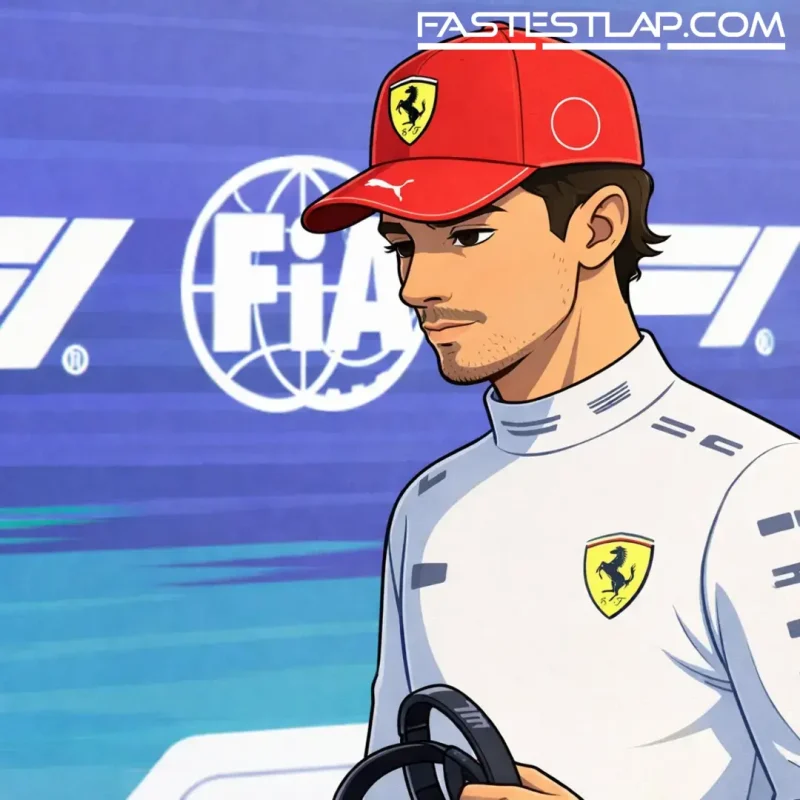
Lewis Hamilton’s was the quieter triumph, because it didn’t arrive with fireworks so much as process. He’d been scratching for pace through practice, half a second off in FP3, and then made a decision you don’t often hear a driver admit: he walked away. Literally left the track between FP3 and qualifying to reset, stayed on the engineering call, then came back and delivered. Quickest in Q1, and then, with Charles Leclerc out of the picture, Hamilton led the Ferrari effort when it mattered most.
The detail that will matter inside Ferrari is that this wasn’t one of those weekends you can file under “track-specific weirdness”. Barcelona is the honest exam paper. Ferrari brought a sizeable upgrade here, Hamilton found a way into the window, and he came out of it with his first Ferrari front-row start, splitting the two Mercedes cars. That’s a proper statement weekend in a place that tends to expose you if you’re faking it.
Leclerc, meanwhile, managed to turn a promising session into another self-inflicted wound. He’d had the edge over Hamilton in Q2, and then threw it away in an instant — pushing for more entry speed, releasing the brake earlier, and getting caught out as the rear let go when he picked up traction on the dirty line. He didn’t hide behind anything afterwards, either: no excuses, no references to traffic or gusts, just an uncomfortably blunt admission that he was ashamed and that, on days like this, he has to deliver.
It’s also the second crash in a week. Whatever the mitigating factors last time, this one sits squarely with him, and it lands at a point where the internal dynamic at Ferrari is shifting in plain sight. Leclerc has followed Hamilton down the route of changing brake materials from Brembo to Carbone Industries — and he was clear it played no role in the mistake — but the broader picture is hard to ignore: Hamilton is pushing changes, the team is responding, and the performance line is starting to tilt in his direction.
That doesn’t mean Ferrari has “become Hamilton’s team” overnight. But when one side of the garage is trending upwards with increasingly consistent execution, and the other is adding repair work and lost grid positions, the balance of influence has a habit of moving quickly, contract or no contract.
Further back, Alpine had one of those Saturdays where the quotes sound worse than the lap times — and the lap times weren’t great. Pierre Gasly was 14th, but the bigger issue was his complete lack of trust under braking. He described a car that darted left and right with the steering straight, something he claimed he’s never experienced in a decade in F1. Alpine even changed chassis, broke curfew on Friday night, and still didn’t understand it. Gasly’s “zero confidence” line landed with extra weight because he was also hinting that a pitlane start — breaking parc fermé — might be on the table if it’s the only way to make the car driveable over 65 laps.
Franco Colapinto’s side didn’t sound much healthier either, describing a “disconnected” feeling that suggests Alpine has bigger correlation questions than it can comfortably answer mid-weekend.
At the other end of the emotional spectrum, Sergio Perez qualified 19th for Cadillac and somehow still made it sound like progress — because it was, in context. Two seconds off pole at Barcelona in a new programme is not a disaster, and Cadillac being a full second clear of Aston Martin at the back will have been noted up and down the paddock. Perez, tellingly, wasn’t interested in laughing at the green cars; he was talking about finding another six-tenths to “be in the mix properly”, and mentioned a deployment issue through the final two corners. It’s the mindset of a driver who senses the platform is better than the headlines suggest, even if the operation still has rough edges — something that showed on Valtteri Bottas’ side after a brake issue in FP3 left the team scrambling.
And then there’s Fernando Alonso, at home, in last place, sounding every bit like a man trying not to boil over. Aston Martin’s slump has been obvious, but Barcelona made it brutally visible: off the pace of everyone, including the newcomers, and even outqualified by Lance Stroll, snapping Alonso’s two-year run of beating him on Saturdays. Alonso’s response to questions was curt, and his assessment of the situation was bleak. The only relief he offered was future-facing — a new aerodynamic package and a new engine expected in the second half of the year — which tells you how little he thinks can be rescued right now.
Finally, a quieter winner: Liam Lawson. Eighth on the grid, continuing a strong run after seventh in Canada and sixth in Monaco. In a world with four “top” teams hoovering up the front positions most weekends, Lawson is doing exactly what a credible midfield leader should do: put the car where its ceiling is, and do it repeatedly. He was comfortably clear of rookie team-mate Arvid Lindblad in Q2 and sounded confident that, with tidier execution, both cars could’ve made Q3. The race, he warned, will be about tyre management — and if Sunday turns into a discipline test rather than a flat-out sprint, Lawson’s current form suggests he’ll be right in the fight for the best-of-the-rest again.
Barcelona qualifying, then, wasn’t just about pole. It was about the subtle shifts: Russell reclaiming his own identity, Hamilton nudging Ferrari’s internal gravity toward his corner, and a few teams at the back discovering that “fix it later” is becoming a dangerous habit.