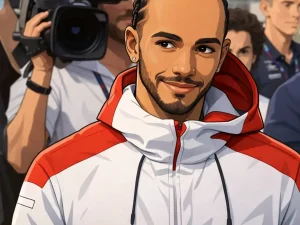
George Russell still remembers the soundtrack in his head the day Mercedes rang: belief, doubt, and the small matter of sharing a garage with Lewis Hamilton.
On the Untapped podcast, Russell laid out the mental reset that came with stepping into Hamilton’s team in 2022. He’d been promoted from Williams into F1’s toughest measuring stick and, as he tells it, the bravado only got him so far. “You don’t know until you go up against the best ever,” he said. That’s where his psychologist stepped in.
The advice was simple and brutal: strip away the mythology. Helmet on, visor down — it shouldn’t matter if the driver next door is a rookie or a seven-time World Champion. Control what you can control. Russell also made peace with the numbers. Beating Hamilton over a season would be exceptional; expecting to do it every weekend would be delusional. “If I beat him 55 percent of the time over a year, that’s amazing,” he said. The key was acceptance: some Sundays, the GOAT gets you.
That mindset framed his debut Mercedes campaign, which arrived just as F1’s ground-effect rules clipped the team’s wings. Russell imagined that finishing ahead of Hamilton would be synonymous with a title — as it had been for the rare teammates who’d done it before — but reality had other plans as Mercedes slid out of championship contention.
Even so, he landed his own markers. Russell outscored Hamilton in 2022 and again in 2024, and he’s since converted that internal battle into silverware, with four grand prix victories for Mercedes. The scoreboard didn’t bring a title, but it did deliver credibility inside Brackley — the kind that matters to “the 2000 people working for the team,” as he put it.
Fast-forward to 2025 and Russell’s the man carrying the star, Hamilton having decamped to Ferrari. The timing feels neat: the apprentice who learned to tune out the legend now leads the rebuild. And that original lesson — compete with yourself first — reads less like sports-psych jargon and more like a career blueprint.
There’s an inevitable temptation to mythologize Hamilton as an opponent. Russell resisted that, and it helped. It also says something about how modern F1 works: the biggest fights are often in-house, unseen, measured in debriefs and data traces. Beat the reference driver and everything else follows. Usually.
For Russell, the headline is straightforward. He didn’t set out to dethrone Hamilton every weekend. He set out to be better more often than not, to win the year — and to live with the days he didn’t. In an era where expectations can chew up careers, that sounds like the smartest win he took.