Silverstone always has a way of dragging old stories back into the present, and this year’s British Grand Prix did it with interest. Christian Horner’s first appearance in the F1 paddock since he was sacked in the aftermath of the 2025 race instantly became one of the weekend’s main talking points — not because anyone expects a fairytale return, but because his shadow still stretches across Red Bull.
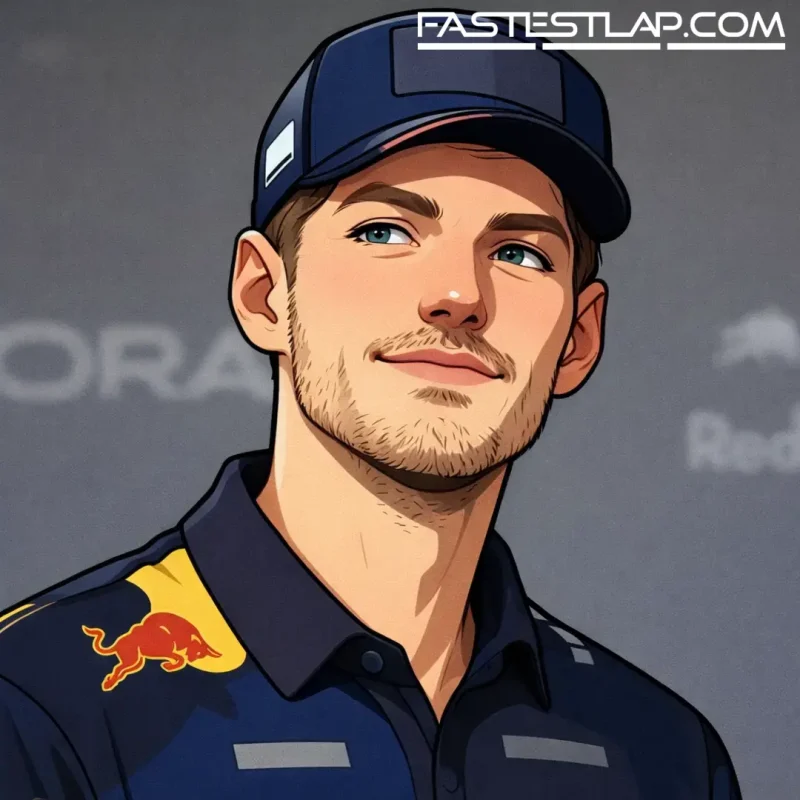
Max Verstappen, for one, isn’t pretending the relationship was severed with the job title. Asked about Horner’s re-emergence, Verstappen made it clear they’ve remained in regular contact. That matters, because 2026 has hardly been a straightforward season for him at Red Bull, and in this business the people you keep close often say as much as the things you say to cameras. Verstappen’s camp has never been sentimental about personnel changes; if he’s still picking up the phone to Horner, it suggests a level of respect — and perhaps a sounding board he trusts amid a more turbulent competitive picture than Red Bull fans have grown used to.
The paddock, meanwhile, is also dealing with a different kind of access problem — one that comes with the sport’s modern fame. The British GP featured the usual swell of celebrities and content creators, but the weekend also delivered a reminder that the credentials system still has teeth. An Instagram influencer had her paddock pass revoked on behavioural grounds after an abusive incident. In an era where the paddock has become part workplace, part marketing set, the message from officials was blunt: being invited in doesn’t make you untouchable.
Not everyone in the Silverstone scrum was a familiar weekly face, either. Ross Brawn was spotted on the grid, a rare F1 paddock appearance following confirmation of his wider motorsport return — he joined the board of directors at Pramac Racing in MotoGP back in May. Brawn turning up doesn’t automatically mean a grand project is brewing, but it did what his presence always does: it got people talking. F1 personnel can’t resist a quiet look at who’s watching, who’s being chatted to, and which conversations seem a little too engaged for a casual visit.
On track, Ferrari finally gave its own noise a counterpunch. Charles Leclerc’s first win of the season arrived at the right time — and in the right place — after a run of results that had started to feel heavier than “just a phase”. What’s interesting is how Ferrari framed it internally: Fred Vasseur had been leaning on Leclerc’s “data” as reassurance, even as the volume rose outside Maranello. That’s a very modern Ferrari story, in a way. Less romance, fewer sweeping statements — more insistence that the numbers were pointing somewhere, even if the results hadn’t caught up.
Elsewhere, the Verstappen storyline also picked up a familiar side dish: a debate about fairness, and whether the sport owes elite drivers anything when the machinery isn’t doing the heavy lifting. Fernando Alonso described F1 as “a bit unfair” in the context of Verstappen’s 2026 struggles at Red Bull. Damon Hill didn’t bite his tongue, dismissing the sentiment as “a load of rubbish”.
It’s an argument that never really goes away, because both sides have a point depending on where you stand. Alonso’s view reflects the reality that a driver’s form can be flattened by circumstances beyond his control; Hill’s retort is the old-school counter that this is precisely what F1 is — a sport built on the unfairness of engineering advantage, political momentum, and timing. What’s changed is how loudly those debates now echo, amplified by the same popularity boom that’s pushing influencers into the paddock in the first place.
Put it all together and Silverstone felt like a snapshot of 2026’s broader tone: the sport is bigger, noisier, quicker to judge and quicker to react. Old power structures are still influencing the present — sometimes literally walking back through the paddock gates — while new pressures keep testing the boundaries of what Formula 1 is willing to tolerate around its most protected spaces.
And through it all, Verstappen remains at the centre of the gravity. Not because everything is going perfectly, but because even when Red Bull isn’t comfortably dictating terms, the Verstappen ecosystem still shapes the week’s conversation. Horner showing up again only sharpened that reality — the past isn’t gone in Formula 1, it’s just waiting for the next weekend to become relevant again.