
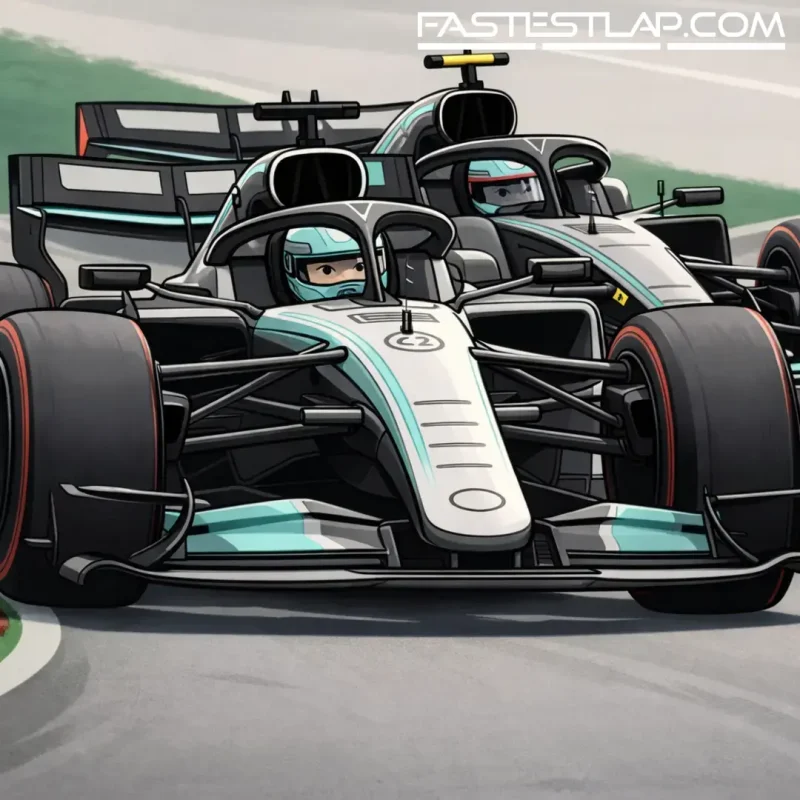
Barcelona’s back on the calendar this afternoon, and if you’re one of those people who still thinks the Spanish Grand Prix is just a long, hot exercise in tyre management, it’s worth remembering what this place has become lately.
Yes, it’s still a 66-lap grind around the Circuit de Barcelona-Catalunya, and yes, it still tends to reward the teams that can control stint length and keep the car in its operating window. But the start here is its own little piece of theatre: the longest run from the grid to Turn 1 all season, a braking zone that invites late lunges, and just enough room for drivers to convince themselves something heroic is on before reality arrives at the apex.
That’s why the opening kilometre matters more at Barcelona than almost anywhere else. If you launch well, you’ve got time to build a move. If you hesitate, you don’t just lose a place — you can lose a whole row, because the slipstream effect stacks cars together and compresses decision-making into a split second. And when that happens, the consequences tend to echo for the next hour and a half.
Paddock memories of this venue aren’t only about the usual “track position is king” sermon either. Last season’s Verstappen-Russell collision still hangs over any pre-race chat about Turn 1 discipline, especially when the field arrives here with a bit of edge after a bruising run of races. Barcelona has a habit of exposing impatience. Drivers know it’s hard to overtake cleanly once the race settles, so they try to win it early — and sometimes they try to win it twice in the same corner.
The race begins at 15:00 local time (14:00 UK), with the full distance set at 66 laps or a maximum two-hour window if interruptions start to bite. Conditions and tyre behaviour will dictate a lot, but the baseline truth remains: this circuit is a relentless stress-test of balance and consistency. If a car is nervous in medium-speed direction changes, it’ll show. If it cooks the tyres in long loaded corners, it’ll show. If the driver’s confidence isn’t quite there on the front end, it’ll show loudly.
And because it’s Barcelona, those weaknesses don’t hide for long. Sector after sector is essentially one prolonged audit — of aero stability, of traction management, of how quickly a team can react when the first stint doesn’t do what the simulations promised. That’s why you’ll see engineers watching the early laps like hawks: the data from the opening run here can flip a strategy call immediately, especially if the field splinters into traffic pockets after the start.
The temptation, as always, will be to label this a “pit stop race” before the lights even go out. But the more interesting part is what happens before anyone reaches their marks: the positioning into Turn 1, the willingness to go three-wide when it rarely ends well, and the subtle trade-offs drivers make between aggression and self-preservation when they know a small mistake can ruin an entire afternoon.
So that’s the setup. A long run to the first corner, a circuit that punishes flaws, and a grid full of drivers who understand that Barcelona doesn’t give you many cheap opportunities once the rhythm sets in.
Settle in — the Spanish Grand Prix tends to look predictable right up until the moment it isn’t.









