Bernie Ecclestone, Formula One Management and the FIA are taking Felipe Massa’s long-running “Crashgate” lawsuit to the UK Supreme Court, after being granted a rare shortcut appeal that bypasses the usual process.
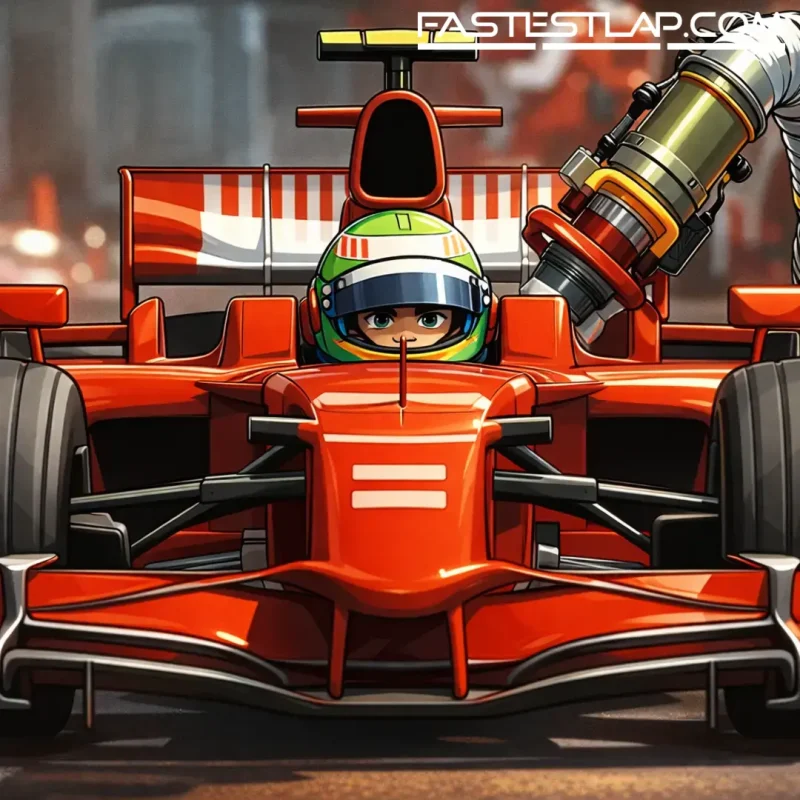
The case hangs on one of the sport’s most infamous nights: Singapore 2008, when Renault ordered Nelson Piquet Jr to crash deliberately to trigger a Safety Car at the perfect moment for Fernando Alonso, who had pitted early. Alonso inherited track position and went on to win. Massa, leading at the time, was dragged into the chaos and then suffered Ferrari’s own self-inflicted disaster — released from its box with the fuel hose still attached — a pitlane moment that’s become a shorthand for a championship slipping through fingers.
Massa finished outside the points. Lewis Hamilton took third and, with it, six crucial points that helped him edge the title by a single point at the end of the season. For Massa, that arithmetic has never stopped hurting, and it’s the foundation of a claim that the sport’s authorities should have voided the Singapore result once they knew the race had been manipulated.
What makes this latest development significant isn’t the old footage of a fuel rig swinging from the back of a Ferrari. It’s that the legal fight, which many in F1 privately assumed would bog down in procedure and ultimately fade, has instead found a clear runway to the highest court in the land.
Massa is suing Ecclestone, FOM and the FIA for $82 million in damages. A London High Court previously allowed the claim to proceed in a limited form — damages only — while rejecting Massa’s attempt to have the 2008 title formally reassigned. In other words, the court shut the door on rewriting the record books, but left open a path for him to argue he suffered quantifiable loss because of how the sport handled what it knew, and when.
In March this year, the defendants were also ordered to pay Massa £250,000 in legal costs. But crucially, the High Court judge granted permission for a direct appeal to the Supreme Court. Now Sky reports that Ecclestone, FOM and the FIA have been “greenlit” for a so-called leapfrog appeal, allowing them to challenge the ruling that Massa’s conspiracy claim can go to trial without trudging through the standard appeal steps first.
At stake is less the 2008 championship itself — the courts have already drawn a line under that — and more the question of what responsibility a sport’s governing ecosystem carries when a result is tainted, and what recourse a driver has when the consequences are effectively permanent.
That’s why this has always made the people currently running Formula 1 and the FIA uneasy, even if the names on Massa’s lawsuit feel like they belong to another era. If a Supreme Court hearing ends up reinforcing that the claim should be tested in court, it keeps alive a scenario where internal handling of scandals becomes fair game for civil litigation in a way F1 has historically avoided. And if the Supreme Court sides with the defendants and shuts the case down, it becomes a different kind of precedent: a legal confirmation that even the most spectacular sporting controversy has a shelf life, whatever the moral argument.
Massa has been consistent in how he frames it — not as a complaint about bad luck, but as a grievance over governance.
“I lost my peace because I knew that I was robbed,” he has said. “Since then I was never relaxed.
“This is against a race that was manipulated. (The 2008 season) was an incredible championship. It was a big fight from the beginning to the end. It was a great championship from my side. I was the driver who won more races that year, who started in pole position more times as well.
“Formula One now is a different from Formula One from then, the FIA now is different from the FIA of the past. I really hope they understand that what happened in the past was not fair for the sport and I really hope that they fix the case.”
There’s an unavoidable irony in all this. Singapore 2008 has long been treated inside the paddock as one of those grim “never again” moments — a scandal that eventually forced change, exposed weaknesses, and served as a warning. Yet in 2026 it’s still, in a very real sense, live. Not on a timing screen, but in court filings and appeal routes.
The Supreme Court angle also adds a sharper edge: this isn’t just another procedural skirmish. A leapfrog appeal is effectively an admission that the issues raised are important enough to warrant immediate attention at the top, because they’re matters of principle rather than mere case management.
For Massa, it’s another step towards having his argument heard in full. For FOM and the FIA, it’s a chance to stop that from happening — not by relitigating who won in 2008, but by challenging whether the claim should ever reach a trial in the first place.
Either way, the sport is being forced to confront something it generally prefers to keep in the past: that “integrity” isn’t just a slogan for press releases when it suits, and that the cost of a manipulated race doesn’t always end at the chequered flag.