Jenson Button reckons the most valuable thing Kimi Antonelli’s brought to Mercedes this season isn’t just raw pace — it’s the kind of calm that lets speed show up every Sunday. And in Button’s view, that’s been amplified by the presence of Pete ‘Bono’ Bonnington in Antonelli’s ear as the teenager sets the early tempo in the 2026 title fight.
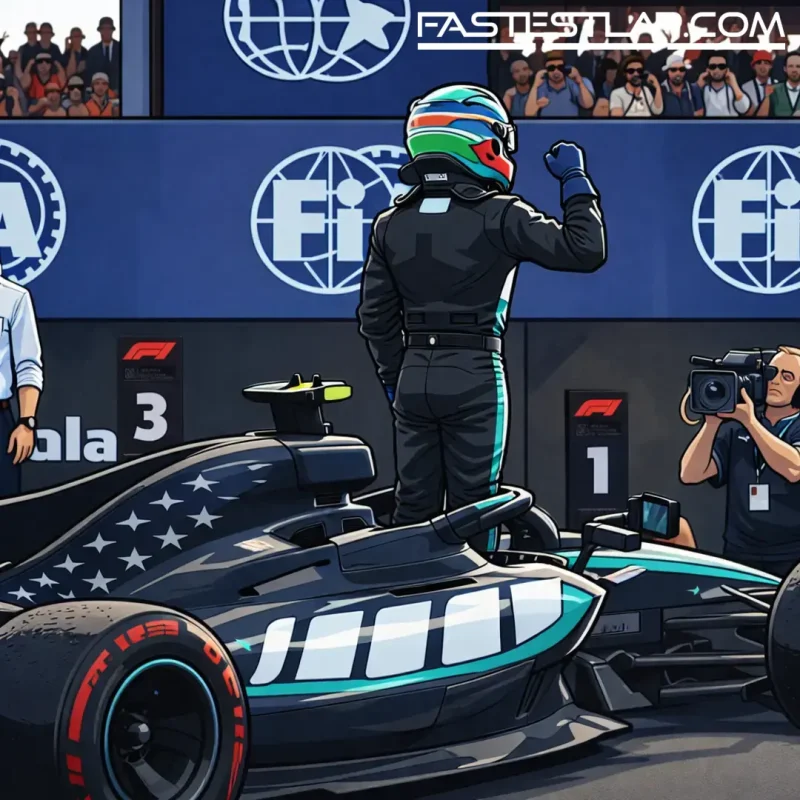
Antonelli has done the loud bit already: five straight wins and the championship lead in only his second year in Formula 1. But Button’s point is that the quiet stuff is often what turns a hot streak into something sustainable.
“People don’t understand how important the relationship is between an engineer and a driver,” Button said when asked about Antonelli’s surge. “Bono is a really good influence on Kimi. They obviously have a good rapport, like Lewis and Bono did, like I did when I was with Bono.”
Button knows the dynamic from the inside. Bonnington worked in Mercedes’ engineering group during Button’s time with the team, and later became synonymous with Lewis Hamilton’s championship years. Now he’s paired with Antonelli, and Button believes that continuity of experience has helped the young Italian find his feet quickly — not just in terms of confidence, but in shaping a car in a direction he can lean on.
That matters because Mercedes started 2026 with the quickest package under the new regulations. George Russell converted that into victory at the opener in Australia, with Antonelli second, and it looked initially like a straightforward “experienced hand leads, rookie follows” story. It hasn’t played out that way. As the season developed, Antonelli and Bonnington appeared to get on top of the W17 earlier, and the balance of power inside the garage shifted.
Button suggested Russell has been the one forced to chase the car rather than dictate it.
“It does feel that the car has gone a little bit away from what George’s style requires,” he said. “I don’t know if he has the backing from his engineer… to be brave enough to go and try something different, because their driving style is completely different.”
For a team, that’s the tightrope: you chase lap time in development, but the best overall result often comes when both drivers can access it. Button’s read is that Antonelli’s side has got to a workable place faster, and Russell’s side may have been slower to pivot — not through lack of speed, but through the complexity of extracting it in a car that’s drifting away from his preferences.
Russell’s season has also carried the kind of swings that mess with momentum. Button pointed to a battery issue while Russell was leading in Canada and what he described as a questionable penalty in Monaco — setbacks that coincided with Antonelli’s run of wins. At one stage after Monaco, Russell was 68 points behind. That gap has been cut sharply: Russell’s win in Austria, plus podiums in Barcelona and Britain, have brought him back to 25 points down.
Button isn’t dismissing the idea that Russell can keep chipping away. If anything, he sounds like someone who’s been around enough title fights to recognise when the mood is changing.
“I was always told that I was a driver that had talent, natural ability, and didn’t work hard,” Button admitted. “I would say he’s completely the opposite. He works extremely hard… He has meetings about meetings, and racing drivers don’t like meetings.”
That work ethic is a strength, but Button also hinted at the psychological cost of finally having a championship-capable car and realising the opportunity might not come around often.
“When George went to Mercedes, they’d won multiple championships in a row, and he arrived and the car wasn’t as good,” Button said. “That’s tough for a racing driver. And then he’s up against Lewis, and he did a better job than Lewis over those years.
“Now, he has a car that can fight for world championship… you’ve got to give it your all. But in doing that, you put a lot of pressure on your shoulders.”
It’s the sort of pressure that can show up in tiny ways — a reluctance to gamble on a setup direction, a tendency to “tighten up” when the margins are already fine. Button thinks Russell is experienced enough to recognise it, but not immune to it.
Antonelli, by contrast, is being portrayed as the opposite: looser, freer, almost stubbornly youthful in how he carries the moment. Button called it “awesome to see”, describing a driver who looks like he’s enjoying the ride rather than bracing for impact.
“He’s just very relaxed, loose with everything,” Button said. “He’s just a very different driver to most drivers on the grid. Because he’s so young… everything’s exciting for him.”
That’s a nice story in July. The real test comes when the calendar starts to run out and “having fun” meets the hard maths of a championship. Button expects the mental side to swing both ways as the season closes in.
“When we get towards the end of the season, things will definitely change, for both of them, mentally,” he said. “I think we’ll see it ebb and flow through the season in terms of who’s competitive and who’s getting the best out of the car, which is great because that’s the fight we want to see.”
Mercedes won’t mind who tops the intra-team scoreboard if it’s piling points into the constructors’ column — but the subtext is obvious. Antonelli’s early run has shifted the internal gravity, Russell’s response has been forceful, and Button’s not-so-subtle warning is that this isn’t just about who’s faster. It’s about who keeps their head, who finds the right technical path in the garage, and who can still do it when the countdown really starts.