Red Bull walked into Barcelona needing a clean weekend and a calmer paddock. It got neither.
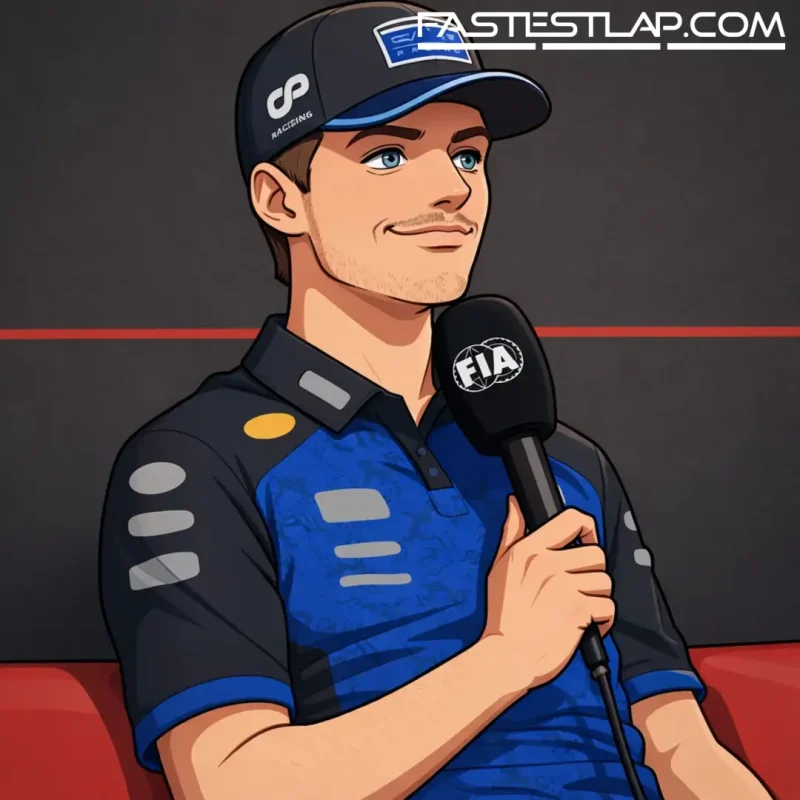
The most striking detail to emerge ahead of the Spanish Grand Prix wasn’t a lap-time trace or a new floor edge; it was that Max Verstappen, in a meeting with senior Red Bull figures, declined to offer any sort of public comfort about staying put beyond next year. In isolation that might sound like the usual “driver keeps options open” dance. In context, it lands with a thud.
Verstappen is contracted through 2028, but the reality of modern F1 contracts is that the ink rarely tells the whole story. The key is the performance-based clause understood to sit inside his deal — the kind that turns a bad run of races into a genuine leverage point. With the summer break looming and Verstappen down in seventh in the standings, there are only four races left before the August shutdown to shift the picture. If he’s still outside the top two at that point, the clause believed to exist becomes less theory and more trigger.
That’s where Red Bull’s headache starts. Not because Verstappen is suddenly “available” in the traditional sense, but because the calendar has created a pressure cooker: every weekend between now and the shutdown becomes a referendum. Red Bull can talk about long-term projects, 2026 learning curves, and building back momentum — all true, all sensible — but elite drivers respond to the sharp end. Verstappen’s own position doesn’t require theatrics; silence does the work for him.
And silence is exactly what Red Bull got.
Even more awkward for the team is how quickly the conversation now slips from “will he stay?” to “who could actually take him?” That’s where the sport’s undercurrent is at its most political. One team’s dip becomes another team’s recruitment pitch, and a clause — if it can be activated — becomes a weapon in every negotiation. This is how silly season gets real before it’s officially allowed to be real.
Verstappen’s points deficit to the driver currently second, Lewis Hamilton, sits at 60 heading toward the break. It’s not an unbridgeable number in abstract, but it’s big enough that you can feel the paddock doing the maths. Red Bull’s job is straightforward in description and brutal in execution: stop the bleeding quickly, because every race that passes without a visible swing in form strengthens Verstappen’s hand and weakens the team’s ability to set the narrative.
Meanwhile, Mercedes has quietly pulled back from a different kind of fight.
After Monaco, the team had filed a right of review petition over George Russell’s penalties. That move took on added edge because Alpine managed to overturn Pierre Gasly’s two five-second penalties — a decision that, unsurprisingly, didn’t go down well with rivals who’d watched drivers punished for what they considered identical offences. There’s been a lingering irritation in the paddock about consistency and precedent ever since.
Mercedes has now dropped its petition. Read that less as surrender and more as a calculation: sometimes the cost of extending the argument — politically, procedurally, reputationally — outweighs the slim chance of rewriting a past result. Monaco controversies have a habit of swallowing weeks of oxygen; Mercedes has decided it’s done feeding it.
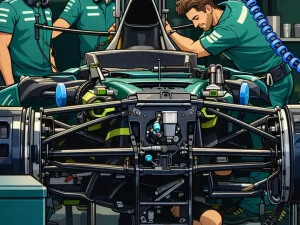
At Aston Martin, the focus is more operational than existential. The team confirmed that Jak Crawford will run Lance Stroll’s car in FP1 at the Austrian Grand Prix, ticking off another of the mandated rookie outings under F1’s rules. Crawford already sampled the AMR26 when he took Fernando Alonso’s car in Japan back in March, and Spielberg will give the team a second data point in a very different sort of session: shorter lap, higher commitment, less margin for a driver still learning the rhythms of an F1 weekend.
It’s the sort of announcement that can sound minor until you remember how tightly teams now script their Fridays. FP1 used to be a sandbox; in 2026 it’s often the first live test of a weekend’s plan. Handing that hour to a rookie is still the correct thing to do — and, in many ways, the point of the rule — but it also forces teams to be sharper elsewhere. You can’t waste sessions anymore.
And then there was the bit of paddock theatre you could see coming from a mile away, but still landed with a sting.
Jacques Villeneuve has hit back at Lewis Hamilton over a line Hamilton delivered in Canada last month, when he quipped that Villeneuve’s late father Gilles “was obviously far better than his son.” Villeneuve, never one to let a barb pass without returning it with interest, labelled it a “stupid comment” and questioned why Hamilton would say it.
Hamilton’s timing in drawing that response wasn’t subtle: he’d just taken his first Ferrari win in Barcelona. Victories tend to embolden drivers, and Hamilton has never been shy of the sharper aside when he feels like it. But invoking Gilles Villeneuve is a different register entirely — not just a family name, but a piece of Ferrari mythology and Canadian sporting identity. That’s why the remark has lingered long after the champagne dried.
Taken together, Friday’s stories painted the sort of picture that defines an F1 season before it’s defined by results alone: a champion keeping his counsel while a clause hangs in the air, a top team stepping away from a legal scrap it no longer deems worth the trouble, a midfield outfit using a mandated rookie session to develop its own future, and two world champions — one on track, one on TV — still trading blows in the sport’s oldest currency: words.
The next few races will decide whether Verstappen’s non-commitment becomes a footnote or the opening paragraph of the biggest 2027 driver-market story. Right now, Red Bull can’t afford to assume it’ll be the former.