Carlos Sainz has never been shy about qualifying as a statement of intent. Six poles with Ferrari didn’t happen by accident, and they certainly weren’t built on caution.
That’s what makes his early-season read on 2026’s new reality so telling. After finally dragging the Williams into Q2 at Suzuka, Sainz didn’t talk about missing grip or chasing set-up ghosts. He talked about self-control — and how the sport’s latest qualifying “technique” is basically a fight between a driver’s instincts and the power unit’s limits.
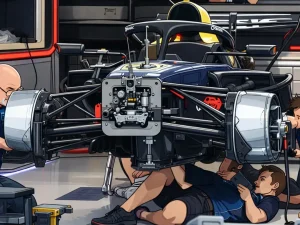
The reset for 2026 has shifted the centre of gravity to energy management. With a new 50/50 split between electrical and combustion power — and energy recovery systems capable of harvesting roughly twice what they could last year — the cars have gained a different kind of complexity. The removal of the MGU-H has changed the feel of the delivery at lower revs, and it hasn’t just been a start-line headache; it’s rewired how drivers build a lap.
The old qualifying playbook was brutally simple: get the tyres in the window, point it at apexes, and keep your right foot pinned for a lap that bordered on violent. Now, “flat-out” is something you ration. Between harvesting, lift-and-coast, and the constant risk of running into “clipping” when the battery can’t sustain full deployment, the fastest lap often isn’t the one that feels the most committed.
It’s why the paddock has been split between admiration for the challenge and frustration at what’s been lost. Former F1 driver Jean Alesi has even suggested the new approach punishes the pure one-lap specialists — the Leclercs and Verstappens who, historically, could take a car by the throat for 90 seconds and bend the session to their will. But everybody’s living with the same constraints, and the winners are learning to hide their aggression behind discipline.
Sainz is feeling that battle more keenly than most. His first three qualifying outings as a Williams driver under the new rules have been an education in how narrow the margins are when the electrical side doesn’t play along.
In Australia, he didn’t even get a lap on the board after a battery issue derailed his session. China brought a sobering P17. Japan finally offered a small breakthrough: Q2 at last, even if it still ended in P16.
That might not read like much on paper for a driver with Sainz’s CV, but within the context of 2026 it’s a step — and, more importantly, it’s proof he’s starting to understand what the car wants from him when it matters.
“Honestly, my group of engineers and myself,” Sainz said in Japan, “we’ve done a very good job over the winter to understand it, and I feel like we’re doing a very good job on understanding it and driving it.”
He put a number on it too, which is the kind of detail drivers usually avoid unless they genuinely feel they’re cracking something.
“And in that sense, I think I’m 90, 95 per cent close to understanding everything.”
The interesting part is how he described the remaining five to ten per cent — not as hidden performance, but as those moments where a driver’s “animal instinct” kicks in and ruins the lap.
“There’s definitely surprises that come now and then,” he said, “but I feel like I’ve been not very surprised by it, given how new it is. It’s more how disciplined you want to be with your driving.
“So it’s how your natural instinct, or animal instinct, kicks in in a Q2 lap or a Q3 lap, when you go and push that out, how much you’re gonna upset the system, and the system is gonna backfire in you.”
That’s a remarkably frank way of putting it. The subtext is clear: push like you used to, and the lap can die in ways that are difficult to “feel” until it’s too late. In the old world, a lap fell apart because you over-drove the tyre, missed a braking point, or carried the wrong speed into a corner. Now, you can do everything “right” as a driver and still trip over the car’s energy profile.
And that’s where the psychological shift comes in. Sainz admitted qualifying now leaves drivers with a lingering sense that they’ve left something on the table — even when they haven’t.
“I think that’s where you will see us, always a bit gutted after qualifying,” he said. “Because you always feel like you could have done better, you always feel like you could have done more, you always feel like you can be more efficient when you’re driving.”
Efficiency. That’s the new dirty word for drivers who built their reputation on bravery.
Sainz’s final line was the most revealing: “the reality is that I think, from my side, I understand it’s just how disciplined I want to be with it.”
In other words, this isn’t simply about learning a new power unit — it’s about learning a new version of yourself. The quickest lap may no longer come from the driver willing to take the biggest risks. It may come from the driver who can resist them, who can keep their inputs clean, their exits tidy, their deployment under control, and their ego quiet for just long enough.
For Sainz, the upside is obvious: he’s a methodical operator when he needs to be, and he tends to work well with engineers when the task is understanding a car rather than wrestling it. The downside is that Williams can’t afford many more weekends where a single electrical gremlin turns qualifying into damage limitation.
Suzuka’s Q2 appearance won’t change the season on its own. But it does hint at something that matters in 2026 more than ever: the drivers who adapt quickest to this odd new compromise between speed and restraint are going to look like geniuses — and the ones who don’t will keep walking out of qualifying feeling “gutted,” convinced they just didn’t push hard enough, when the truth is they pushed at the wrong time.