Williams is about to let one of its loudest, most defiant statements from the early-2000s loose again — and the timing feels almost too on the nose.
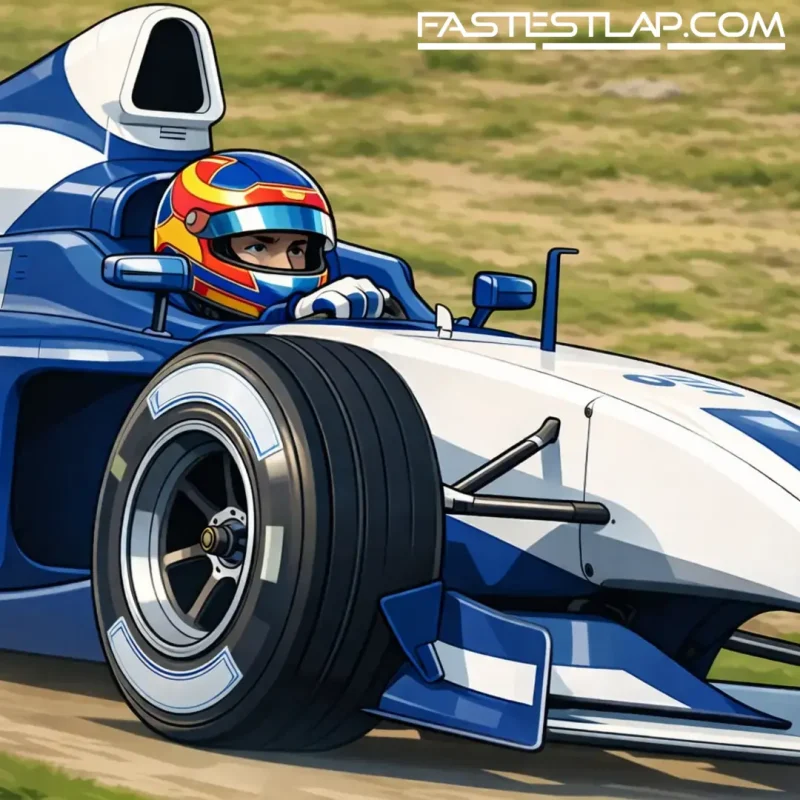
The BMW V10-powered FW25, the car that carried Juan Pablo Montoya and Ralf Schumacher to four Grand Prix wins in 2003, is coming out of long-term hibernation for a proper competitive run in historic racing. After an “extensive restoration” by Williams’ Heritage division, it’ll line up in the BOSS GP series across four rounds in 2026, beginning this weekend at the Nürburgring.
For anyone who’s spent the last few seasons watching Formula 1 wrestle with the identity of its power units, the return of a 19,000rpm-era Williams to actual wheel-to-wheel racing is more than a nostalgia hit. It’s an unfiltered reminder of what the sport once sounded like — and of how effortlessly an engine note can cut through all the modern debate.
The FW25 is no museum piece with a polite parade schedule. Its 2003 record is still the sort of line that makes engineers and old-school fans sit up: four wins in a season dominated by Michael Schumacher’s Ferrari, and enough pace that Williams finished second in the constructors’ championship. Montoya delivered at Monaco and in Germany, Schumacher won at the Nürburgring in the European Grand Prix and later at Magny-Cours in France. This was a proper race winner, and a proper heavyweight in a high-water-mark season for naturally aspirated V10s.
It also has one of those neat bits of Williams history tucked into the footnotes. The FW25 was used in first F1 tests for a then-teenage Nico Rosberg — who went on to become world champion — and for Nelson Piquet Jr, another name linked to the team’s testing programme of that era. Even by Grove standards, it’s a chassis with a crowded CV.
The car’s owner, Phil Stratford, will be the one racing it — with Williams Heritage providing the factory-level backing that tends to separate a “brought out for a weekend” classic from something genuinely sharp. Beyond this weekend’s Nürburgring opener, the programme includes a return visit there and a trip back to Magny-Cours, plus races at the Red Bull Ring and Mugello.
That calendar matters. These aren’t random circuits; they’re places where the FW25’s story actually happened, particularly Magny-Cours and the Nürburgring. There’s a certain honesty to taking the car back to the venues that shaped its reputation, rather than simply chasing the biggest crowd.
“Owning and racing the FW25 has been a lifelong ambition,” Stratford said, pointing to the appeal of doing it with the people who know the car intimately. He also leaned into the romance of the locations — circuits where, in his words, “Ralf and Juan Pablo made history” — before adding: “I cannot wait to get to the Nürburgring.”
From Williams’ side, the subtext is clear enough. This isn’t just a customer keeping a classic alive; it’s the team’s Heritage arm stepping into a historic championship for the first time, and using that as a bridge between past and present. Heritage director Jonathan Kennard described it as a way of bringing Williams’ legacy “to life for a new audience” as the outfit approaches its 50th anniversary next year — while also framing that history as something that feeds into the modern team’s ambition “to return to the front of the grid.”
And then there was the line that will do the rounds in every paddock WhatsApp group: Kennard talking about the “unforgettable 19,000 RPM, V10 soundtrack” echoing around the Nürburgring once more.
BOSS GP’s F1 class is open to cars from 1996 onwards, which puts the FW25 in a familiar field of relatively recent machinery — the sort of cars many current fans still remember watching on TV rather than purely through highlight reels. Previous entries have included Toro Rosso’s STR1 from 2006, which ran a rev-limited V10, and the 2010 Lotus Racing (later Caterham) T127. It’s a category where speed is real, not implied, and where the mechanical signatures still carry the character modern F1 has consciously smoothed out.
That’s why this Williams return lands with extra bite in 2026. Formula 1 is in the first season of its new technical regulations, and the temperature around what the sport should be — and what its engines should sound and feel like — hasn’t exactly cooled. FIA president Mohammed Ben Sulayem has already floated the idea of a V8 return for the next engine cycle as early as 2030, following vocal criticism of the current direction from sections of both the fanbase and the competitive side of the grid. Anthony Hamilton, father of Ferrari driver Lewis Hamilton, has also put his weight behind a different vision, unveiling plans for a new HybridV10 series.
None of that changes what F1 is doing right now, of course. But it does colour the backdrop. When an iconic V10 car is being rebuilt, supported by its original team, and sent back into competition, it can’t help but feel like a live demonstration — not a proposal, not a press release — of a version of Grand Prix racing that still pulls hard at the sport’s collective imagination.
This weekend, the FW25 won’t be fighting for world championship points. It’ll be chasing trophies in a historic series. But the moment it fires up and heads out onto a circuit like the Nürburgring, it’s going to do what V10 cars always did best: cut straight through the noise.