Williams’ 2026 has had that familiar early-season smell of a project that arrived late to its own launch party. The FW48 missed the Barcelona shakedown at the end of January, rolled out overweight, and the opening three rounds delivered just two points — a blunt return given the team’s own expectations under the new regulations.
So James Vowles is doing what team principals do when the stopwatch isn’t flattering: he’s doubling down on infrastructure and people, and he’s doing it with the sort of hires that signal a long game rather than a quick fix.
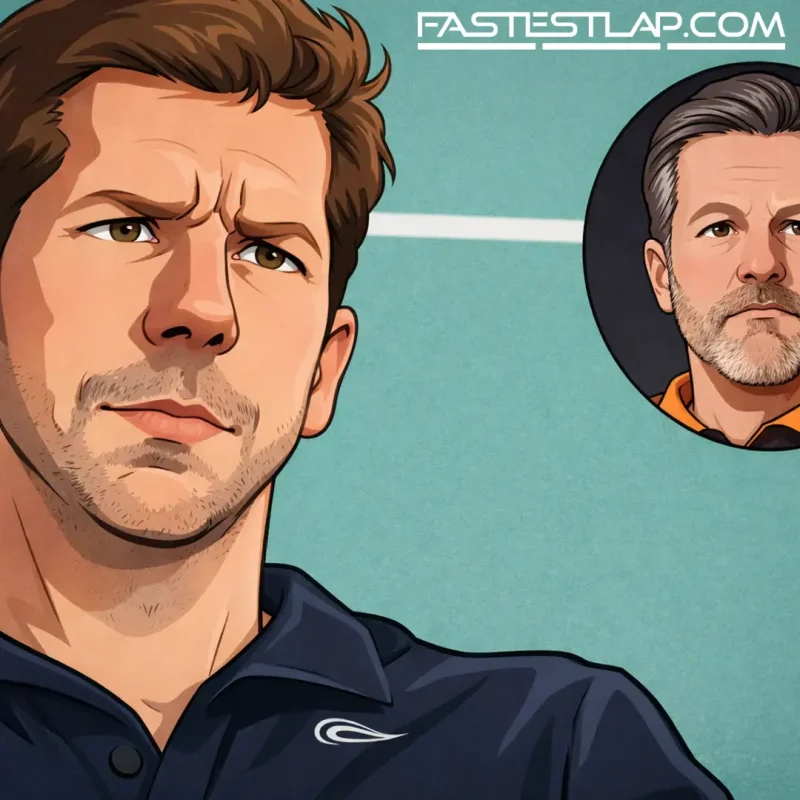
The headline move is Piers Thynne, prised from McLaren and due to start at Grove in August. Williams has been clear the remit is manufacturing: Thynne is being brought in to “lead and transform manufacturing operations” as part of a push for long-term success, with the team pointing directly to his role in McLaren’s “operational and cultural transformation”.
That last phrase matters. Plenty of teams talk about “process” and “culture” when the car isn’t where they want it, but McLaren’s rise to consecutive constructors’ titles in 2024 and 2025 — and Lando Norris’ drivers’ championship last year — didn’t come from a single genius upgrade. It came from getting the factory and trackside machine working cleanly, quickly and repeatably. Williams wants some of that muscle memory.
Vowles, in a statement released by the team, framed it in typically unvarnished terms: Williams is “investing in the people, processes and technology to compete at the front,” and Thynne brings “unrivalled recent experience” of winning championships. The subtext is obvious enough. If you’re serious about fighting McLaren, Ferrari, Red Bull and Mercedes in this era, you don’t just need a clever concept — you need to build, iterate and deliver like they do. Week after week.
Thynne’s arrival isn’t a lone splash, either. Williams has also confirmed Claire Simpson (head of aerodynamic development) and Fred Judd (head of performance optimisation) from Mercedes, plus Steve Booth as head of vehicle engineering after more than two decades with Alpine.
There’s a particular logic to those Mercedes links. Simpson and Judd worked with Vowles during his time at Brackley, clocking 12 and 17 years there respectively. This is Vowles stitching in trusted operators around him — people who don’t need translating when he talks about how a modern F1 team should function, and who understand the tempo required when the regulations are young and the competitive picture is still fluid.
It’s also telling that the hires cover manufacturing, aero development, performance optimisation and vehicle engineering. That’s not a “fix the rear end” recruitment drive; it’s a skeleton key approach. If you believe Williams’ current ceiling is being set as much by execution as by ideas, you go after the bits of the organisation that determine whether an upgrade arrives on time, whether correlation holds, and whether the car’s potential is actually being extracted across a race weekend.
Thynne, for his part, isn’t pretending this is a sideways step into comfort. He described it as “a really exciting moment”, said Williams has “clear ambition to be championship level in all areas”, and noted he’ll be part of the senior leadership group. He also made a pointed nod to his recent past, saying he’d enjoyed “a fantastic time at McLaren” helping bring the team back to the top — and that he hopes Williams can do the same.
All of this arrives against a backdrop of modest on-track progress. After that rough opening, Williams has looked sharper over recent weeks. Carlos Sainz and Alex Albon went ninth and 10th in Miami, and Sainz backed it up with another ninth in Canada. It’s not the sort of points haul that moves mountains, but it’s evidence the team’s dug itself out of the immediate hole it started in.
The temptation is to treat these announcements as corporate noise — another round of “we’re building for the future” messaging. But there’s a practical edge to it in 2026. With a new ruleset bedding in, the teams that climb fastest are often the ones that industrialise development earliest: short loops, clean handovers, manufacturing agility, and the ability to correct mistakes without losing a quarter of a season. The car you start with matters; the organisation you’ve built to evolve it matters more.
And that, really, is the story Vowles is trying to tell. Williams hasn’t simply decided it wants to be better. It’s trying to build the internal machinery that allows “better” to be repeatable — the difference between nicking a result when circumstances fall your way, and becoming the team others measure themselves against.
The interesting part is the timeline. Thynne doesn’t start until August, which means any tangible manufacturing-driven gains are likely to be measured in months, not races. Williams is, effectively, admitting that 2026 is as much about putting foundations in the ground as it is about scraping points together on Sundays.
But if you’re serious about “the next level”, that’s the uncomfortable truth: it’s built in meeting rooms, in factories, and in the dull, relentless business of doing the basics better than everyone else. Williams is betting that by importing proven operators from title-winning environments, it can turn the current recovery into something sturdier — and, eventually, something threatening.