Williams knew this season was always going to be a balancing act, but few in Grove expected to be spending the opening phase of 2026 paying off winter debt.
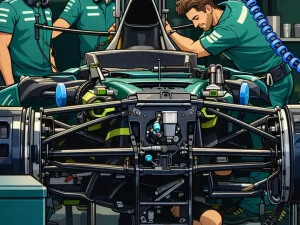
The FW48’s pre-season saga — a missed opening test in Barcelona because of chassis issues and an uncomfortable fight with an overweight car — didn’t just cost mileage. It forced a development sequence that’s about as unglamorous as it gets in modern F1: the first upgrades were aimed at taking kilos out, not adding downforce. Only once the weight problem was under control could the engineering group start chasing lap time in the normal way.
That kind of reset matters, because Williams isn’t selling a short-term story to Carlos Sainz. It’s selling a project. And Sainz, a four-time Grand Prix winner who joined last year and helped lift the team to fifth in the constructors’ championship alongside Alex Albon, has every reason to interrogate whether the plan is holding together — especially with the paddock aware there’s an exit clause in his three-year deal that could allow him to walk two years in.
Team principal James Vowles insisted he’s faced the situation head-on with Sainz, framing their relationship as one built on blunt conversations rather than corporate reassurance. Speaking in Monaco, Vowles said he’s been “very honest” about what went wrong over the winter and why the team believes it won’t be repeated.
“His honour, the way he works, his honesty, his values are very similar to mine,” Vowles said. “So we have really honest conversations all the way through. He’s here to commit to this as a project to win a world championship.”
Vowles’ central pitch is essentially twofold. First, that Williams has properly diagnosed the winter failure — not only the delays, but how it “ended up being” — and has put safeguards in place. Second, that the pain has accelerated internal reform.
He pointed to “a good amount of changes” inside the organisation, some already public and some still to come, and argued the winter mess may ultimately prove useful because it exposed weaknesses that might otherwise have remained hidden.
“I agree with him, this could have been the best thing that happened to us this winter, because we need to expose everything,” Vowles said. “And we are making the level of change required to move forward.”
There’s a pragmatic edge to the way Vowles describes it: not romanticising the failure, but leveraging it. In a cost-cap era, you don’t get unlimited chances to waste weeks on the wrong development path. If your first meaningful steps of a new cycle are about mass reduction rather than performance, you’re already chasing the calendar. Williams’ argument is that it can still make that time back through cleaner processes and sharper execution — and that Sainz can see the direction of travel.
Vowles even framed the evaluation window in plain terms: the run of races from Japan to Miami to Montreal, and whether the car is moving up the grid “at the rate he’s happy with”. Vowles’ answer was “yes”.
Sainz, for his part, hasn’t disguised that he’s weighing his future. But in Monaco he was careful to make clear where his preference lies — and why.
“Obviously very happy to hear from James,” Sainz said. “I think we’ve made it mutual across one another that the ideal scenario and the ideal path moving forward for me has always been Williams and has always been seeing the progress of this team and continuing to help this team become a competitive team.”
“That’s what I would love the most and very happy to see that my boss still wants me.”
The subtext is familiar to anyone who’s watched top-line drivers tie themselves to rebuilds: there’s a genuine appetite to shape something, but only if the slope of the graph is pointing the right way. Sainz reiterated that he has to make a decision this year, yet he described Williams as his “priority” and said he’s communicated that clearly to both the team and his management.
“When I did the commitment a couple of years ago to come here, it was with the commitment of trying to make this work and I wish we can do that,” he said. “Obviously this year we’ve hit a bit of a big bump that we didn’t expect and now all my attention and focus is to try and get this team out of the bump as soon as possible.”
Sainz’s language is telling: “bump” rather than crisis, but “big” and unexpected. It’s the tone of a driver trying to stay constructive while still setting a standard. He also cut to the core motivation that makes these projects brittle if results don’t follow.
“I just want to be winning in F1,” Sainz added. “That’s my main message to my management and at the same time help Williams get back to the top.”
Results-wise, Williams’ position after five race weekends underlines why this conversation isn’t going away. The team sits eighth in the constructors’ championship, and Sainz has scored six of the squad’s seven points — a stat that reads like both a compliment and a warning. On the one hand, he’s delivering. On the other, it highlights how thin the margin is when a season starts with self-inflicted limitations.
For Williams, the challenge now is simple to describe and brutal to execute: convert the “we’ve fixed the weight” phase into genuine, repeatable performance gains before the year becomes a write-off. Vowles can talk about structural change and future-proofing — and he’s right to — but Sainz is already judging it the way elite drivers always do: by the stopwatch, the upgrade cadence, and whether Sundays start to offer more than damage limitation.
In other words, the honesty is appreciated. The progress is what will decide everything.