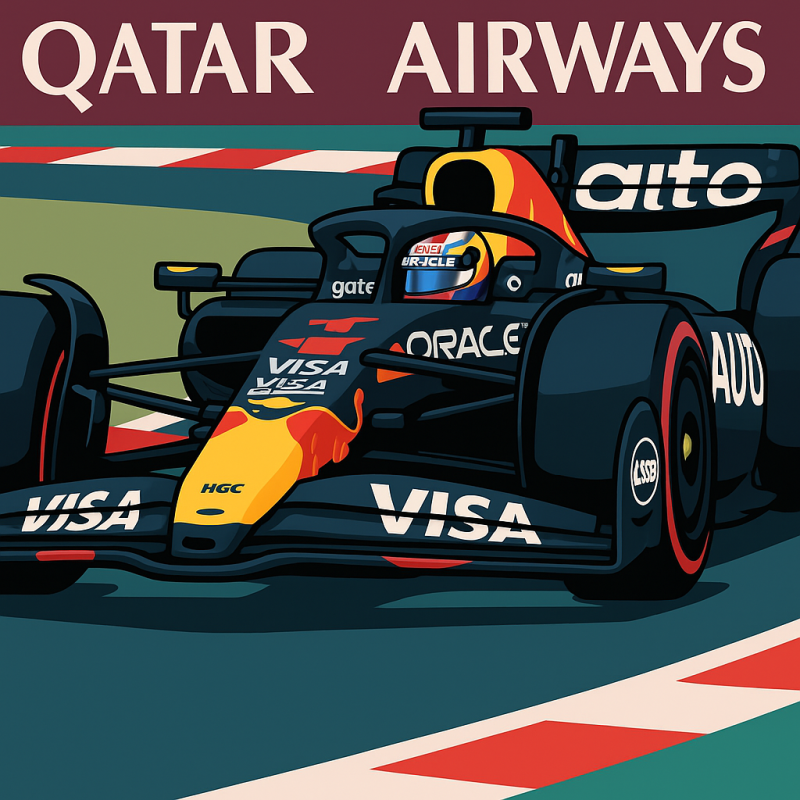
Don’t expect a late-season magic bullet from Red Bull. New team boss Laurent Mekies says the RB21 will run to the flag with only minimal upgrades, as the Milton Keynes squad shifts its firepower toward the 2026 rule reset.
That’s a pragmatic call from a team stuck in a grind. Red Bull sits fourth in the Constructors’ standings, more than 40 points behind Mercedes, with 194 on the board — 187 of them courtesy of Max Verstappen. He’s dragged two wins out of a car that’s been edgy and inconsistent, and nowhere near the unshakeable platform he had a year ago.
“The season is still very long,” Mekies told media, “but even if car development is going to heavily slow down, or is pretty much going to be minimal from now on, we still have a lot of things we can learn.” The Hungarian Grand Prix underlined the need for that homework: Verstappen managed only ninth, Yuki Tsunoda 17th, as the RB21 looked fussy and short on grip throughout the weekend.
Mekies isn’t reading that as a full-season verdict. “We accept the fact that we are probably not very strong on a track like the Hungaroring,” he said. “No question, McLaren are faster, but look at Spa — Max was able to fight, certainly on Saturday, and surprise everyone in the sprint.” In other words, when the circuit profile suits and the window is found, the car still has teeth. Just not often enough.
So the stopgap is to learn, not to throw parts. With the budget cap biting and a wholesale redesign looming for 2026 — power units pivoting to a 50:50 split between hybrid and combustion, ground effect giving way to flat floors, and moveable aero coming in — Red Bull has chosen to bank resources where the next titles will likely be won.
That decision carries extra weight given Red Bull’s step up as a power unit manufacturer with Ford. What began as a partnership focused on hybrid systems has widened. “Initially, we didn’t want to be so involved in combustion engines, but now we are because we obviously still have a lot to learn in this area,” said Ford motorsport chief Mark Rushbrook, noting the Blue Oval is now helping with parts production and “almost the entire car — and also on the operational side.”
The short-term trade-off is clear. Don’t expect a cascade of aero kits or a late balance transformation. Verstappen will keep hustling for podiums on friendly tracks, Tsunoda will have to pick up the scraps when the window opens, and Red Bull’s weekends will hinge on extracting consistency from a narrow operating range.
The long game, though, is unmistakable. While others chase marginal gains into November, Red Bull’s biggest lap time may be getting written right now in CAD, on dynos, and in simulation rooms for 2026.