Mercedes lift lid on Russell’s bruising Zandvoort fight and the 0.75s hole he had to dig out of
George Russell left Zandvoort with 12 hard-earned points and a W16 that looked like it had gone three rounds with a cheese grater. The Dutch Grand Prix turned into a damage-limitation exercise for the Mercedes driver after contact with Charles Leclerc ripped chunks from the floor and shifted the car’s balance into what the team called “pretty unpleasant” territory.
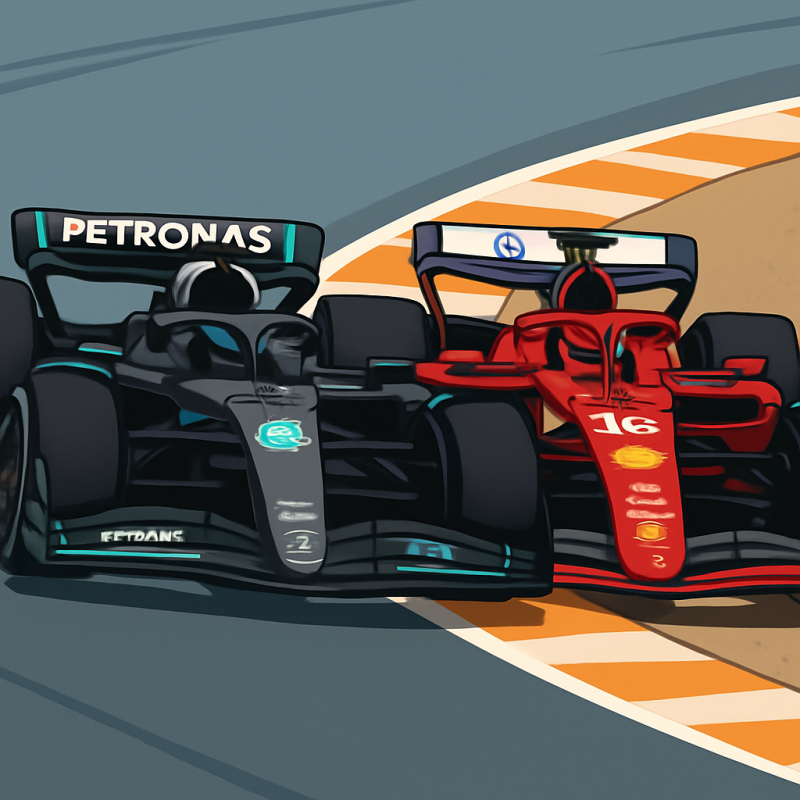
The flashpoint came on lap 33 in the twisty run through Turns 10-12. Leclerc muscled back ahead for fifth, the pair rubbing wheels and trading radio barbs over track limits and racing room. The stewards looked at it post-race and moved on. Russell didn’t get that luxury.
On the pit wall, Mercedes could see the W16 shedding carbon on the world feed. “It was pretty substantial damage,” said team representative Bradley Lord in the team’s debrief. “Bits of the floor were falling off — the floor edge is super important not just for downforce but for the car’s behaviour. George lost up to three quarters of a second a lap, and on top of that the handling changed, so he had to adapt to a car that wasn’t exactly friendly.”
In other words: he was fighting with one hand tied behind his back. And still he dragged it to P4.
That recovery did require a little choreography. Once the scale of the damage was clear, Mercedes asked Russell to invert with Kimi Antonelli, whose car — despite also running over some debris — was in healthier shape. It was a classic team-first call designed to maximize points, and Antonelli set off after Leclerc.
What came next will be argued about well into Monza week. At Hugenholtz (Turn 3), Antonelli dived down the inside and tipped Leclerc into retirement. It ended Ferrari’s last shot at points and left a sour taste after a race in which both red cars had been in the wars.
“We knew George was down on performance and Kimi had the pace,” Lord explained. “So we asked them to swap — a normal instruction if it helps the team score more. Kimi could then close in on Leclerc and put pressure on the Ferrari, opening up strategic options.” The strategy part never got a chance to breathe. One lunge, one crunch, one orange grandstand groan.
The net of a chaotic afternoon: Russell was the only points scorer among the four Mercedes and Ferrari drivers at Zandvoort. Lewis Hamilton’s race ended early with a crash at the same Hugenholtz bowl, while Antonelli’s late skirmishes left him classified 16th. Ferrari walked away empty-handed after Leclerc’s DNF, compounding a day that had already gone sideways. The upshot in the Constructors’ battle is tidy for Brackley — Mercedes trimmed the gap to Ferrari for second place to just 12 points, with nine rounds still to run.
There’s a broader takeaway here for Mercedes. The 2025 W16 has often looked happiest when it’s loaded up in long, fast corners; Zandvoort’s cambered loops should’ve been fertile ground. Russell still showed the car’s base is strong — if you can lose 0.75s a lap through floor damage and hold on for P4, the raw pace is there — but the fragility of the floor edge was brutally exposed. Lose that, and you lose both downforce and predictability. On a track where commitment is currency, that’s expensive.
Russell wasn’t in the mood to dwell, and you suspect the team won’t either. There’s work to do before Ferrari’s home race, and the Constructors’ fight has tightened to the point where every intra-team call and every bit of carbon saved could swing the balance.
Zandvoort won’t be one they frame in silver on the factory wall, but it may prove one they circle later as the day they banked points the hard way — with the car wounded, the elbows out, and the title chase just a touch closer.